
The complete guide
How to Choose a Kids Teepee Tent That Actually Gets Used
The problem with "a space of their own"
Most homes do not have a spare room going begging. Children still want somewhere that belongs to them, somewhere with a door they control and a floor that is theirs. That urge shows up around age three and tends to express itself as a fort made of sofa cushions and the good duvet, built in the middle of the living room at the least convenient moment.
A teepee solves that without costing you a room. It marks out about a metre and a bit of floor, gives it walls and a roof, and makes it a destination instead of a mess. It also packs away, which matters more than people expect when they are shopping.
What this one actually is
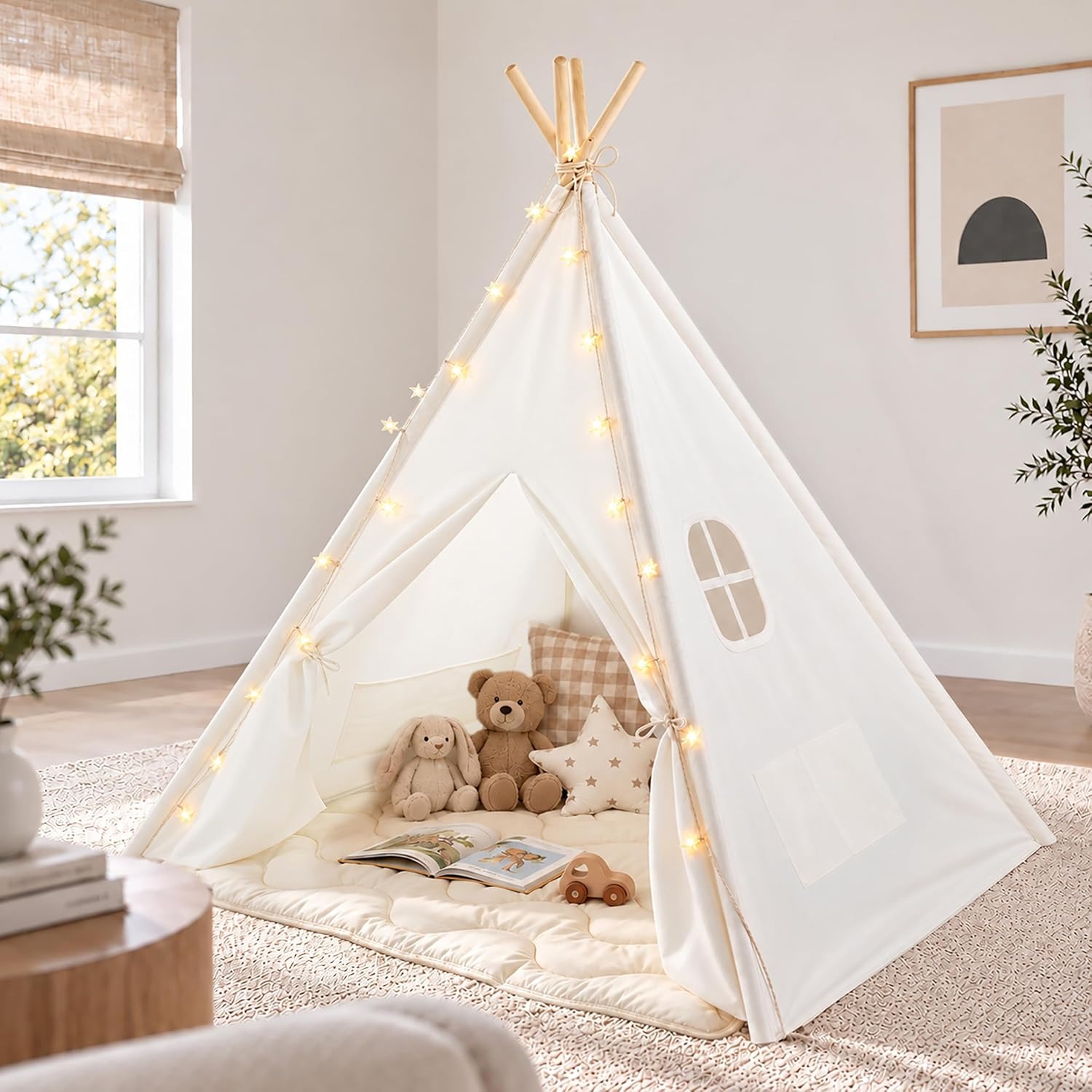
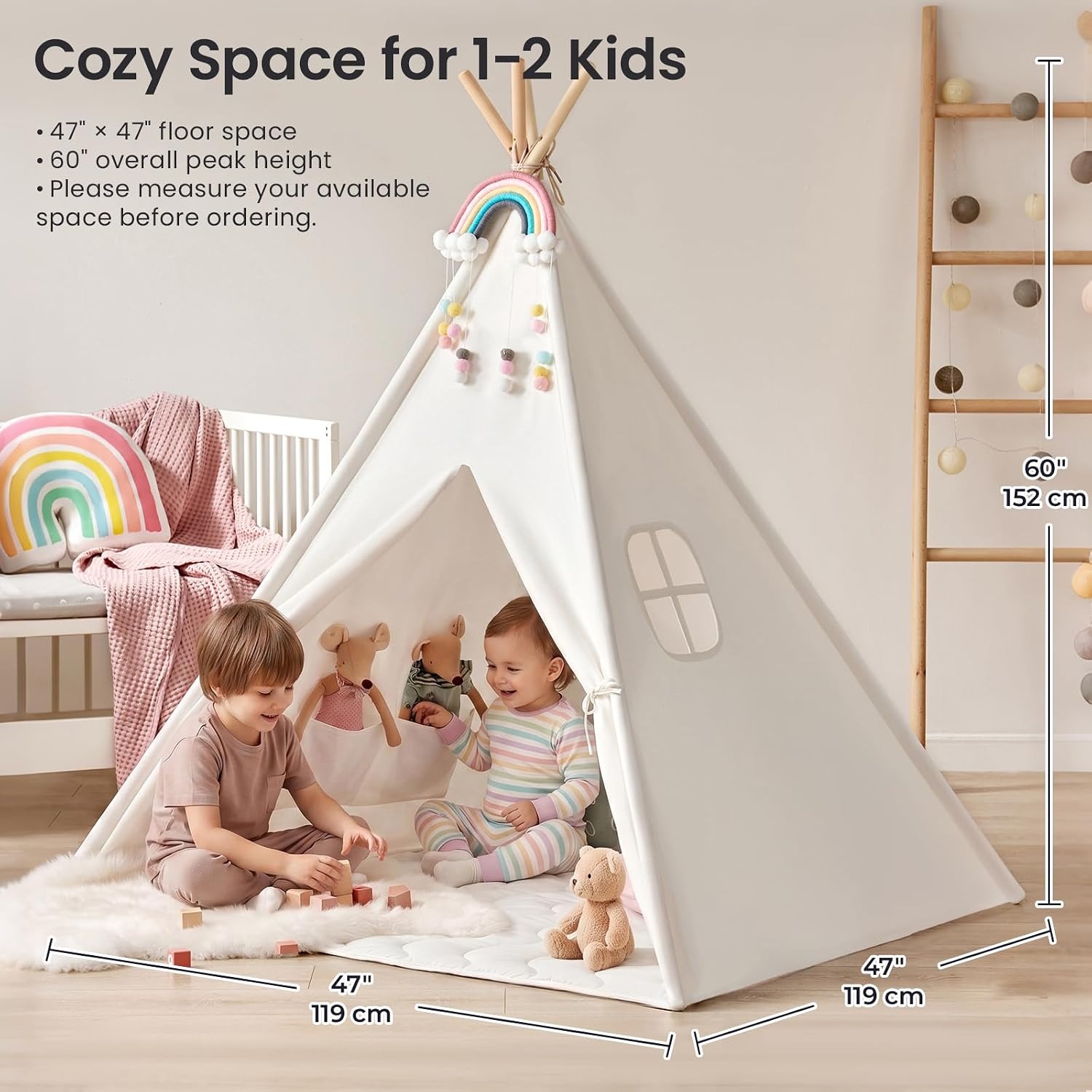
This is a four-pole teepee with a cotton canvas cover. The canvas is 8 oz weight, 100% cotton, and the poles are wood. Standing up, it is 121.9 cm square at the base and 167.6 cm tall at the peak. The whole thing weighs 3.5 kg.
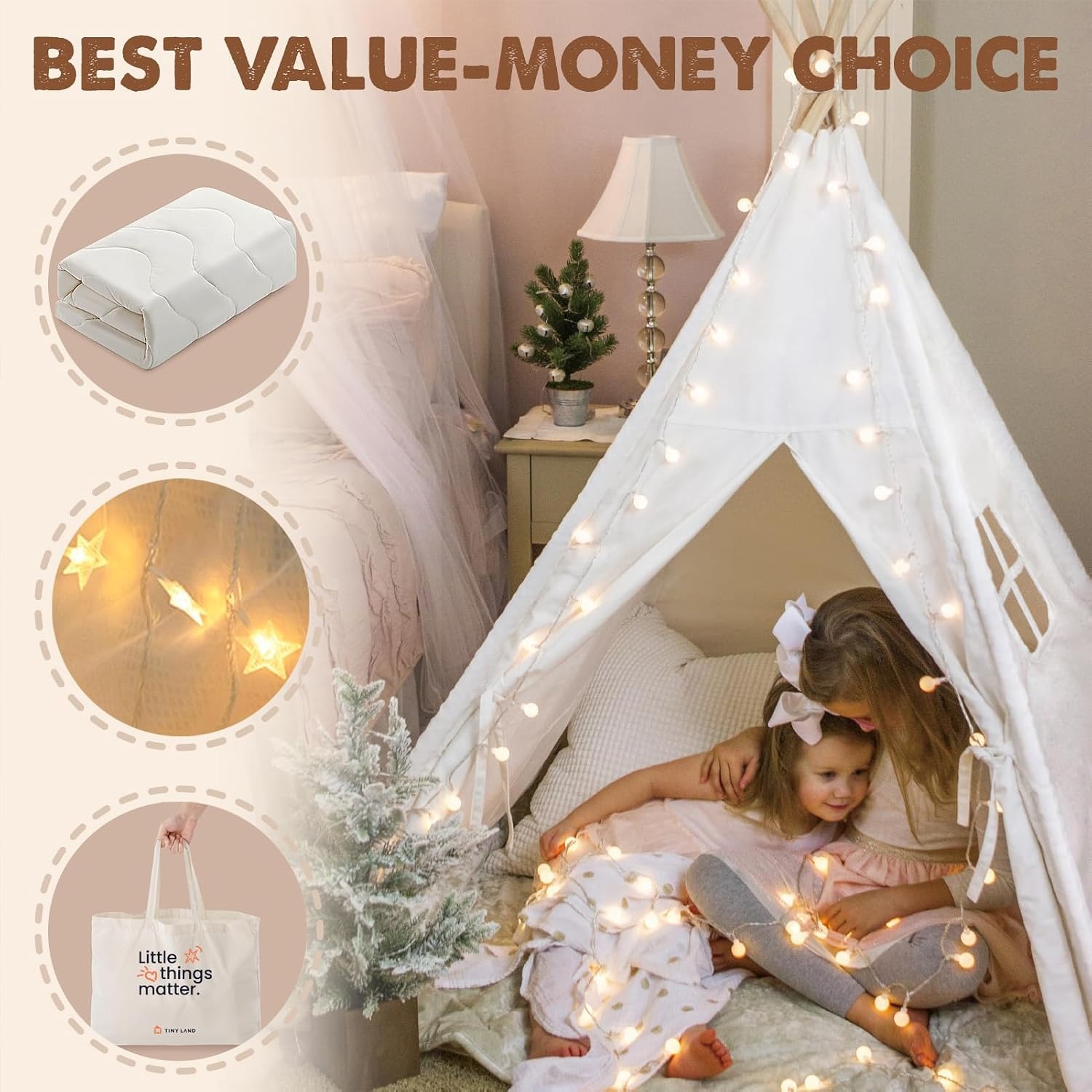
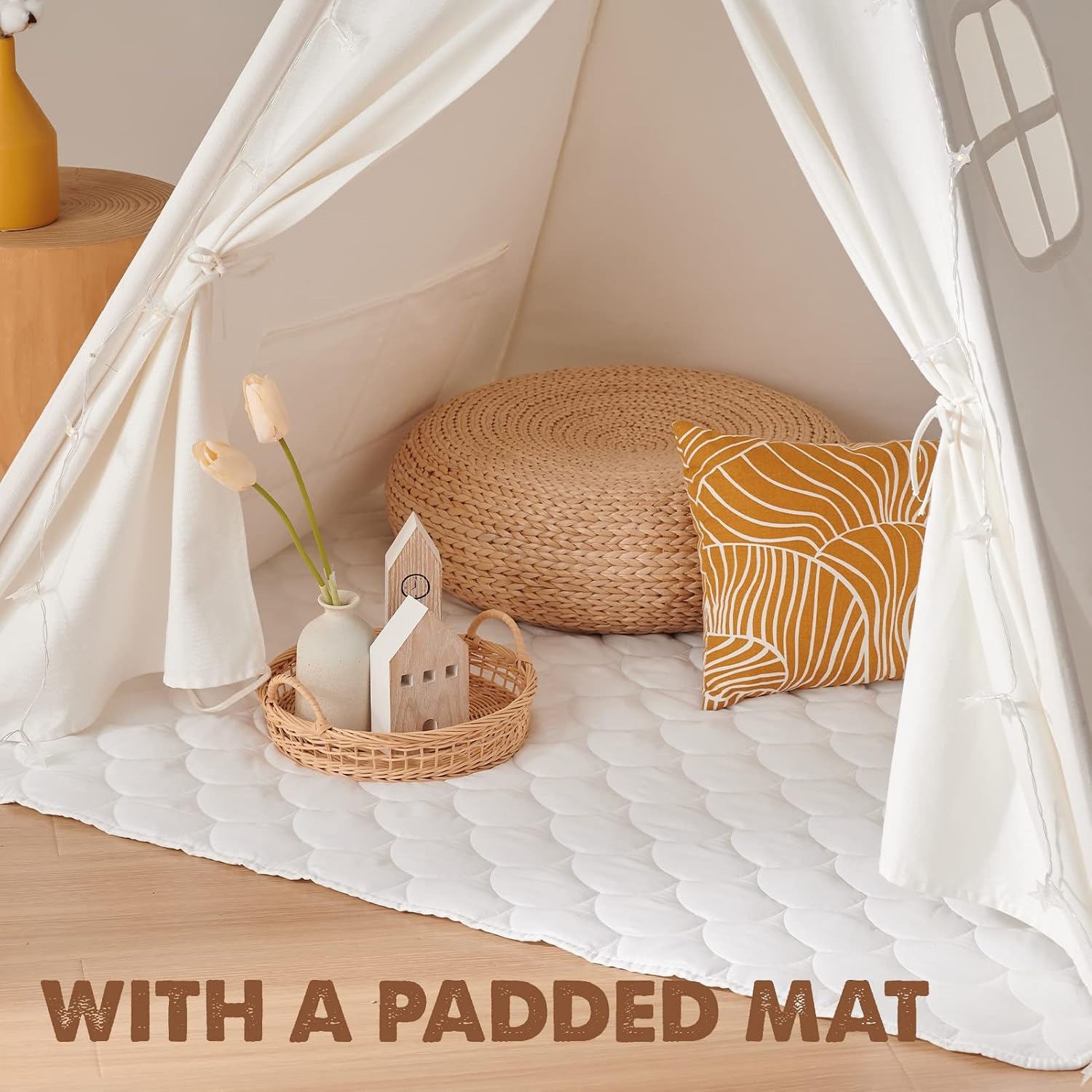
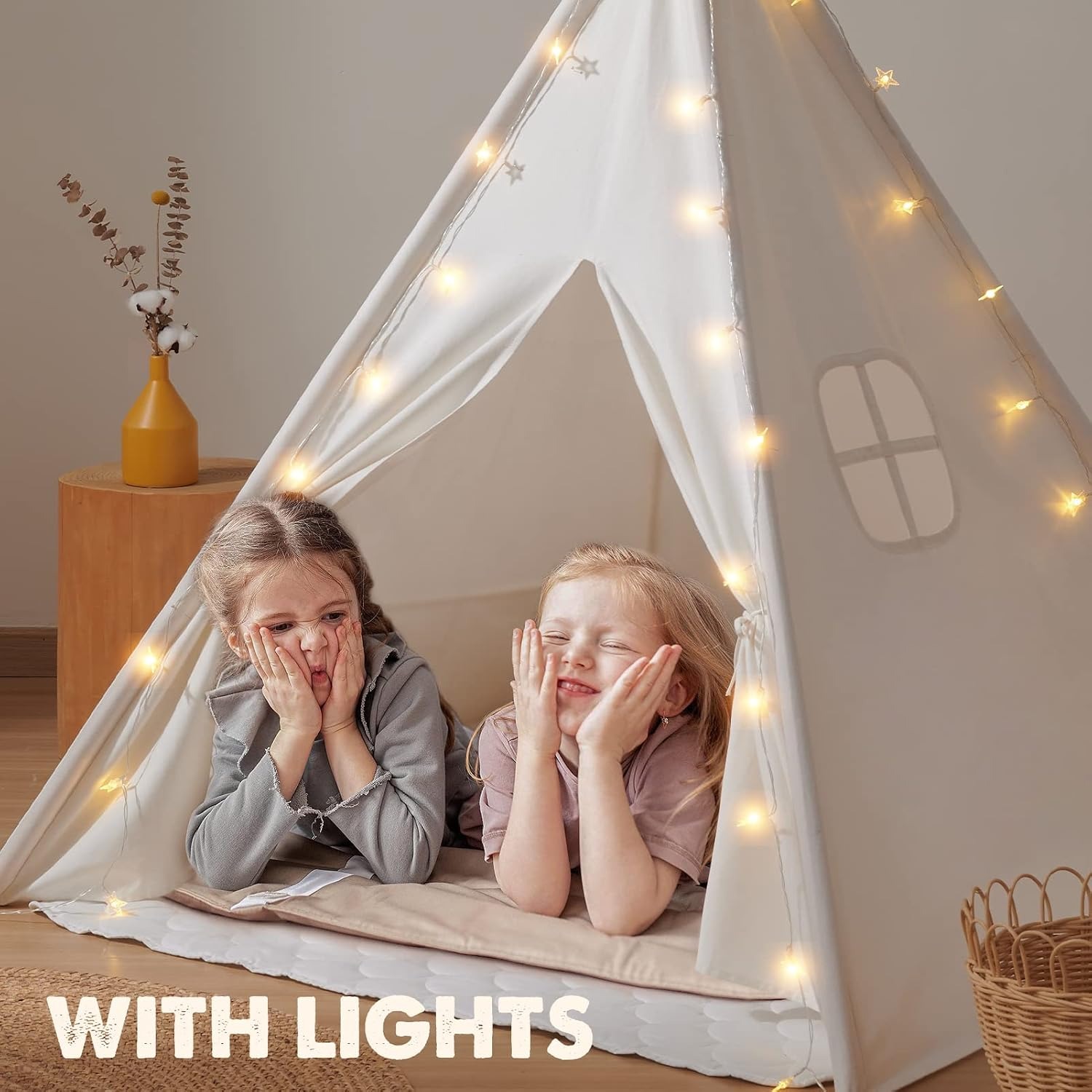
Two extras come with it. A thick padded mat for the floor, and a set of fairy lights. Those two items are usually sold separately with teepees, and buying them afterwards tends to add a surprising amount to the total. Having them in the box means the tent is a finished play space the day it arrives, not a frame you still need to furnish.
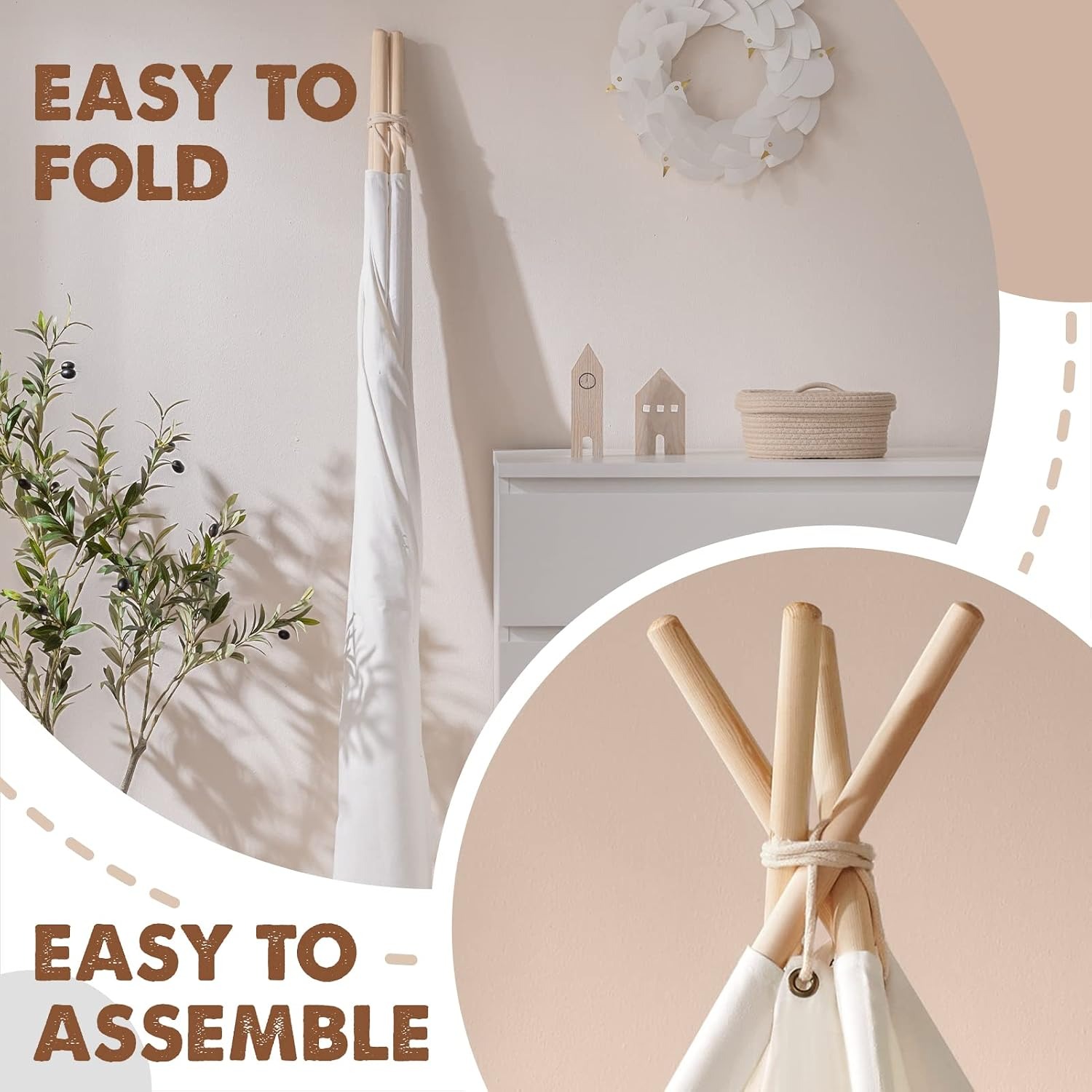
Assembly is required. The poles slot together, the canvas goes over, ties at the top hold the shape. It is a one-person job and it is not fiddly.
Why fabric weight is the thing to check
If you have ever bought a cheap play tent, you will know the sound. Thin polyester crinkles, catches the light oddly, and lets so much daylight through that the inside never feels like a den. It also tends to sag between the poles because there is no weight in the fabric to pull it straight.
Heavier cotton canvas behaves differently. It hangs in proper folds, it blocks more light so the inside feels enclosed, and it does not rustle every time a child moves. It is also pleasant to touch, which matters when children are lying on it and pulling it around them. An 8 oz cotton canvas teepee tent sits firmly in the "proper furniture" category rather than the "party supply" one.
The frame material follows the same logic. Wooden poles have weight at the base and resist flexing. Hollow plastic poles bend under sideways pressure, and children apply sideways pressure constantly. On this tent the bottom section of each pole sits inside the canvas, which helps hold the legs where you set them.
Measuring before you buy
Take a tape measure to the corner you have in mind. You need 121.9 cm in both directions for the base, plus a bit of breathing room at the front so the door panels can swing open. Height is rarely the problem indoors, but check if you are putting it under a sloped ceiling or a loft bed.
Think about where the fairy lights will plug in or where the battery pack will sit, and keep that route clear of the doorway. And look up. Avoid placing it directly under a shelf, a hanging light, or window blind cords.
Who it suits
The age guidance on this model runs from about three years to ten. That is a wide span, and the tent gets used differently across it.
At three and four it is a den. Soft toys move in, snacks get smuggled, and the child sits inside narrating a complicated storyline to nobody in particular. At six and seven it becomes a reading corner, which is where the included lights start earning their place. By nine and ten it is somewhere to take a book and a friend and shut the rest of the house out for an hour.
Young children under three can use it with direct supervision. Keep the lights switched off during unsupervised play, and keep loose cords out of reach.
Indoor, outdoor, or both
Cotton canvas and wooden poles are happiest indoors. That said, a dry afternoon in the garden is no problem at all, and the tent is light enough to carry out and back. The rule is simple. If the grass is wet or rain is coming, leave it inside.
What you want to avoid is leaving it out overnight, in heavy sun for days, or on damp ground. Natural fibres take on moisture, wood swells, and colour fades. Treat it as an indoor play tent that visits the outdoors and it will hold up for years.
Keeping it in good shape
Spot clean the canvas. A damp cloth, a little mild soap, gentle pressure, and plenty of air drying time before you fold anything away. Resist the urge to put the cover in the washing machine. Heavy cotton can shrink and lose its shape in a hot wash, and a shrunk cover no longer fits the frame properly.
Wipe the poles with a dry cloth and keep them away from damp. Every few weeks, check the joints and the top ties. Play loosens things gradually, and a thirty second tighten keeps the frame standing straight.
The padded mat can be shaken out and spot cleaned the same way as the canvas. If it gets a drink spilled on it, dry it fully before putting it back inside, because trapped damp under a mat on a hard floor is how musty smells start.
Making it a place they want to be
A teepee on its own is a frame. What turns it into a favourite spot is what goes inside. The padded mat does most of the work here, because a soft floor is the difference between five minutes and an hour. Add a couple of cushions and a small basket of books and you have essentially built a reading nook tent.
The fairy lights change the character of the space completely once the main room light is off. For a lot of families that becomes the bedtime routine, stories in the tent, then straight into bed. Switch the lights off when the room is empty, same as any other lamp.
Some people decorate further with bunting or a small sheepskin. Only the mat and lights are included with this tent, so anything else is your own addition. The canvas takes clipped-on decorations easily.
Comparing against the alternatives
A pop-up tent is cheaper, lighter, and folds into a disc. It is also noisy, flimsy, and tends to look out of place in a tidy bedroom. It suits a holiday or a garden more than a permanent corner.
A fabric playhouse that fits over a table saves floor space but depends on owning the right table. A wooden playhouse is beautiful and completely immovable, which rules it out for most homes.
A canvas teepee sits in the middle. It looks like something you chose on purpose, it is sturdy enough for daily use, and it comes apart when you need the floor back. The 3.5 kg weight is light enough to move but heavy enough to feel solid.
The short version
If you want a children's teepee that will still be standing in two years, look at the fabric weight and the frame material before anything else. Heavy cotton canvas and wooden poles are the markers of a tent built for daily play rather than a weekend.
This one gives you both, at 121.9 by 121.9 cm with a 167.6 cm peak, plus a padded mat and fairy lights already in the box. Measure the corner, allow half an hour for the first build, and keep it out of the rain. Do that and it earns its spot in the room.