
The complete guide
How to Choose a Kids Teepee Tent That Actually Gets Used
The problem with most play corners
Every family ends up with a pile in the corner of a room. Soft toys, cushions, a blanket half pulled off the bed, a few books. Children keep trying to build a den out of it, and the den keeps falling over. Then the chairs get dragged in, the good throw gets used as a roof, and someone has to tidy it all up before dinner.
A teepee solves that quietly. It gives the den a permanent shape so the child is not starting from scratch every afternoon. The pile becomes a place. It also contains the mess, because the toys that would be spread across the floor now live inside a defined square. That is a small win, but it is the kind of small win you notice daily.
How a cotton canvas teepee works
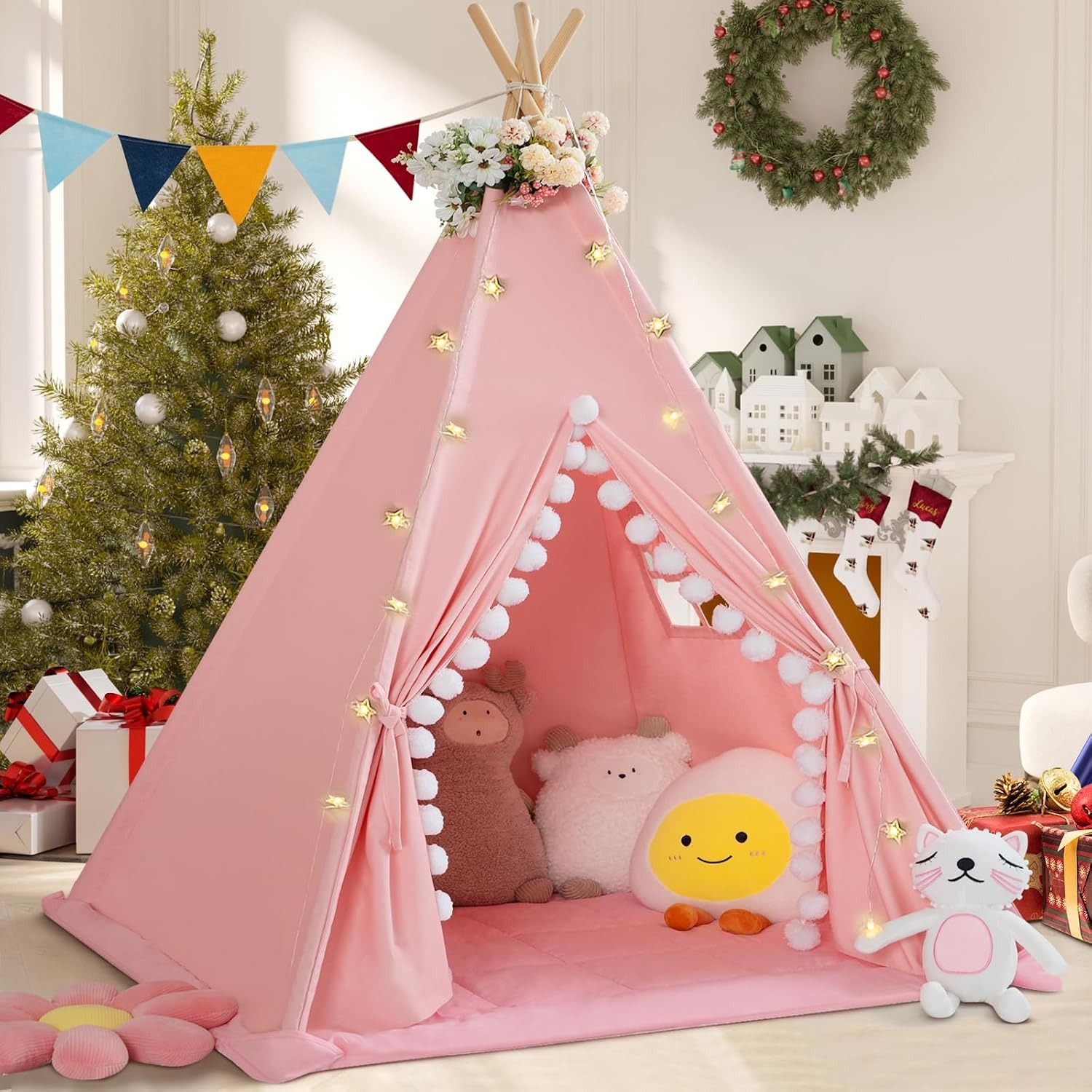
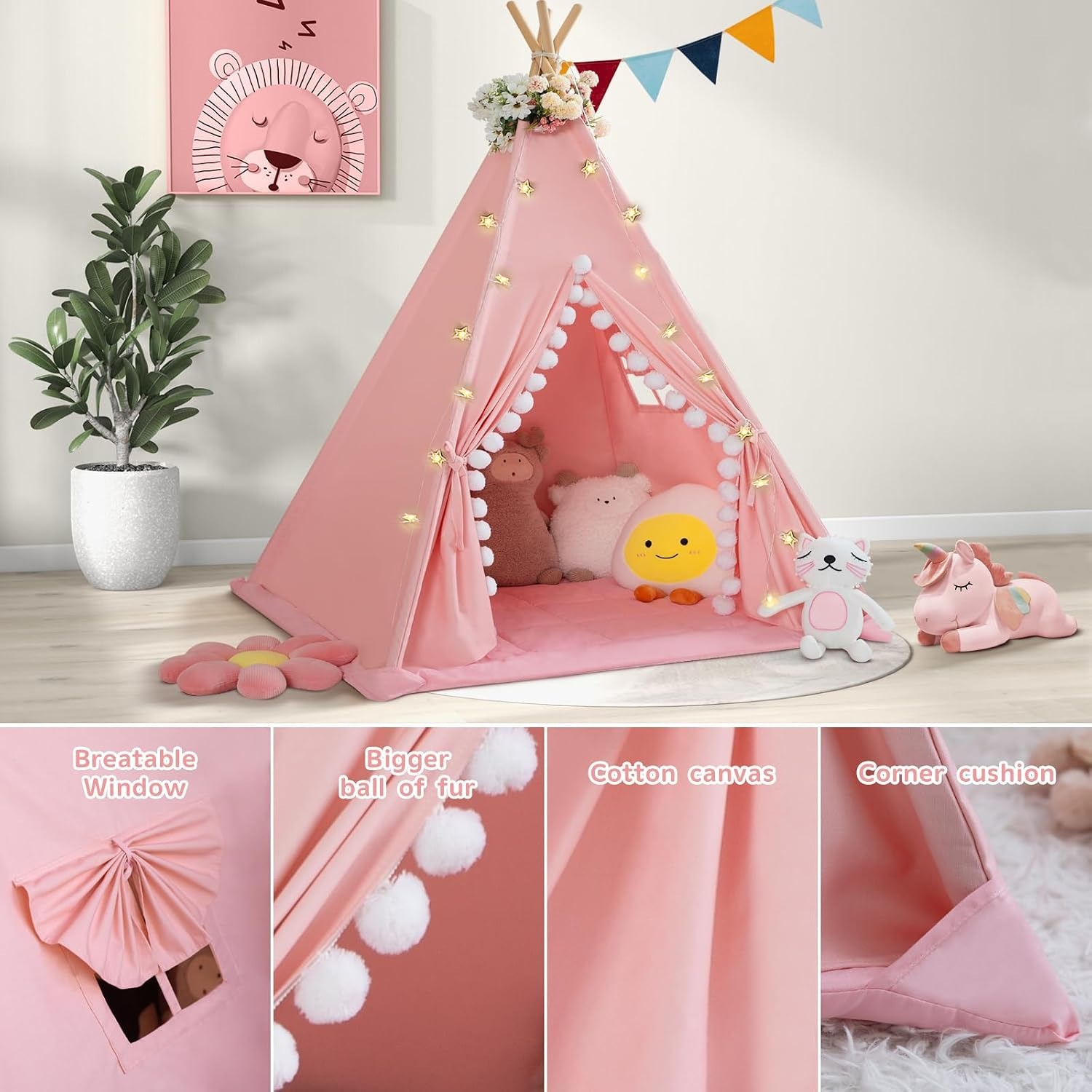
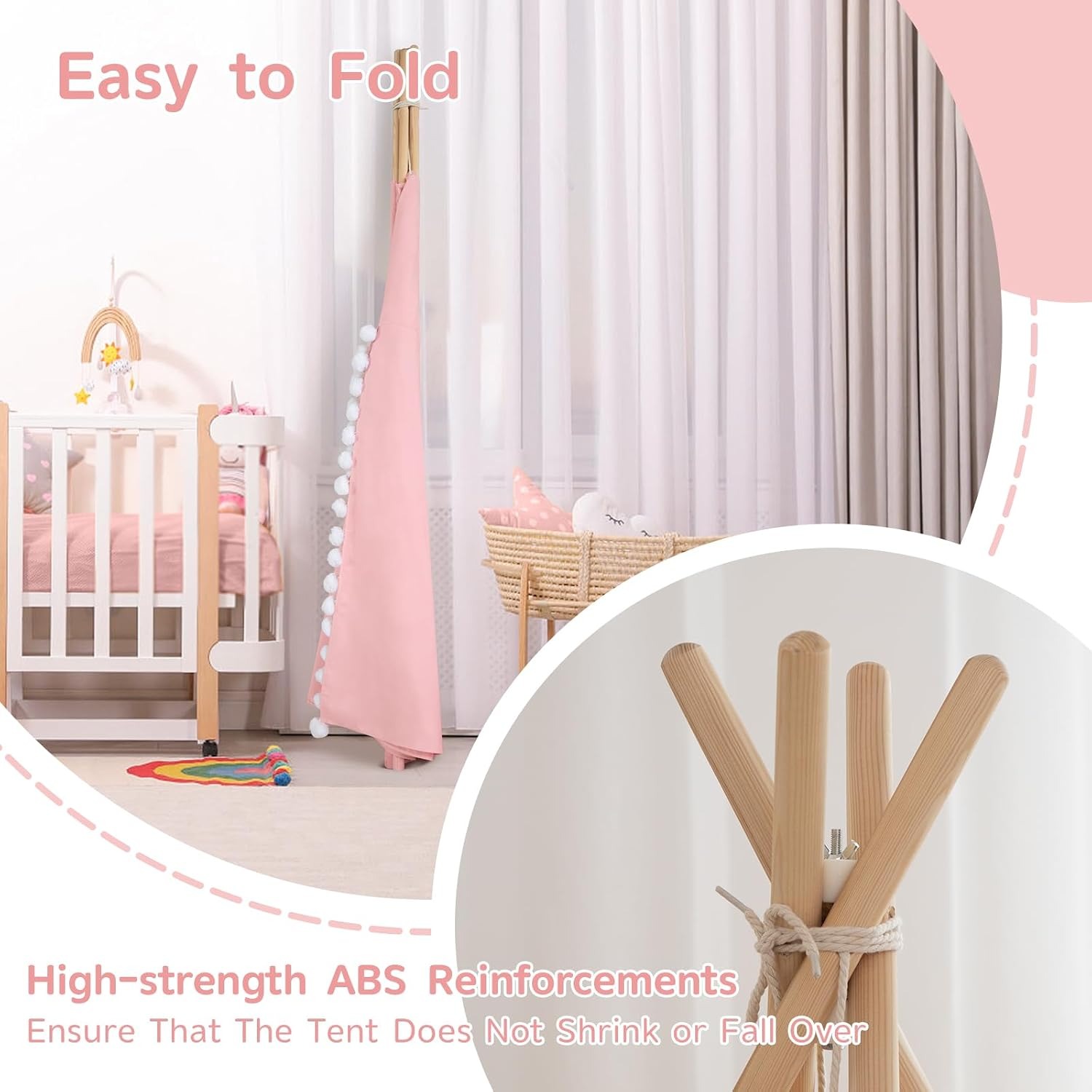
The mechanics are simple, which is why these tents last. Four pine wood poles cross near the top and splay out at the base. The cotton canopy slips over the frame and its own tension holds everything open. There are no zips to jam, no plastic clips to crack, no air to pump in.
The pine poles do the structural work. Pine is light, which matters when you are moving the tent to vacuum under it, and it is strong enough to hold a canopy taut without flexing. The poles are sanded as part of manufacture, so there is nothing sharp for small hands to find.
The cotton does the comfort work. Synthetic play tents can feel clammy and they trap heat on warm days. Cotton breathes, so a child can sit in there for an hour without getting stuffy. It also drapes better, which is why these tents look like furniture rather than toys.
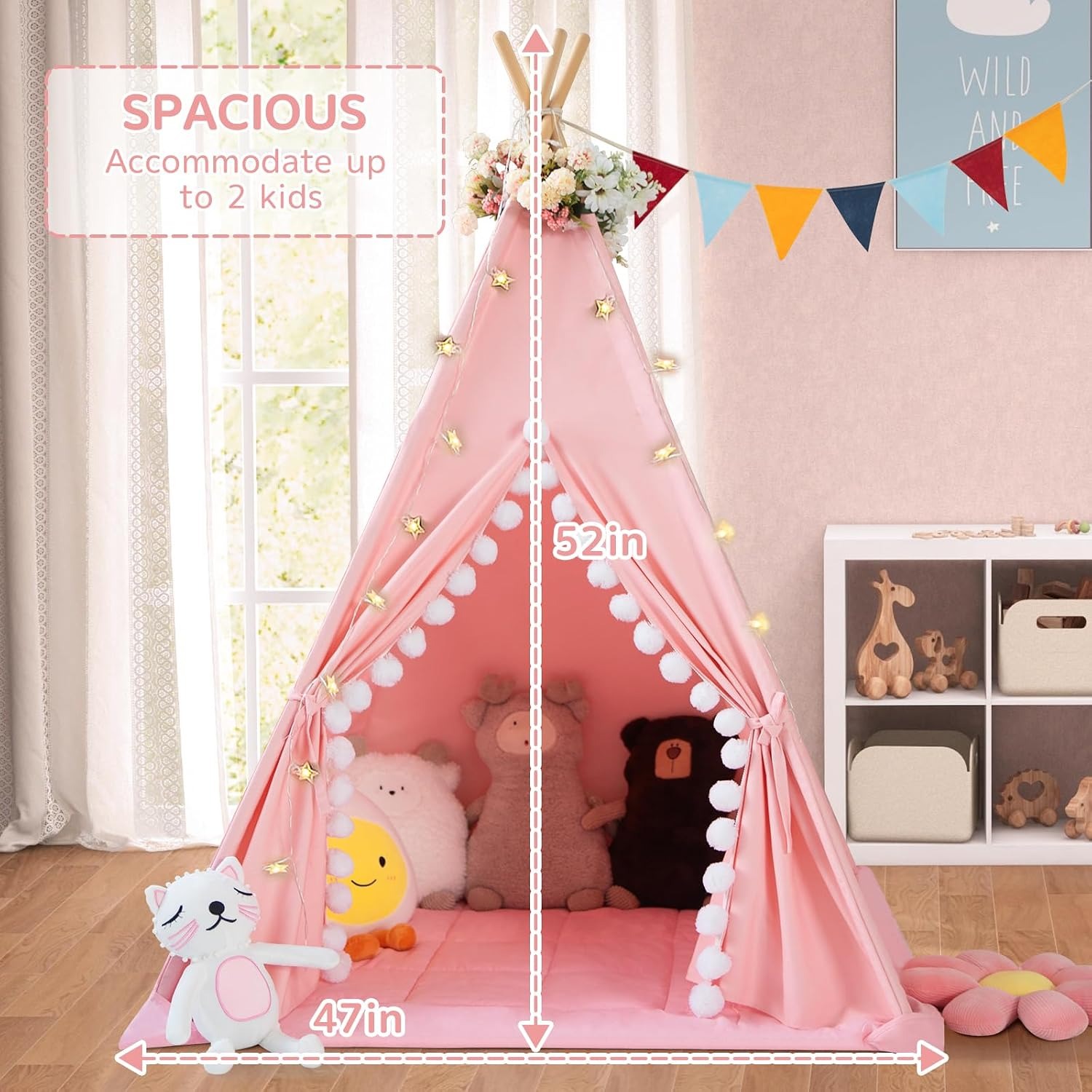
This particular model measures 119.4 cm square at the base and stands 132.1 cm high. In old money that is roughly 47 inches wide and 52 inches tall. The whole thing weighs 3.6 kg assembled.
Why the padded mat matters more than you think
A lot of teepees sell as a frame and a canopy, nothing else. They look great in photos. Then the child gets inside, sits on a cold tile floor, and climbs straight back out.
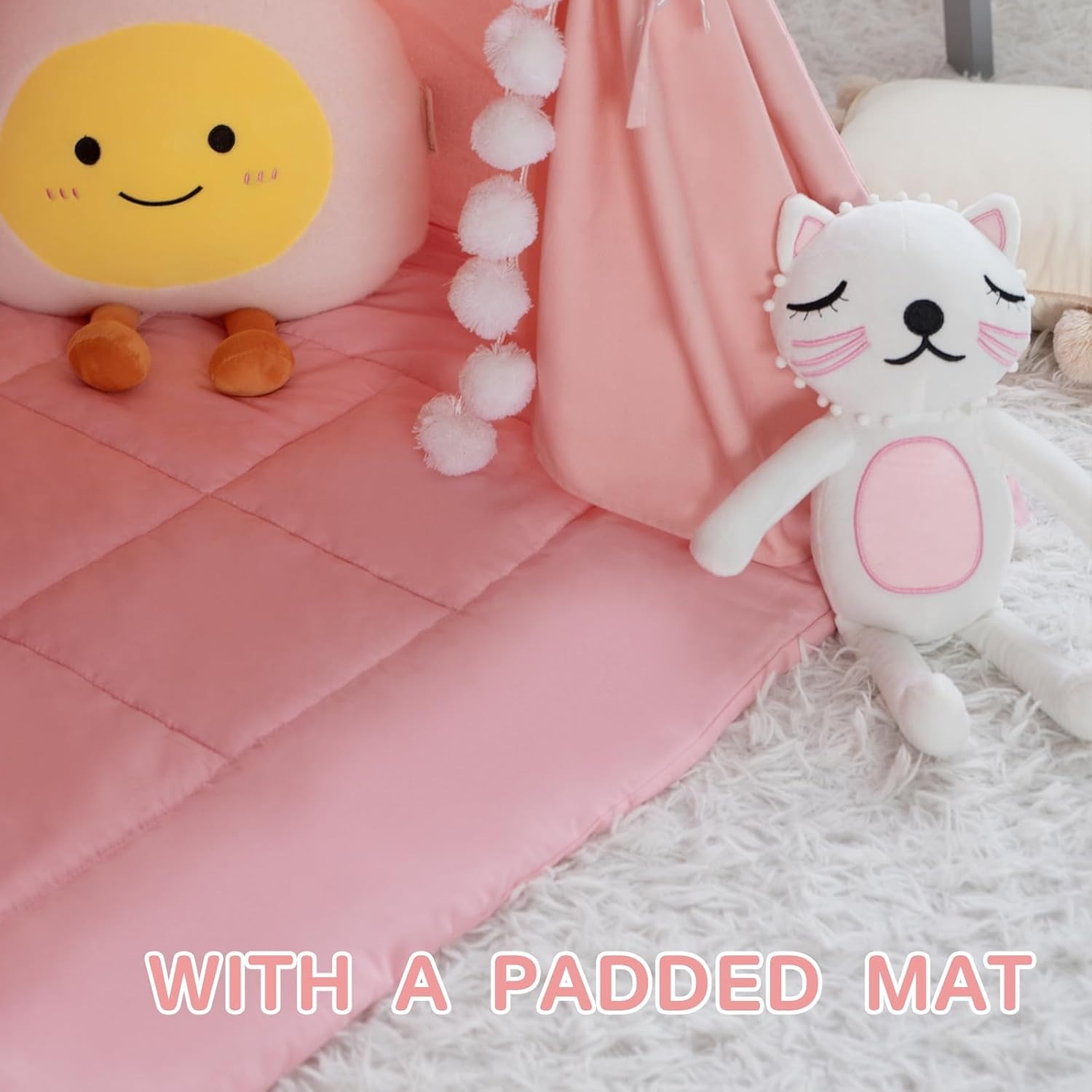
The padded mat included here is the difference between a prop and a place. It insulates against cold floors, cushions knees and elbows, and stops the base of the tent from feeling like an empty box. Children stay in a teepee for twenty minutes instead of two when the floor is soft.
It is also practical. A fitted mat does not slide the way a borrowed rug does, and it marks the boundary of the play area clearly. When you want to tidy up, everything on the mat goes back in the toy box and everything off it was never meant to be there.
Who it suits
The manufacturer's recommended age is 36 months to 10 years, and that range is honest. Three and four year olds treat it as a hiding spot, a shop counter, a cave. Five to seven year olds start using it for small world play, laying out figures and cars on the mat. Older children, seven and up, mostly use it to get away from everyone with a book.
Space-wise, it suits one child comfortably or two sitting side by side. It is not a group playhouse. If you have three children who all want to be inside at once, you will want something larger or a second tent.
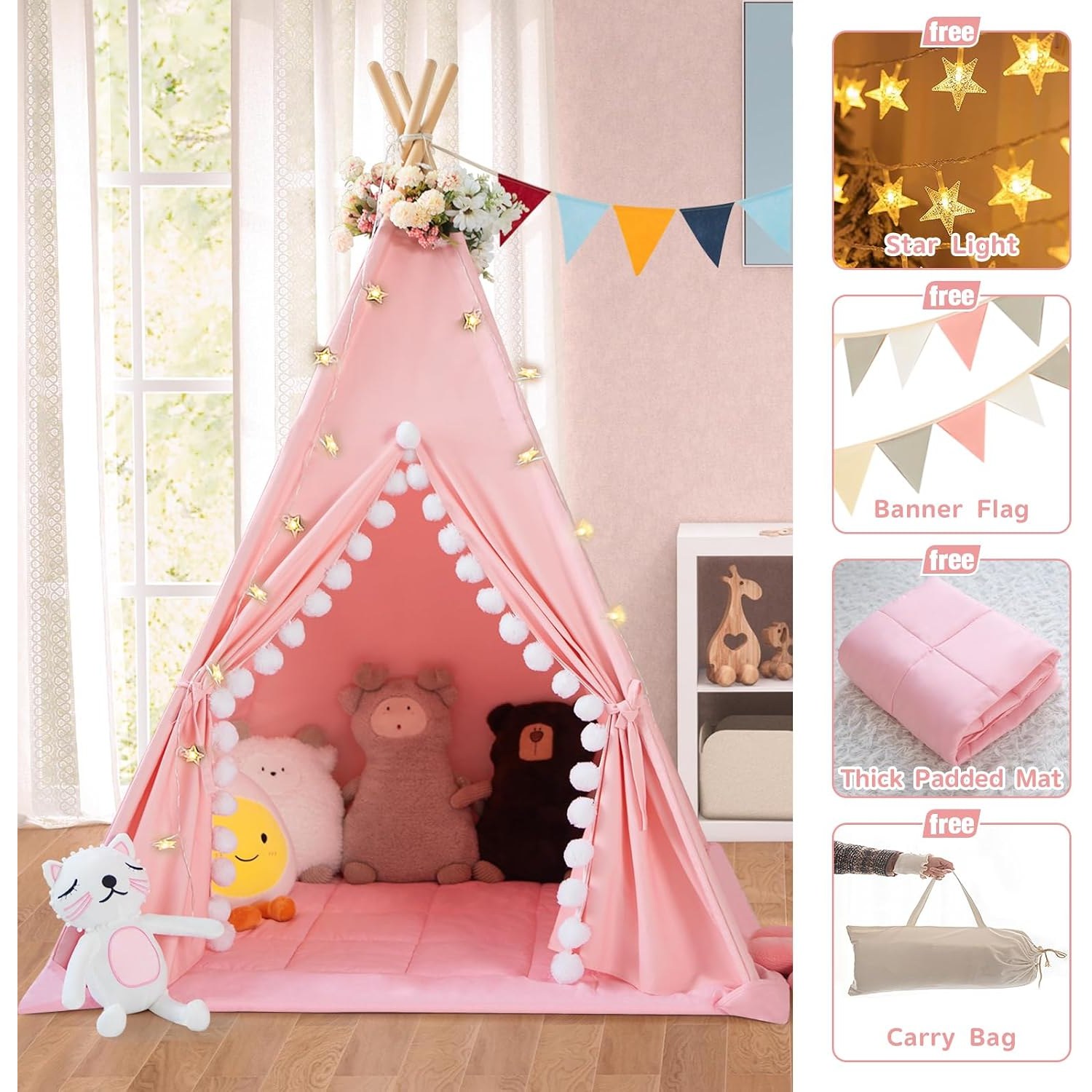
It also suits families who need flexibility. Because the poles come apart and the canopy folds, the whole thing packs into the included carry bag. That matters in rented homes, in rooms that double as guest rooms, and for anyone who wants to take it to a grandparent's house for the holidays.
Choosing between options
If you are comparing play tents, a few things separate the good ones from the ones that end up in the shed.
Look at the frame material first. Wooden poles hold their shape and look better in a bedroom. Thin fibreglass or plastic rods can bow under tension and they tend to go wobbly after a year of being taken down and put back up.
Then check what is actually in the box. A tent on its own means you will be buying a mat, a cushion and lights separately, and those add up fast. This one includes the padded mat, star lights, a banner flag and a carry bag, so you can set it up fully on the day it arrives.
Finally, measure your corner. A 119 cm square footprint is modest but it is not nothing. Leave a bit of clearance around the base so the poles can splay properly, and check your ceiling height if you plan to put it under a sloped roof. At 132 cm tall it fits almost anywhere, but it is worth confirming before you order.
One more thing worth saying. Think about where the tent will live long term, not just where it will go on day one. The best indoor play tent is the one that stays up, and tents stay up when they are in a corner nobody needs to walk through.
Setting it up
Lay the parts out on the floor first so you can see what you have. Fit the poles together, stand the frame, then slide the canopy over the top and adjust until the fabric is even on all four sides. The included instructions walk you through it and most people have it standing in a few minutes.
Once it is up, put the padded mat down inside, then hang the star lights where the cable will not be pulled. The banner flag goes at the apex. Add a cushion and a few books and you are finished.
If the frame feels loose, the usual cause is uneven pole splay. Nudge the feet out a little further and the canopy will pull tight again.
Keeping it in good shape
Cotton and pine both reward a bit of care and neither needs much.
For the canopy, spot clean small marks with mild soap and cool water. For a proper wash, take the fabric off the frame first and follow the care label. Dry it fully before refitting it, because damp fabric on wood can leave marks on both.
For the poles, a dry cloth or a barely damp one is plenty. Never soak wood and never leave the tent standing on a wet patio. If it has been outside, bring it in and let it air before packing it away.
For the mat, vacuum or shake it out regularly. Blot spills rather than soaking them, and let it dry flat. Thick padding holds water, so patience beats scrubbing here.
Store everything in the carry bag somewhere dry. A wardrobe shelf or the top of a cupboard is ideal. An unheated garage over a wet winter is not.
A note on outdoor use
It will go outside on a dry day and children love it in the garden. Put it on flat ground, keep it out of strong wind, and bring it in before the weather turns. It is a play tent, not camping gear, and treating it that way is what keeps it looking good for years.
The short version
This is a cotton canvas teepee on a sanded pine frame, 119.4 cm square and 132.1 cm tall, weighing 3.6 kg. It comes with a padded mat, star lights, a banner flag and a carry bag, so there is nothing else to buy. Assembly is required and takes minutes.
It suits children from around three up to ten, one or two at a time, and it works just as well as a reading corner as it does as a den. It folds away into its bag when you need the floor back.
If you want a corner of the room that belongs to your child, and you want it to still look good in a year, this is a sensible place to start. Measure the space, order it, and have it up before bedtime.