
The complete guide
Choosing a Teepee Tent for Girls and Boys, A Practical Buyer's Guide
The problem with blanket dens
Every child builds one eventually. Two dining chairs, a sheet, a couple of heavy books to hold the corners down, and a structure that collapses the moment someone crawls in with enthusiasm. The engineering is bad and the clean-up is worse. What children actually want is the feeling the den gives them, a small enclosed space that belongs to them and not to the adults, with a door they control.
A teepee tent for girls and boys solves that properly. It gives the same sense of enclosure, but it stands up on its own, it does not eat your bed linen, and it folds away when the room needs to be a room again. For most families the surprise is how quickly it stops being a novelty and starts being furniture. Children go in there to read, to sulk, to hide from a visiting relative, to line up every toy they own in a row. The tent just sits there being useful.
How this one is built
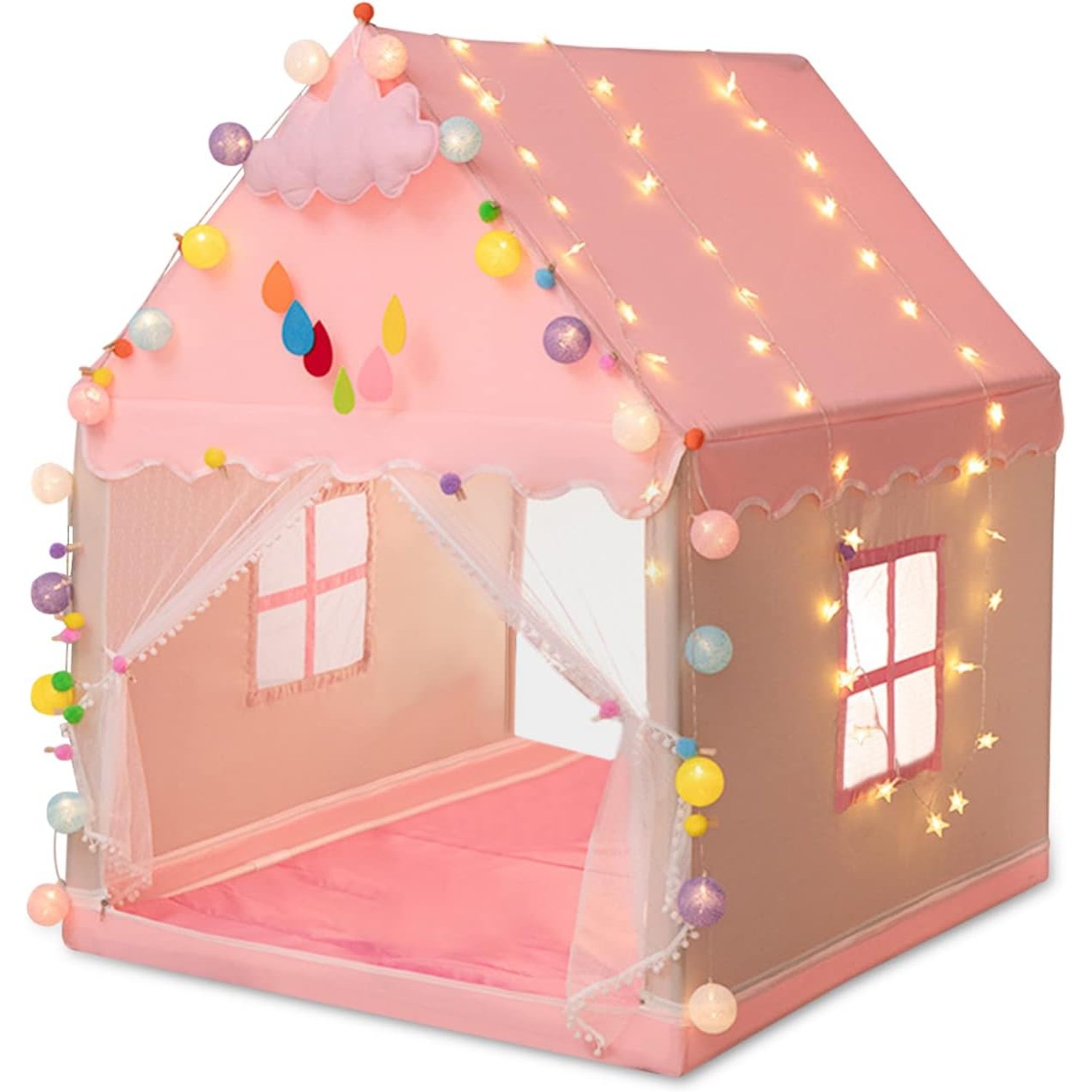
The construction is straightforward. Fabric panels in polyester cotton wrap around a set of alloy poles, with an aluminium frame giving it structure. There is nothing clever going on, and that is a good thing. The fewer moving parts a child's play item has, the fewer things there are to break in the first six months.
The fabric choice matters more than people expect. Polyester cotton has enough cotton character to feel soft when a child presses a cheek against it, and enough polyester to hold colour and resist the general abuse of being dragged around. It is not canvas, so do not treat it like camping gear, but for indoor and dry-day outdoor use it does the job.
Aluminium poles keep the whole assembly at about 3 kg. That number is worth dwelling on. Three kilograms is light enough for one adult to pick up the entire tent, still assembled, and carry it to another room. Heavier tents with timber poles look lovely in photographs and then never move again, because moving them is a two-person job with a risk of scraped paintwork.
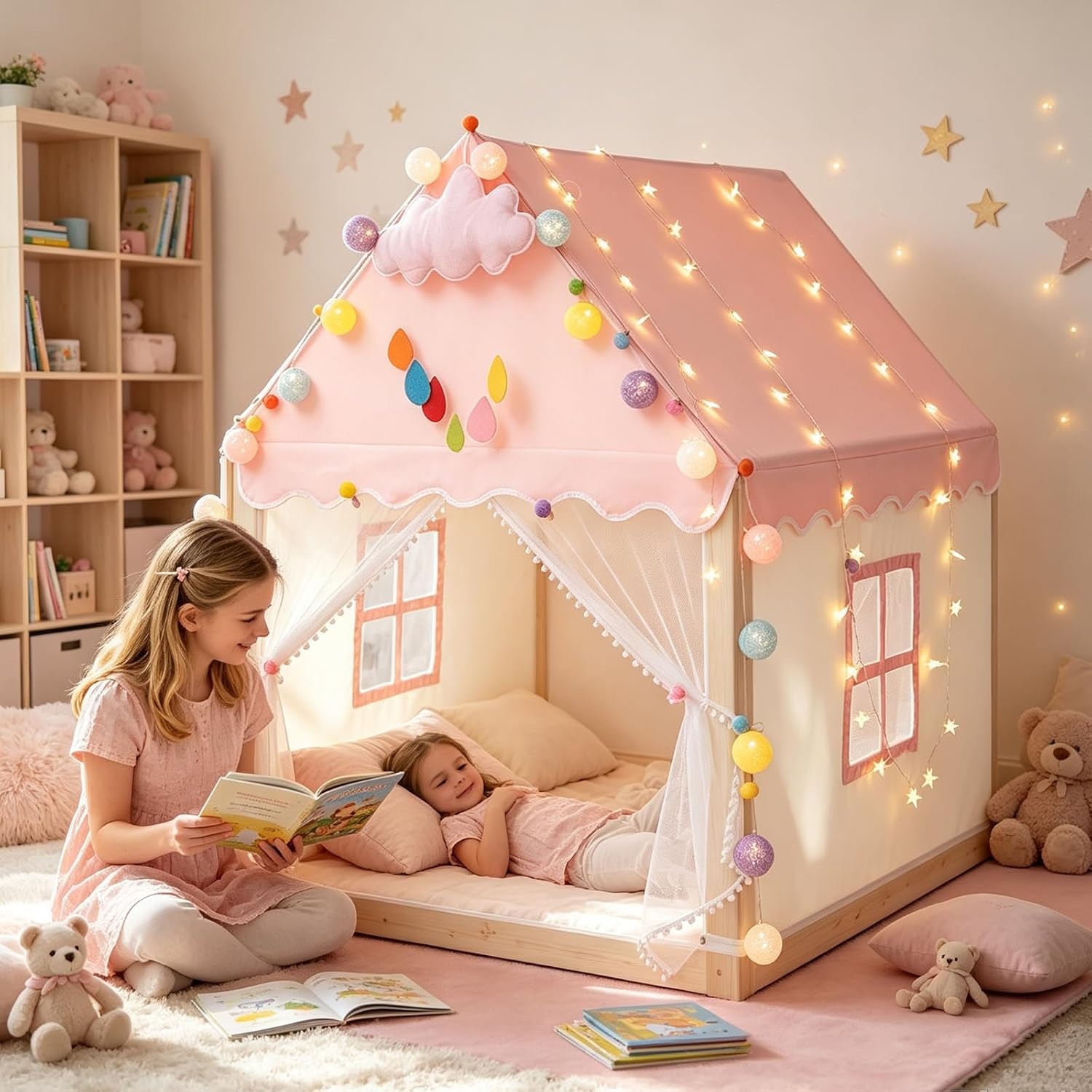
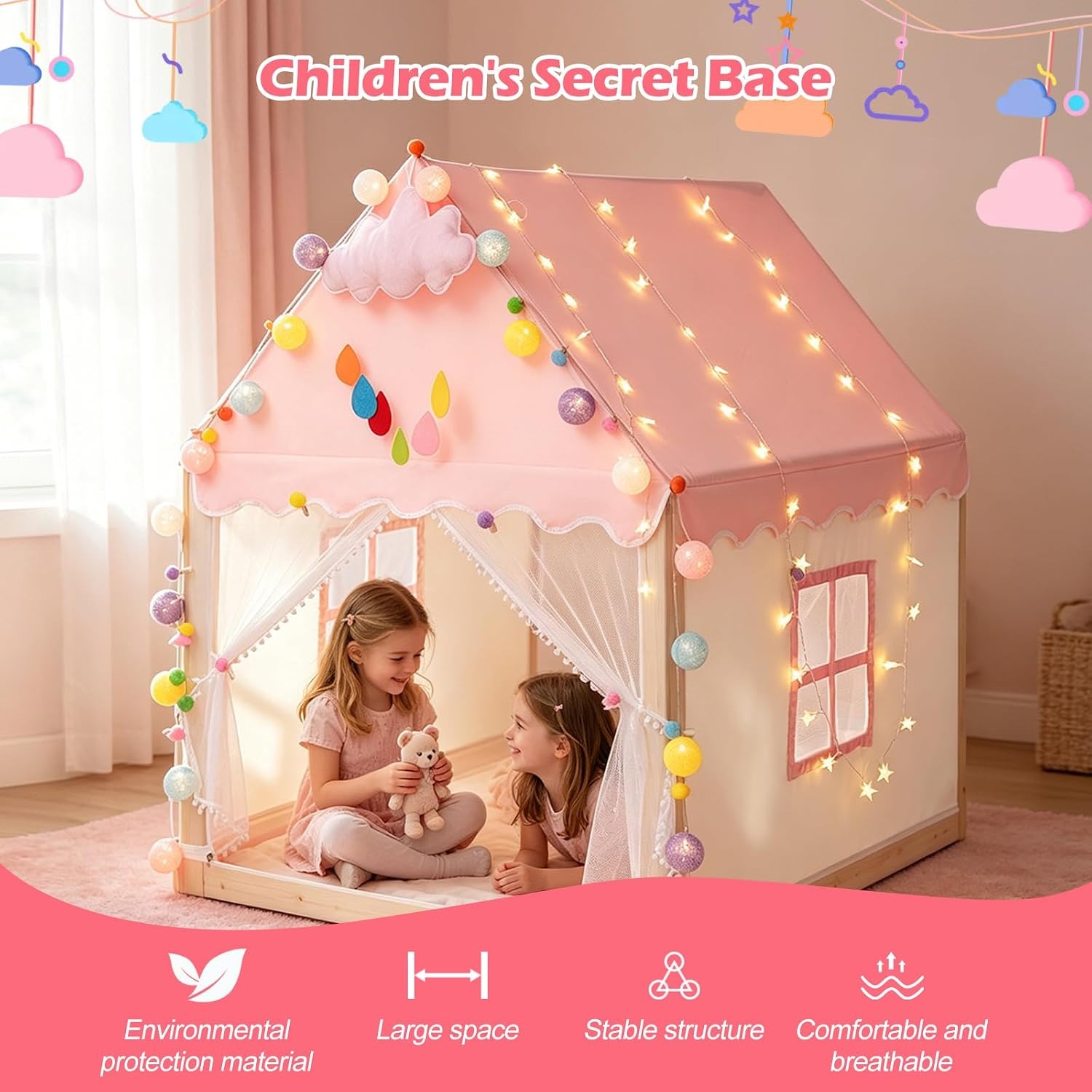
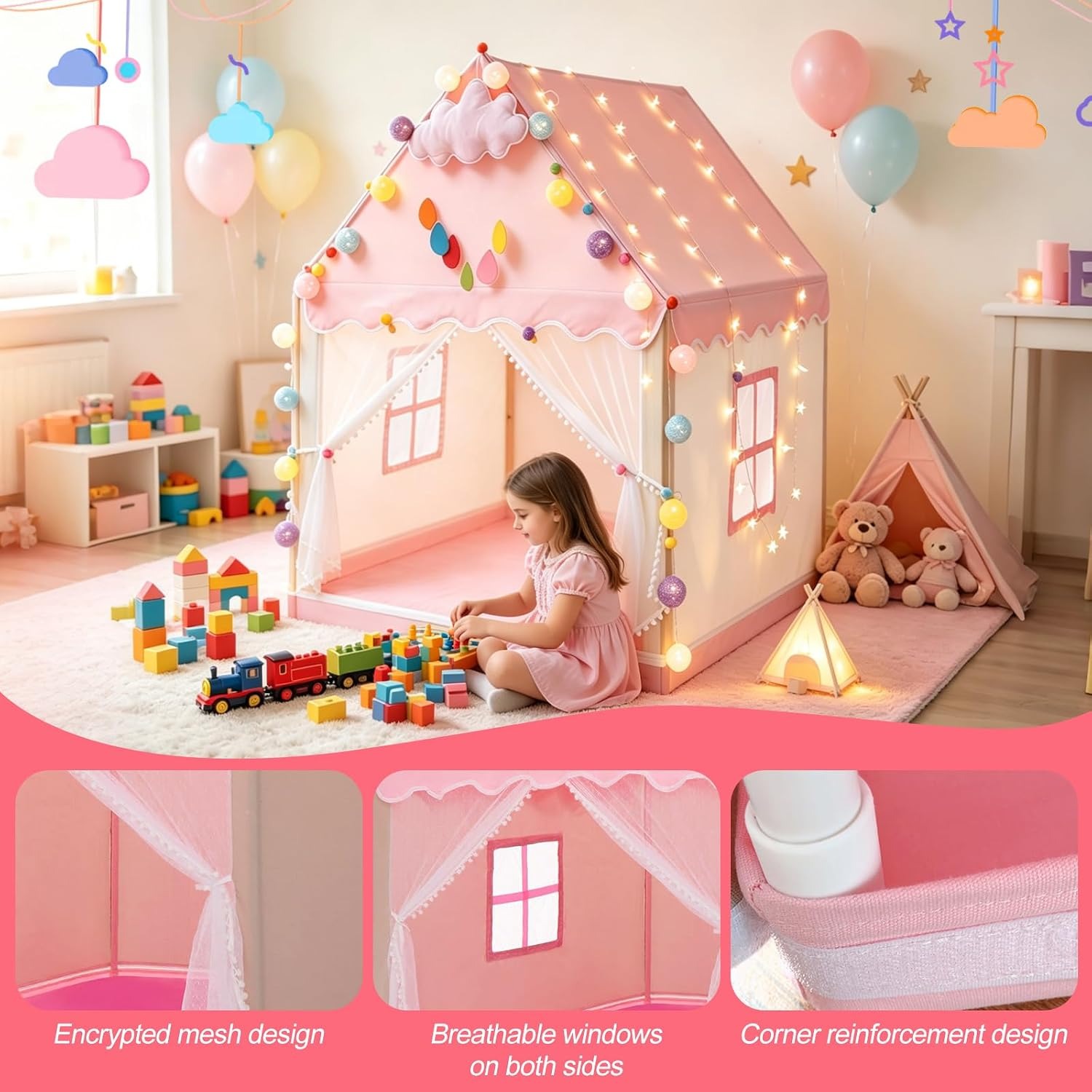
The assembled size is listed at 140 x 120 x 142 cm, with the item dimensions separately recorded at 120 x 100 x 140 cm. Either way, you are looking at a floor area that genuinely fits three or four children sitting down, and a peak height where most young children can stand near the middle. Side windows let air through and let you see in. The listing records assembly as not required.
Who it suits
The manufacturer's recommended age range is 0 to 6 years. In practice the sweet spot is somewhere between two and six, when imaginative play is at full throttle and a child is big enough to get in and out confidently but small enough to find the space enormous.
Younger than that, it can still work as a soft, contained play area for floor time, but a young child or new walker should never be left alone inside. Older than six, children sometimes keep using it as a reading corner if they still fit, and sometimes decide overnight that it is for young children. That is normal and no reflection on the tent.
It suits homes with limited space better than you would guess, because it folds. It suits households with more than one child, because the floor area is big enough to share. It also suits anyone looking for an indoor teepee for children that can migrate to the garden for a birthday party and then come back inside.
Choosing the right size and spot
Measure first. A footprint of roughly 140 x 120 cm is not huge, but it is not small either, and it needs clear floor rather than floor that is mostly occupied by a toy box. Mark the rectangle out on the carpet with masking tape before you order if you are unsure. Five minutes with a tape measure saves a difficult conversation later.
Think about where it will sit permanently, not just where it looks good. A corner away from the door is usually best, because it keeps the walkway clear and gives children the tucked-away feeling they are after. Avoid putting it in front of a radiator, beside stairs, or near a window with a blind cord. Near a wall is fine, but leave a little gap so the fabric is not pressed flat.
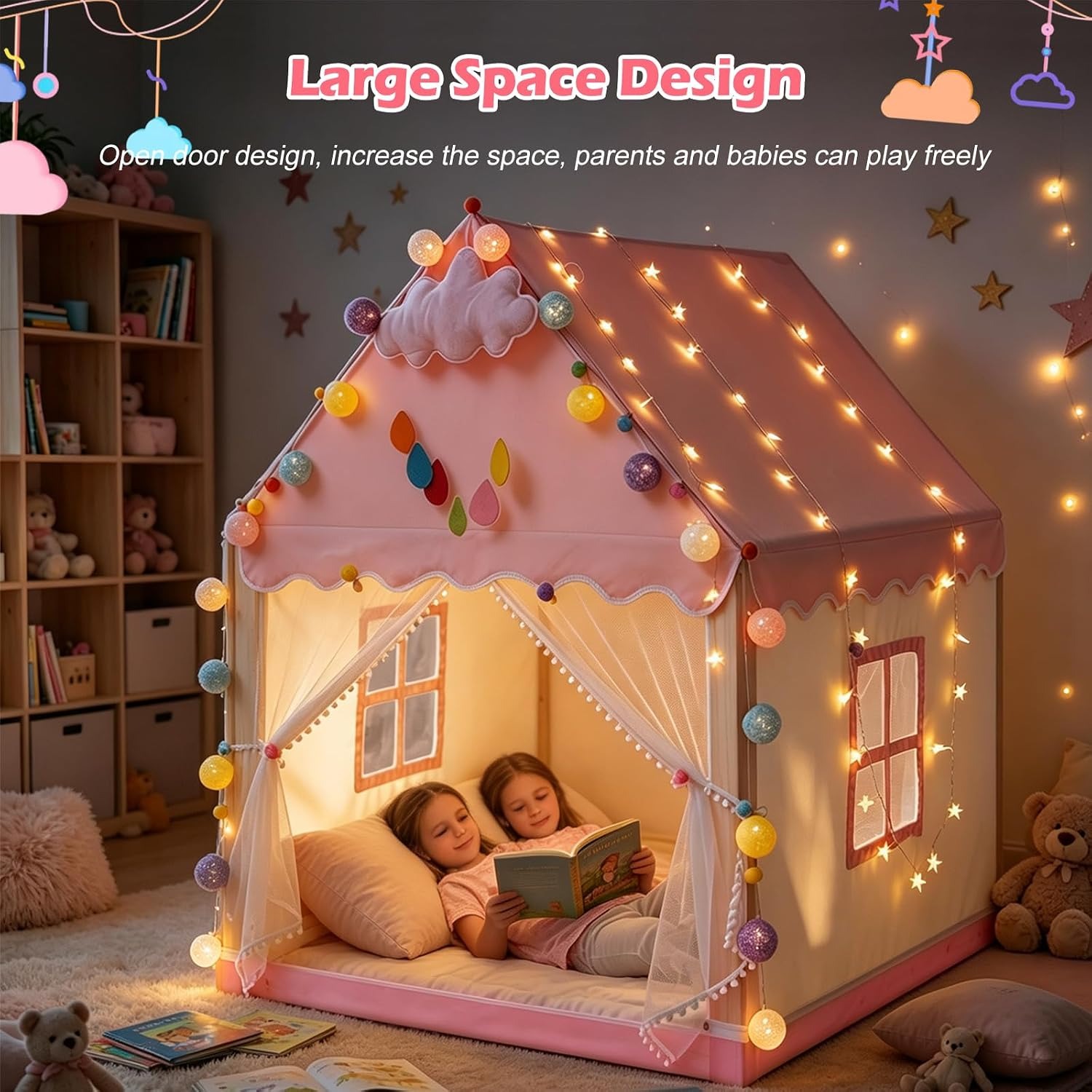
Light matters too. A playroom teepee in a dark corner gets used less than one near a lamp. A small battery light inside, placed on the floor rather than hung from the poles, makes it a far nicer place to sit with a picture book.
Setting it up and keeping it safe
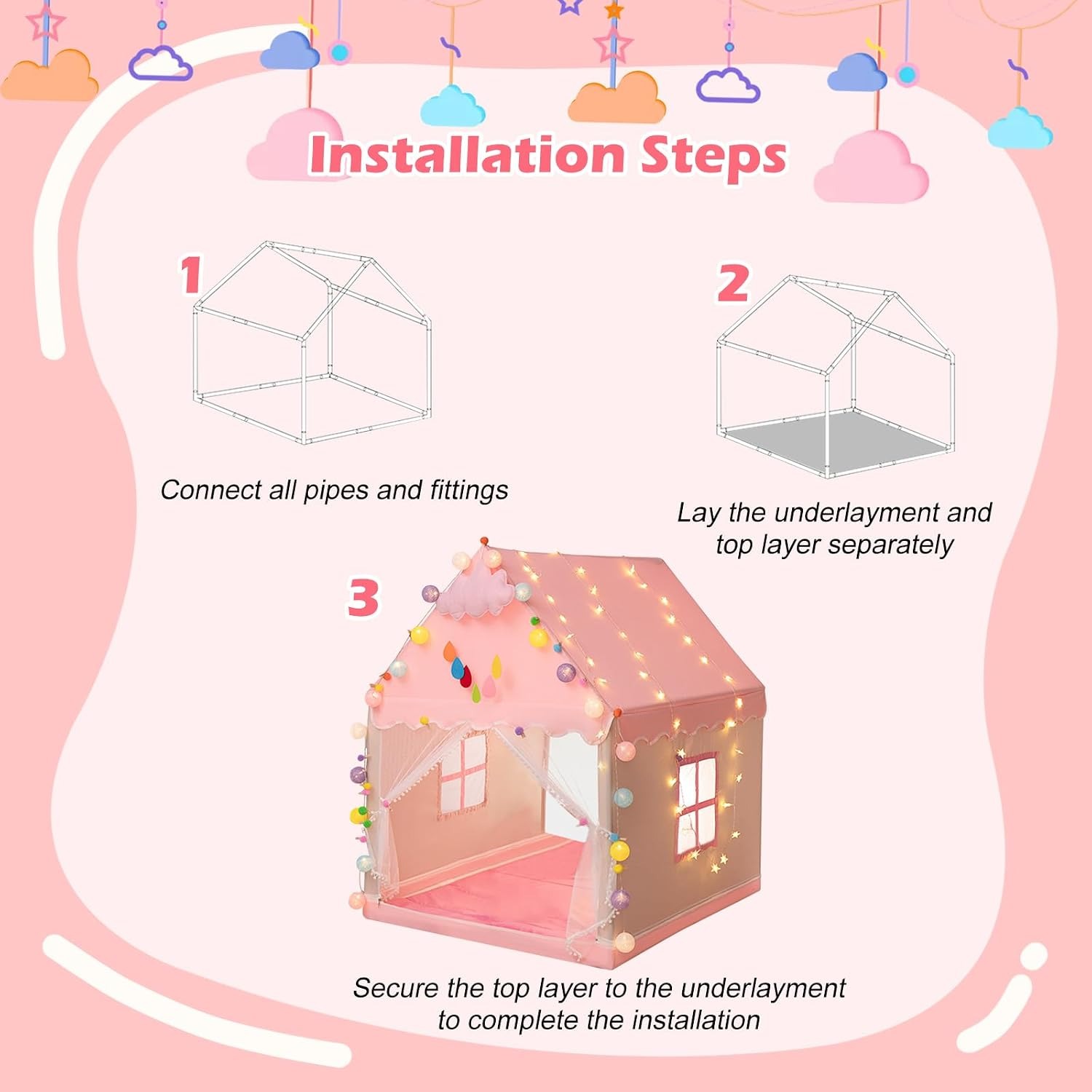
Even though assembly is listed as not required, an adult should handle setup, check the pole joints and make sure everything sits square before children pile in. Set it on a flat, level surface. Hard floors are fine, carpet is fine, soft uneven lawn is less ideal because the base can shift.
Keep supervision proportionate to age. A five-year-old reading quietly inside needs almost none. A young child who likes to grab and pull needs an adult in the room. Teach children not to lean their full weight on the walls, which is the single most common cause of a play tent going over.
Do not drape heavy items from the frame, do not put the tent on a raised surface, and keep cords, small parts and anything hot well away from it. None of this is complicated, it is the same common sense you apply to any play equipment.
Making it somewhere they want to be
The tent is the shell. What goes inside decides whether it becomes a favourite spot or a dust collector. A soft rug or folded quilt on the floor makes an enormous difference to how long a child will stay in there. Two or three cushions, no more, or there is no room left for the child.
A small basket of books works better than a pile of toys, because toys migrate out and never come back. Fairy lights are popular but place them where they will not be tugged. Some families add a cuddly toy that lives only in the tent, which gives the space a sense of identity.
Rotate what is inside every few weeks. A bedroom play tent that always contains the same four things gets ignored. Swap the books, add a torch, put a cardboard box in there and call it a control panel. Small changes keep interest alive for months.
Care and storage
Cleaning is simple. Spot clean fabric marks with a damp cloth and a little mild soap, then let the panels air dry fully. Avoid bleach and avoid the tumble dryer. Wipe the poles down with a dry cloth every so often and check that the joints are still snug.
If the tent lives outside for a day, bring it in before evening damp sets in and let it dry completely before folding. Storing fabric away while it is still damp is the fastest way to end up with a musty smell that is hard to shift.
For longer storage, fold it down and keep it somewhere dry and out of direct sunlight, since strong sun fades fabric over time. Under a bed or on a cupboard shelf is plenty. Taking a quick photo of how it is assembled before the first takedown makes the next setup faster.
The short version
This is a light, roomy teepee tent for girls and boys made from polyester cotton panels on an aluminium frame, measuring 140 x 120 x 142 cm assembled and weighing around 3 kg. Side windows keep it airy and let you check in from outside. The recommended age range is 0 to 6 years, and the maker states assembly is not required.
Buy it if you have a clear corner of roughly 140 x 120 cm, a child in the den-building years, and you would like that instinct to produce something sturdier than a sheet over two chairs. Measure your space first, set it up on a flat floor, put a rug and a couple of books inside, and then leave them to it. That last part is the whole point.