
The complete guide
How to Choose a Kids Play Tent That Actually Gets Used
The problem with a room that has no small spaces
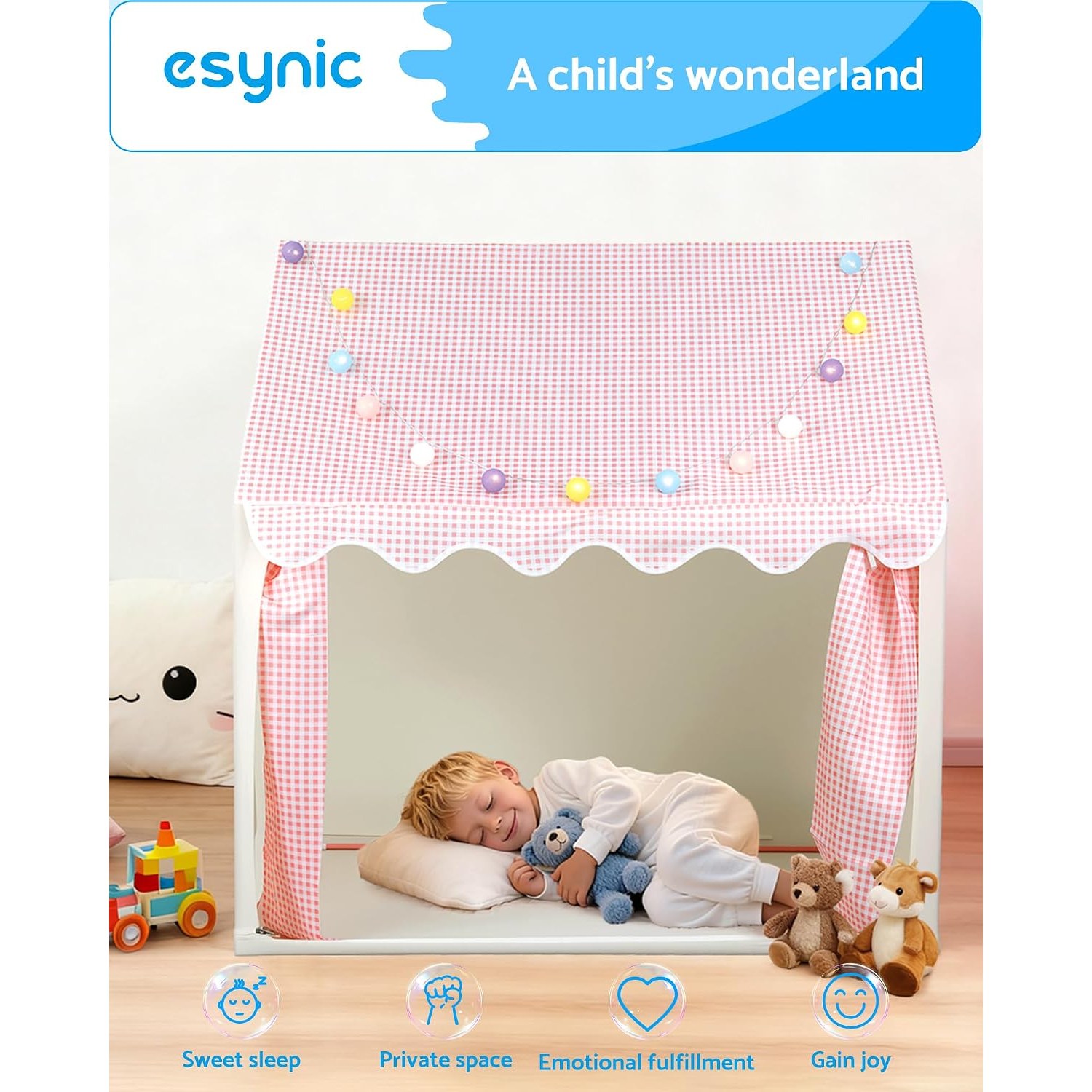
Children like corners. Watch any young child in a big open living room and they will eventually crawl behind the sofa, under the table, or into the gap beside the bookcase. It is not shyness. Small enclosed spaces feel safe, and a space that is clearly theirs feels even better. The trouble is that most homes are designed entirely for adults, so the only small spaces available are the ones that are inconvenient or slightly dangerous.
A play tent solves that without any building work. You put one down and a patch of carpet becomes a house. Children understand the rules instantly. They take things in there, they ask people to knock, they sit inside and talk to themselves. It is one of the few toys that creates a behaviour rather than just filling a toy box.
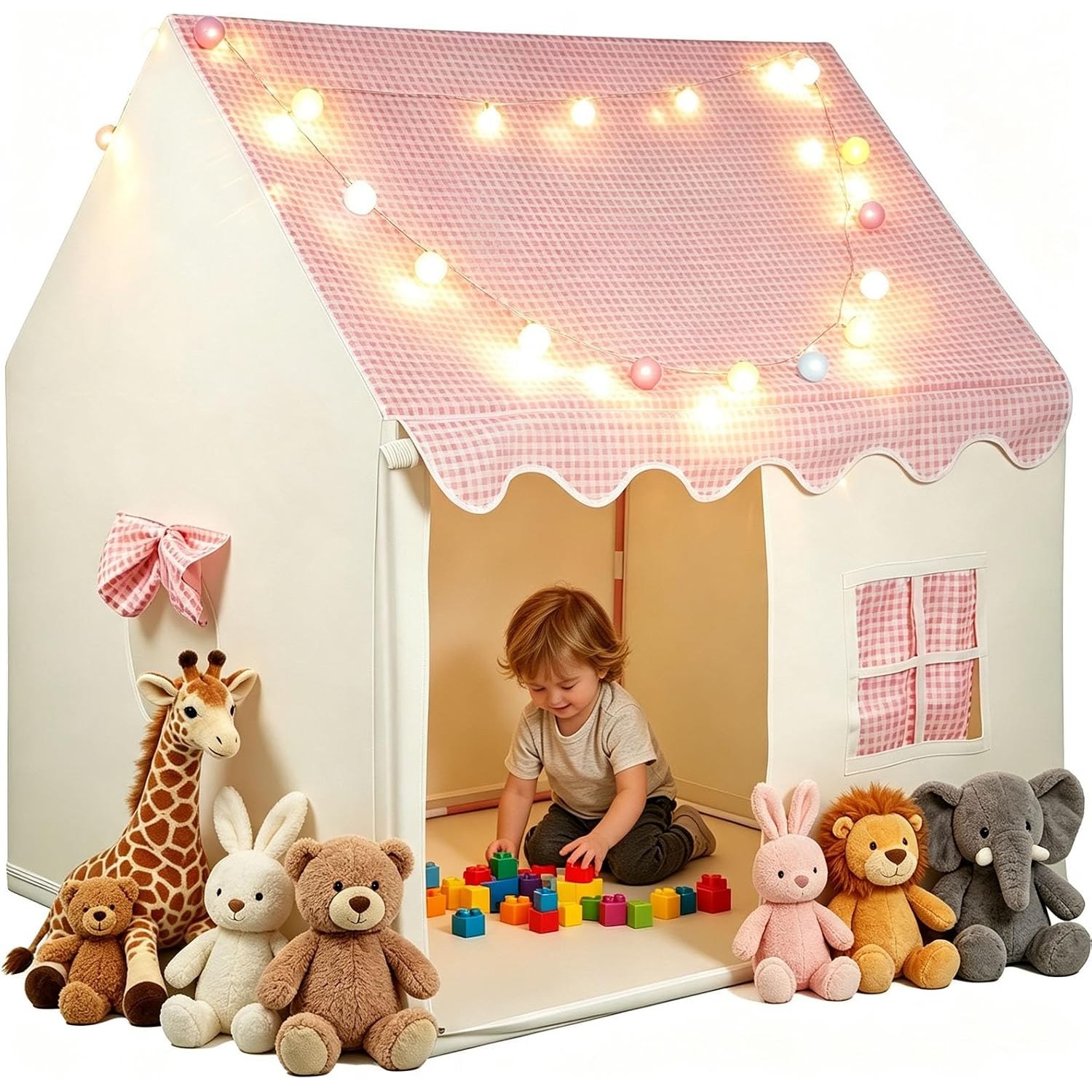
This particular foldable play tent with LED lights is 120 cm wide, 100 cm deep and 130 cm tall. That is a useful size. Big enough that two or three children fit comfortably, small enough that it does not swallow a bedroom. And because it folds, you are not making a permanent decision about your floor space.
How it goes together
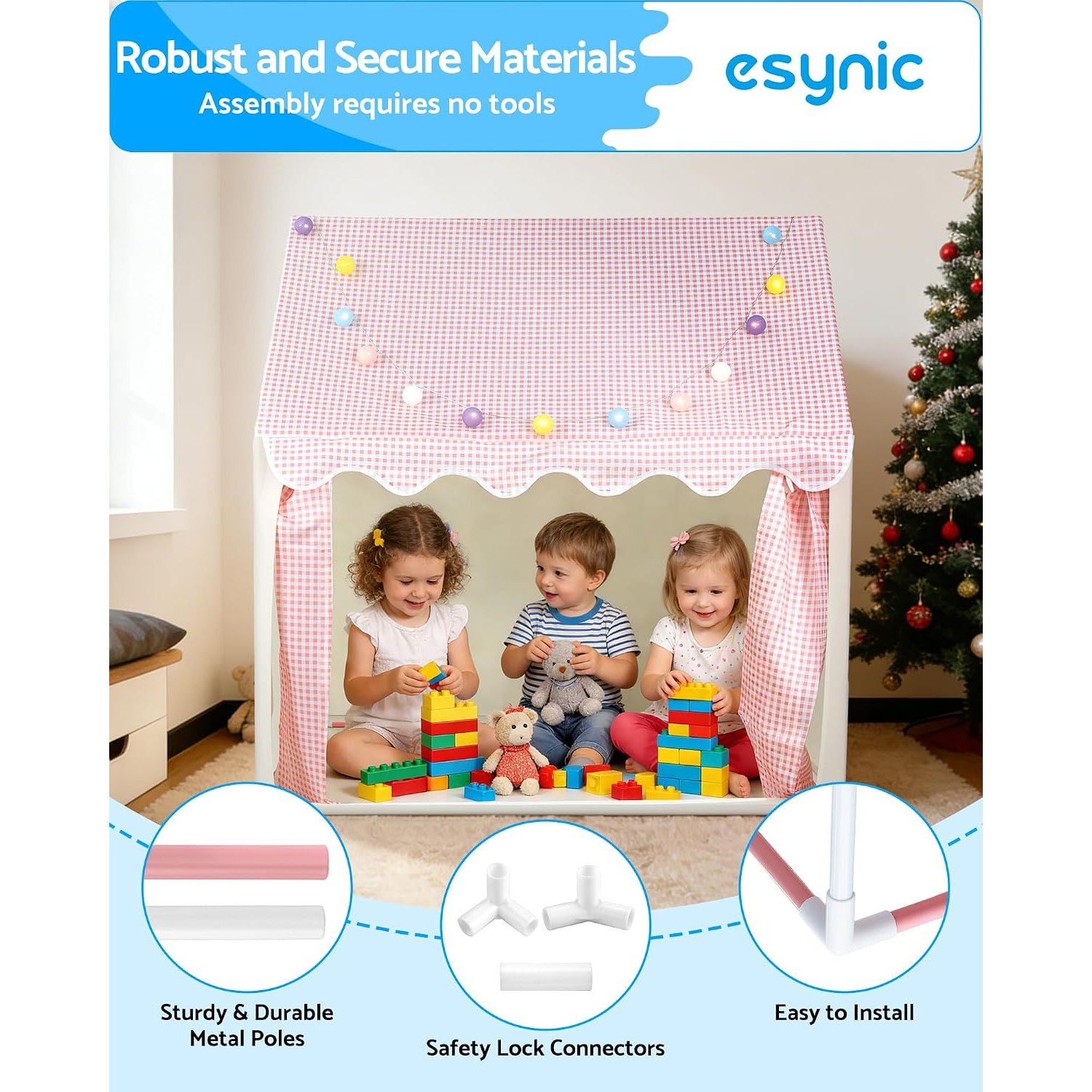
The structure is simple. Metal support poles form the frame, plastic connectors join them, and a polyester cover slides over the top. There are no tools involved. You lay the poles out, click the frame together, then fit the cover and straighten it up.
The first build takes about ten minutes. After that, if you take it down and put it back up seasonally, it is quicker because you already know how the pieces relate. Plenty of parents involve their children in this part, which is a nice bit of practical problem solving for small hands and makes the tent feel like something they helped create.
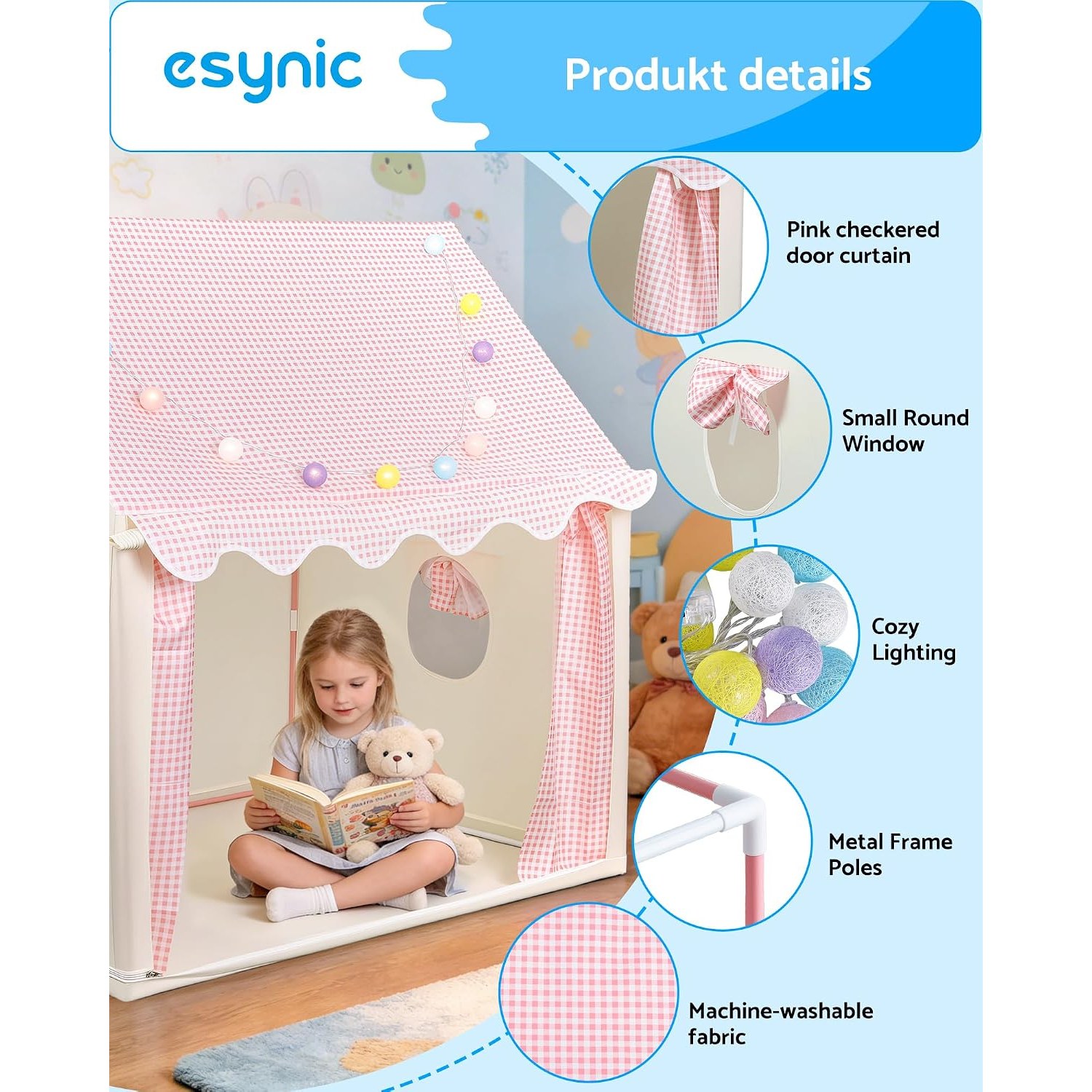
The metal frame is worth pausing on. Cheaper play tents often use flexible fibreglass rods that work fine for a few months and then start to bend or splinter. Metal poles hold their line. The tent keeps a proper house shape instead of slowly turning into a lump of fabric on the floor, and that matters more than it sounds, because children lose interest in a den that looks defeated.
Light, air and getting in and out
Two things sink a lot of play tents. One is a tiny entrance that young children struggle with. The other is a sealed interior that gets warm and stuffy within ten minutes.
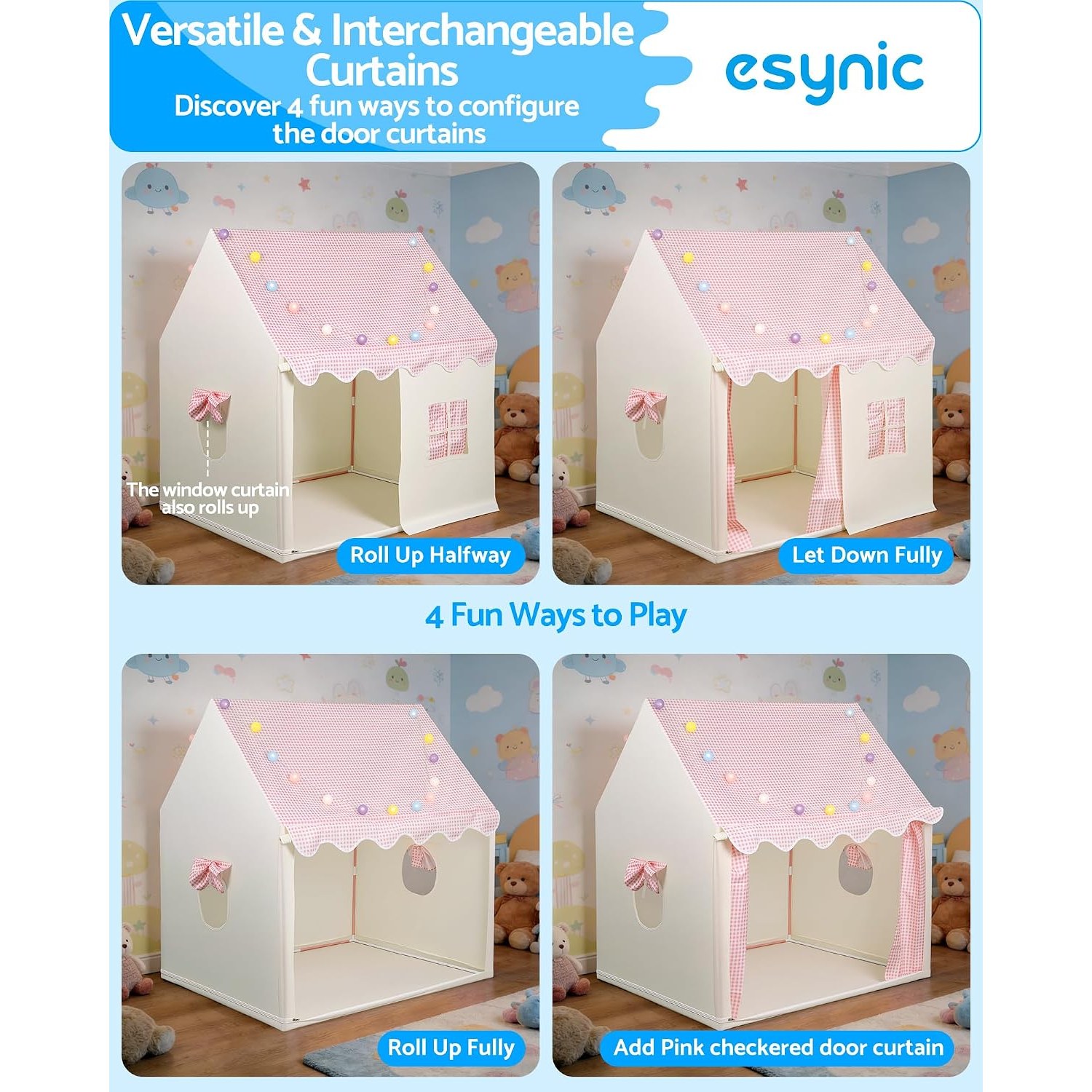
This design handles both. The front has a large side-by-side opening, so children can walk in rather than wriggle through a slot. For a young child still working on balance, that is the difference between using the tent happily and giving up on it. There are also two windows, which do the boring but important job of moving air through the inside and letting daylight in. You can look in from across the room without disturbing anyone, which is handy during naps.
The included cotton ball light string is the part children remember. Soft points of light along the frame change the mood completely, especially in the evening. It makes the inside feel like a proper hideaway rather than a fabric box, and it gives a bedtime routine somewhere to go. Many families use it as the best reading nook tent moment of the day, twenty minutes of books inside before teeth and lights out.
Who it suits
The recommended age range runs from 18 months to 12 years, which is unusually wide for a toy, and it holds up in practice because different ages use it differently.
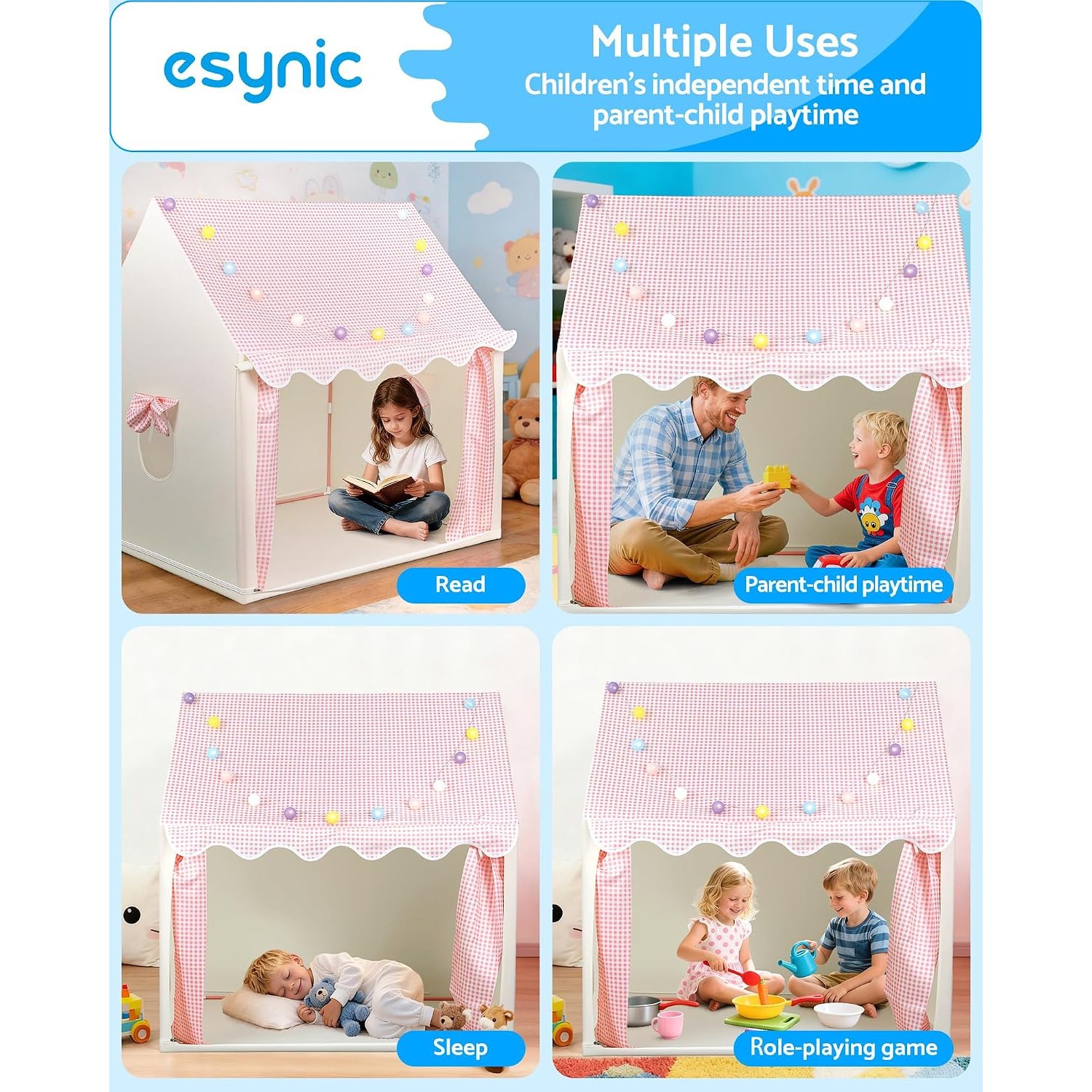
Young children use it for hiding games and for carting objects in and out. That is most of what young children do with any space. Preschoolers start inventing scenarios, so the tent becomes a shop, a cave, a hospital for teddies. School-age children, especially around six and up, treat it as a base. Somewhere to take a book or a tablet and be left alone for a while. Older siblings often reclaim a tent that was bought for a younger child.
It also works for households where more than one child needs a turn. Two can sit inside together without much elbowing, which makes it one of the better play tents for siblings sharing a room. If your children are the type to argue about territory, be clear in advance about turns, because a tent is a very obvious thing to claim.
Where to put it
Indoors, the classic spots are the corner of a bedroom, a quiet end of the living room, or a playroom. You need a clear area of about 120 by 100 cm plus a bit of room to get in and out. Keep it away from radiators, heaters, curtains and anything that could be pulled down, and leave the entrance unobstructed so a child inside can always come out easily.
Outdoors, it is fine on a lawn or patio on a dry day, and a garden camp is a good way to extend an afternoon. It is not a weatherproof camping tent. Bring it in before rain and do not leave it out overnight, because damp gets into the fabric and sits on the metal. Shade is better than full sun, both for the children and for the colour of the cover.
If you are shopping for the best indoor outdoor play tent for a family that moves between house and garden, the folding design is the feature that makes it workable. Carrying it out and back takes less effort than dragging a rigid playhouse around.
Care and keeping it decent
Polyester is forgiving. Everyday marks come off with a damp cloth and a little mild soap. If the care label on your item allows machine washing, a gentle cold cycle works, and then you air dry it completely before putting it back on the frame. Do not tumble dry and do not iron it. Take the light string off before anything gets wet.
Wipe the metal poles dry if they have been outside, since damp metal can leave marks on fabric over time. When the tent is packed away, store the cover and frame flat somewhere dry, out of direct sunlight. Sun fades colour faster than washing does.
The manufacturer lists an 18 month warranty, so keep your order details somewhere you can find them.
What to think about before you buy
Measure first. 120 by 100 cm sounds small on paper and looks bigger in a real room, particularly once you allow space to walk around it. If your floor is tight, remember you can fold it between uses.
Think about ceiling height too. At 130 cm the tent itself is short, but if you plan to put it on a raised platform or a bed, check the clearance.
Then think honestly about how your child plays. If they like enclosed spaces, books, quiet games and imaginative play, a tent gets used constantly. If they are a whirlwind who only wants to climb and run, a tent will still get used, but you will need to set the rule early that it is a house, not a climbing frame.
The short version
This is a 120 x 100 x 130 cm play tent with a metal frame, a washable polyester cover and a cotton ball light string in the box. It goes up in about ten minutes with no tools, has a wide front opening and two windows, and folds flat when you want your floor back. It suits children roughly 18 months to 12 years, holds two or three at once, and works indoors or in the garden on dry days. The warranty is listed as 18 months.
If you want a small private space for a child without rearranging your home, this does the job and gets out of the way afterwards.