
The complete guide
How to Choose a Kids Teepee Tent That Actually Gets Used
The problem with most children's play spaces
Children do not need more floor. They need somewhere small. Anyone who has watched a four year old crawl under a dining table with a torch and a blanket already knows this. The table gets cleared at dinner time, the blanket goes back on the bed, and the den disappears. Then it has to be rebuilt tomorrow.
A teepee tent solves that in the simplest way possible. It is a permanent den that takes up about as much room as an armchair. It stays up between uses, so a child can wander into it without asking anyone for help, and it folds away when you need the floor back for a birthday party or a visit from relatives.
The second thing it solves is quieter. Shared bedrooms, open plan living, siblings who want different things at the same time. A tent gives one child a place to shut the flap and be left alone for twenty minutes. That is worth more than it sounds.
What this teepee is made of and why that matters
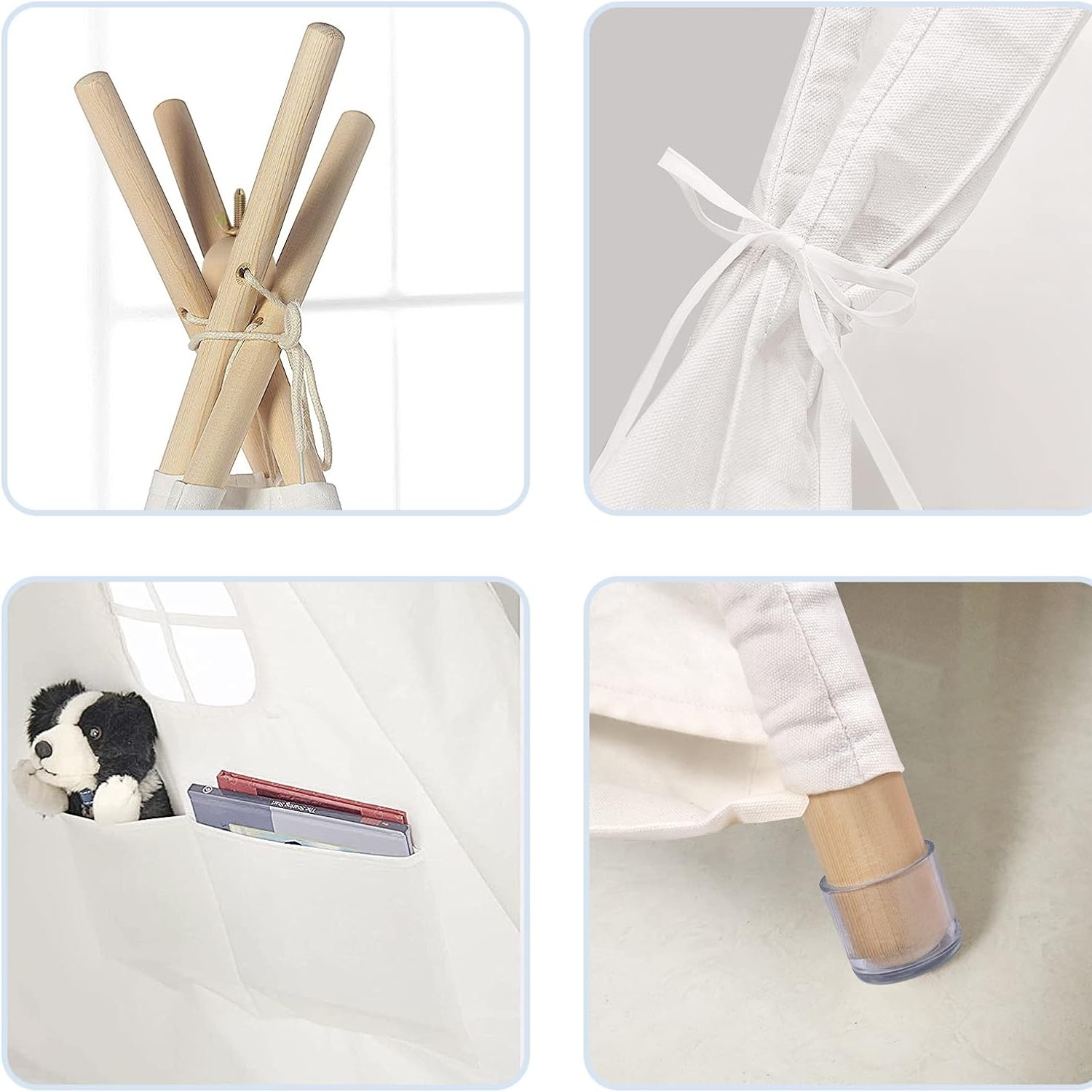
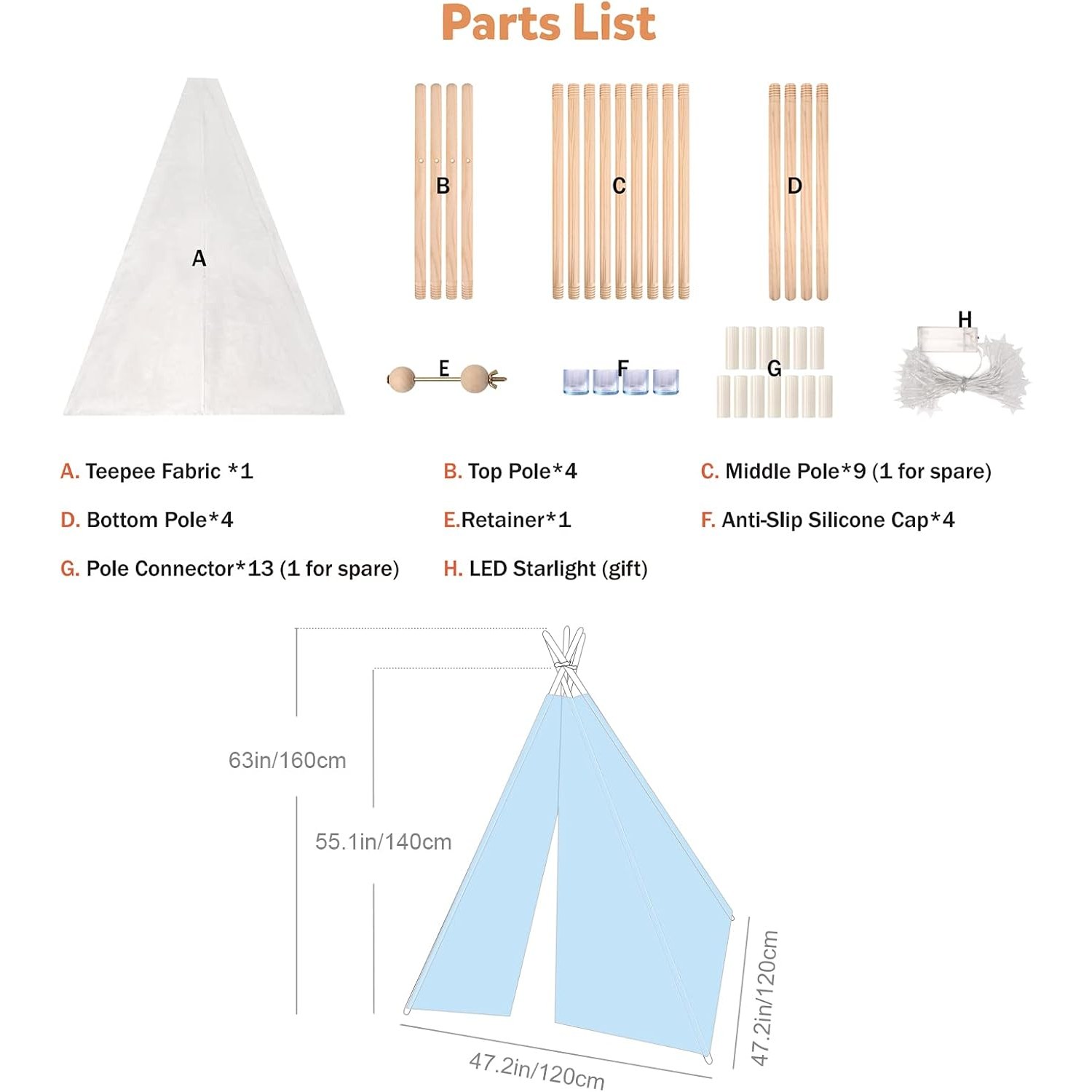
The frame here is pine. Four poles cross near the top and drop into sleeves sewn inside the canvas, so the wood is covered by fabric along its whole length while the tent is standing. That detail matters more than it looks on a product photo. Exposed poles get knocked, climbed on and grabbed. Hidden poles just hold the shape.
The poles are sanded before packing. Raw pine can be rough, and rough pine near a child's hands is a problem nobody wants to discover on day two. Run your hand down each pole when you unpack it anyway, out of habit.
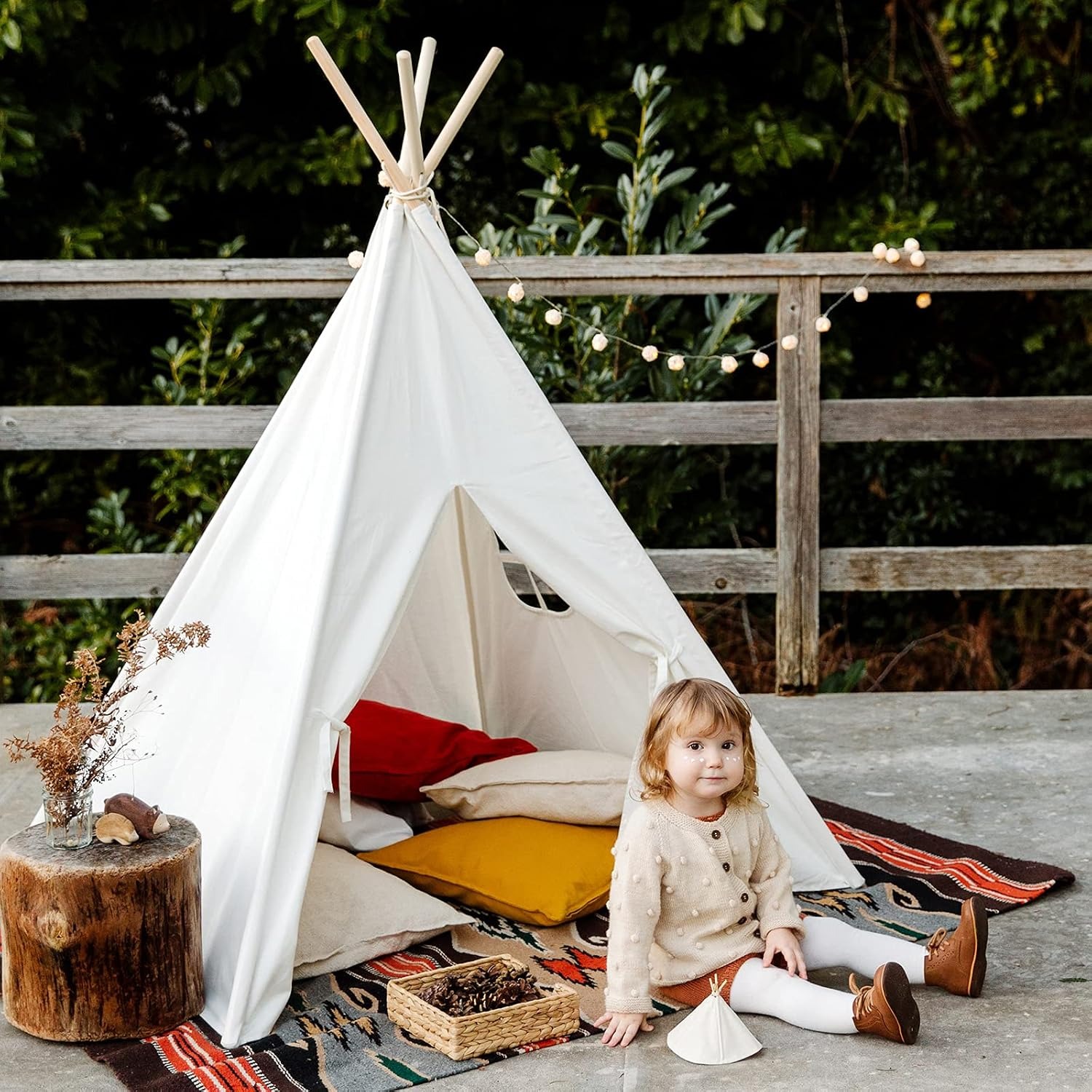
The panels are cotton canvas, unpainted, in white. Unpainted canvas has a slightly matte, textured look that sits well in a bedroom. It also means there is no printed finish to flake or crack where the fabric folds. The trade off is that white shows marks, so expect to spot clean it now and then. That is a fair swap for a fabric that goes with every wall colour and every set of bedding you are likely to own.
Plastic connectors hold the crossing point at the top. They take the strain of the poles pulling against each other, which is what keeps the whole thing standing rather than sliding into a heap.
The fairy lights are not just decoration
It is easy to dismiss the string light as a marketing extra. In practice it is the thing that decides whether the tent gets used in the evening or sits empty after four o'clock.
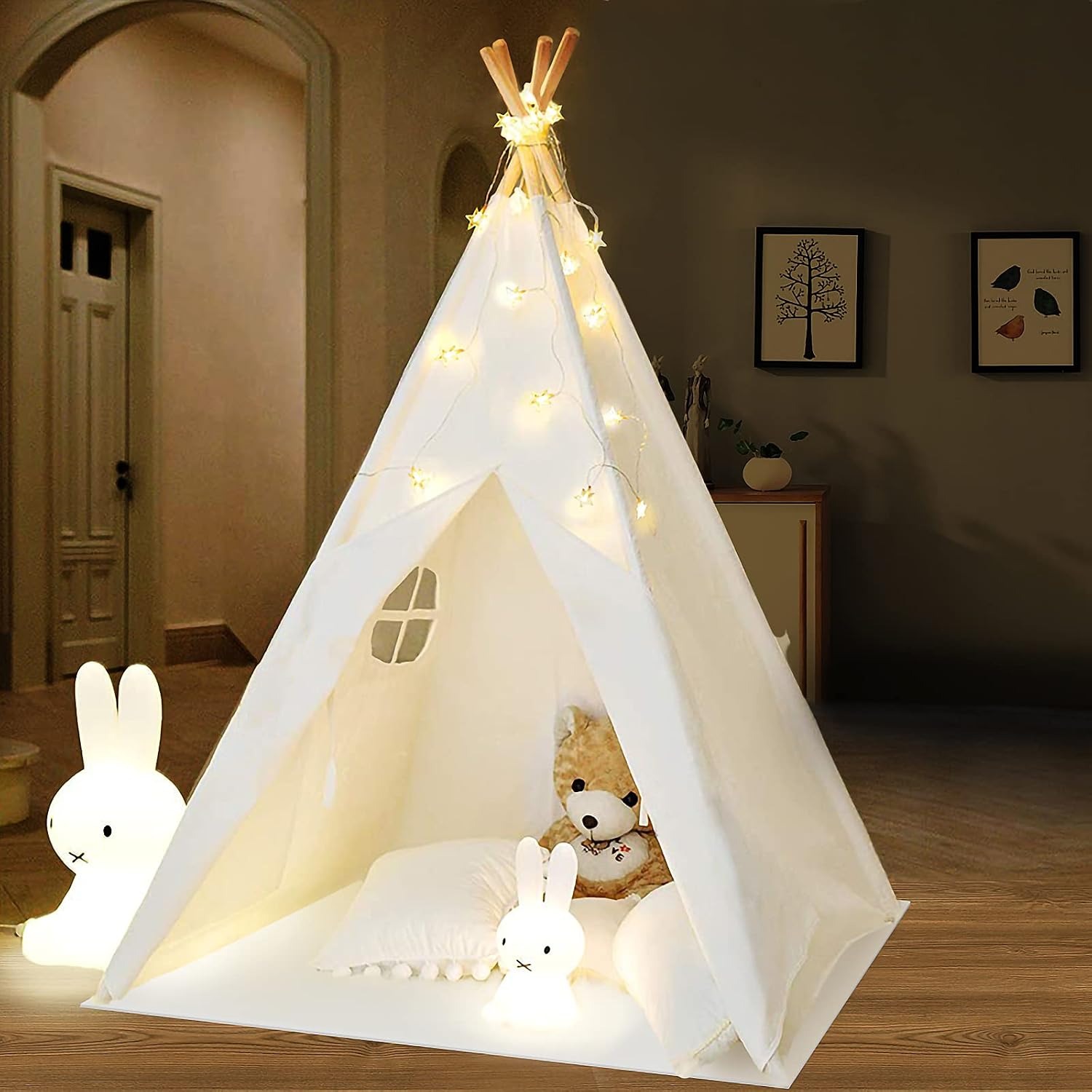
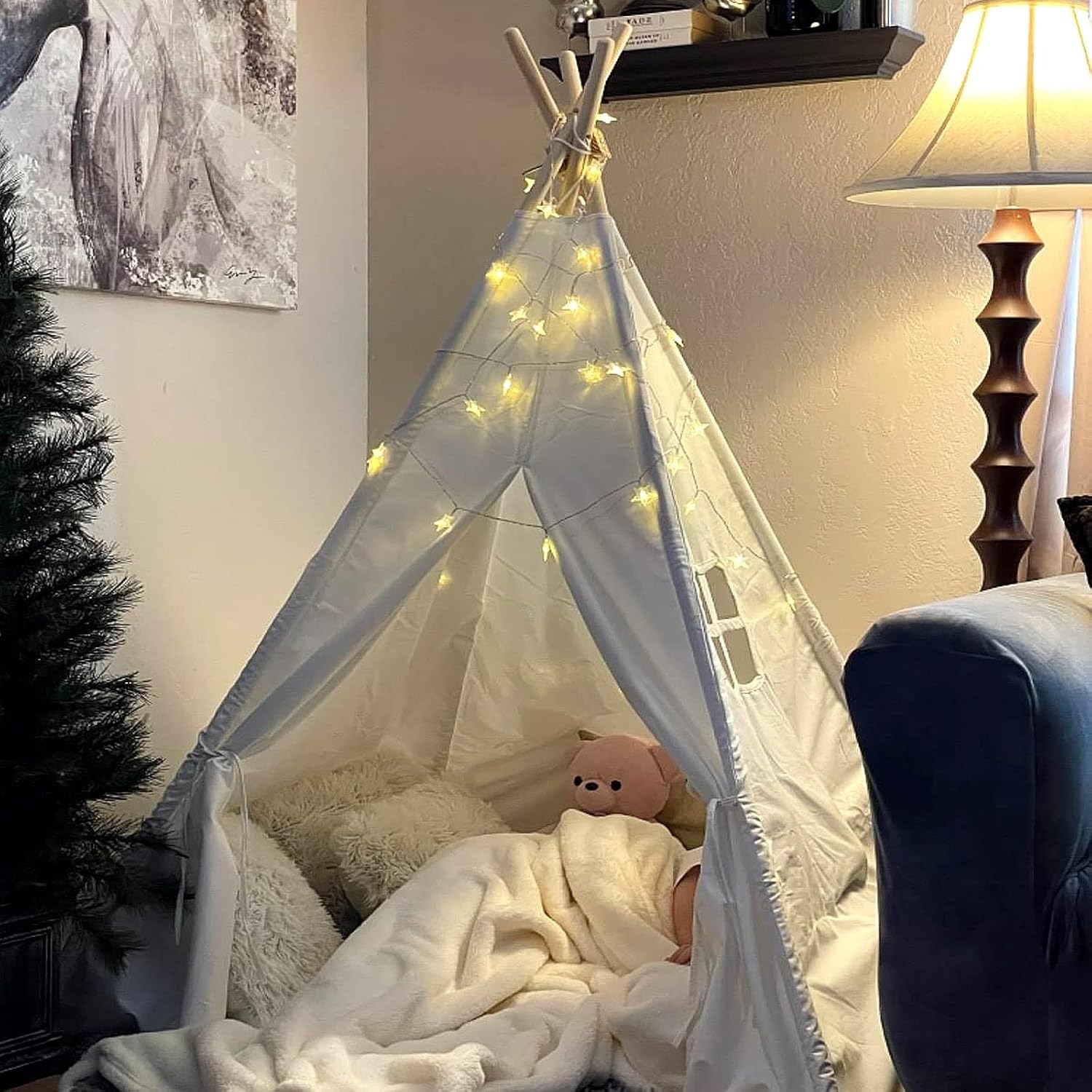
A tent without a light is a dark box once the sun goes down. A tent with a soft string light along the poles is somewhere a child actively wants to be. It reads as cosy rather than gloomy, and it makes the space work for the hour before bed, which is when most parents want the quiet corner to exist.
The light runs on batteries and is operated manually, which means no cable running across the floor and nothing plugged into a wall socket near the play area. Batteries are not supplied, so add a set when you order. Take them out if the tent is going into storage for a season, because leaving batteries in a light for months is how battery compartments get ruined.
Sizing it for your room
The assembled tent is 119.4 cm square and 157.5 cm tall. In old money that is 47.2 by 47.2 by 62.9 inches.
Before you order, go and stand in the corner you have in mind and measure a square about 1.2 metres each way. Then add a bit of breathing room at the front for the door flap to roll back and for your child to crawl in without squashing the panel. In most bedrooms a free corner handles this comfortably. In a very small room, you may need to shift a chair or a toy box.
Height is less of an issue than people expect. At 157.5 cm the peak sits below most ceiling lights and well below standard ceiling height, so it will not interfere with a light fitting unless the corner you have chosen is directly underneath one.
If you are specifically after the best teepee tent for young children, think about where you will be sitting. Younger children like an adult within sight, so a corner of the living room often beats a corner of the bedroom for the first year or so.
Who it suits
The suggested age range is 36 months to 12 years, and that range is honest. At the younger end, children use it for hiding, stuffed animals and dragging every cushion in the house inside. By six or seven it becomes a reading spot. By ten it is where they take a tablet or a book to get away from a sibling.
It also works for children who find busy rooms hard. A small enclosed space with soft walls and a dim light is genuinely calming for a lot of kids, which is why these tents turn up in classrooms and therapy rooms as well as bedrooms.
What it is not is a climbing structure. The frame is light by design, because a light frame is a safe frame if it does get pulled. Children who treat furniture as equipment will need the usual reminder that the tent is for sitting in, not swinging on.
Setting it up without losing an afternoon
One adult can do this. Lay the canvas out flat, find the sleeves along the inside of the panels, and feed a pole through each one from the bottom. Gather the pole tops, fit the connector, and then walk the base of each pole outwards until the tent stands on its own.
The only part that catches people out is spacing the base. Too narrow and the tent is tall and wobbly. Too wide and the canvas sags. Nudge the feet a few centimetres at a time until the panels pull taut and the whole thing feels planted.
Children usually want to be involved, which is fine, though it is worth doing the pole assembly yourself and letting them handle the cushions and the light. An adult should always be present during setup.
Keeping it in good shape
Canvas care is straightforward. Spot clean marks with a damp cloth and a small amount of mild soap, work gently rather than scrubbing, and let the panel dry completely before folding. Skip the bleach and keep it out of the tumble dryer.
Poles want a dry cloth and dry storage. Damp is the enemy of sanded pine, and a pole that has been stored in a shed over winter will not feel as smooth in spring.
If the tent is going away for a few months, take the batteries out of the light, fold the canvas loosely rather than creasing it hard in the same spots, and bundle the poles with a tie so none go missing. That last point sounds obvious and is the single most common reason a perfectly good tent never comes back out.
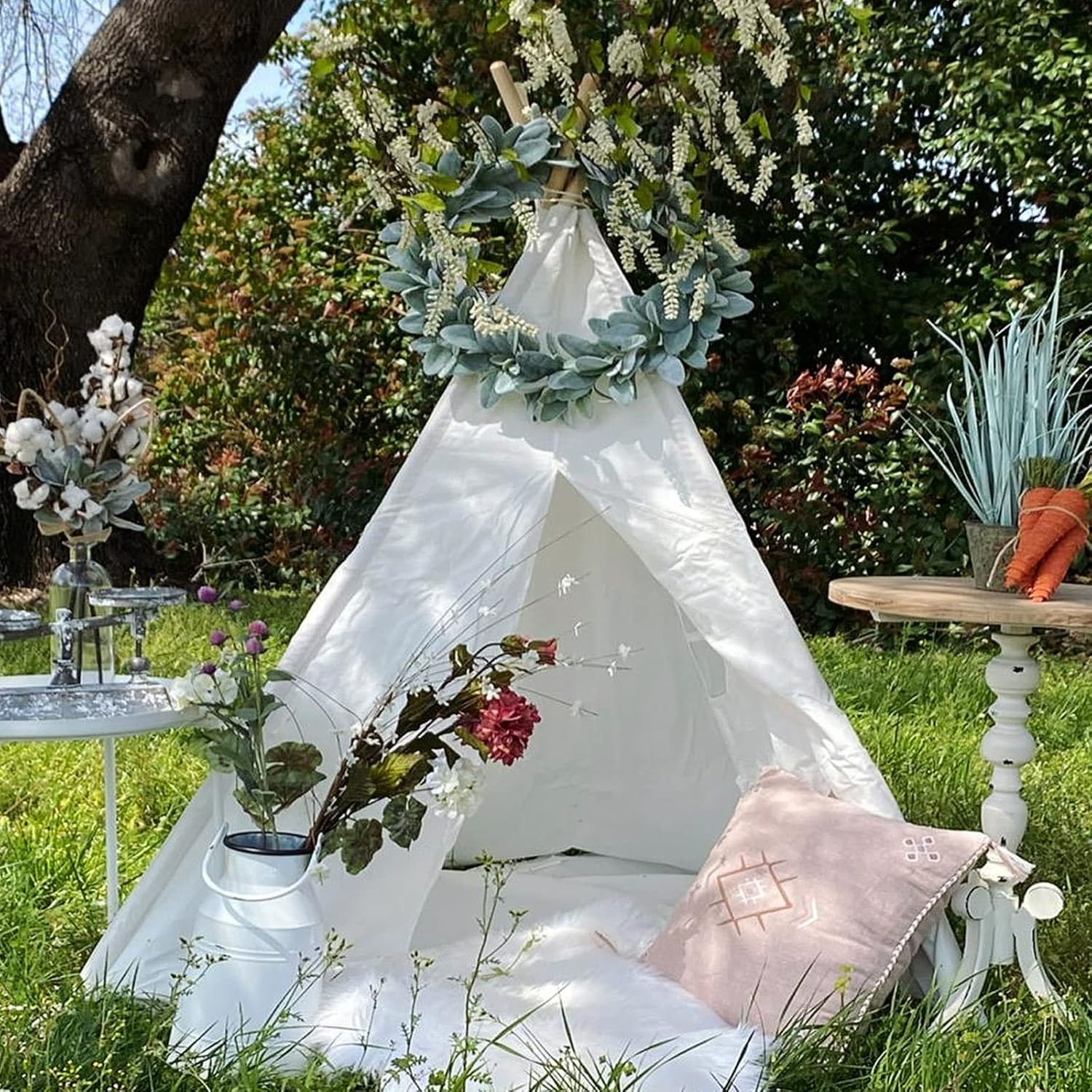
Outdoors, treat it as fair weather only. Cotton canvas handles a dry garden afternoon well and does not handle rain or overnight dew.
The short version
This is a cotton canvas teepee on sanded pine poles, 119.4 cm square and 157.5 cm tall, with a flap door, a mesh window and a string light in the box. It sets up in minutes, folds flat, and suits children from around three up to about twelve.
Buy it if you want a quiet corner that stays put without eating a room. Measure your corner first, grab batteries for the light, and put a cushion and a couple of books inside before you show it to your child. That first impression is what decides whether it becomes the favourite spot in the house.