
The complete guide
How To Choose A Playhouse Tent Your Child Will Actually Use
The problem with most play tents
Plenty of children's tents get opened on a birthday, used hard for a week and then shoved behind a wardrobe. It is rarely because the child lost interest in playing. It is usually because the tent itself got in the way.
The common faults are easy to spot once you know them. The tent is too small, so only one child fits and the game ends in a squabble. It has one narrow opening, so getting in and out is awkward and the child backs out on their knees every time. It gets hot and airless after ten minutes. Or the fabric picks up one spill and cannot be cleaned, so it gets quietly binned.
A double door playhouse tent solves a few of those at once, and it is worth understanding why before you spend money.
What the double door design actually changes
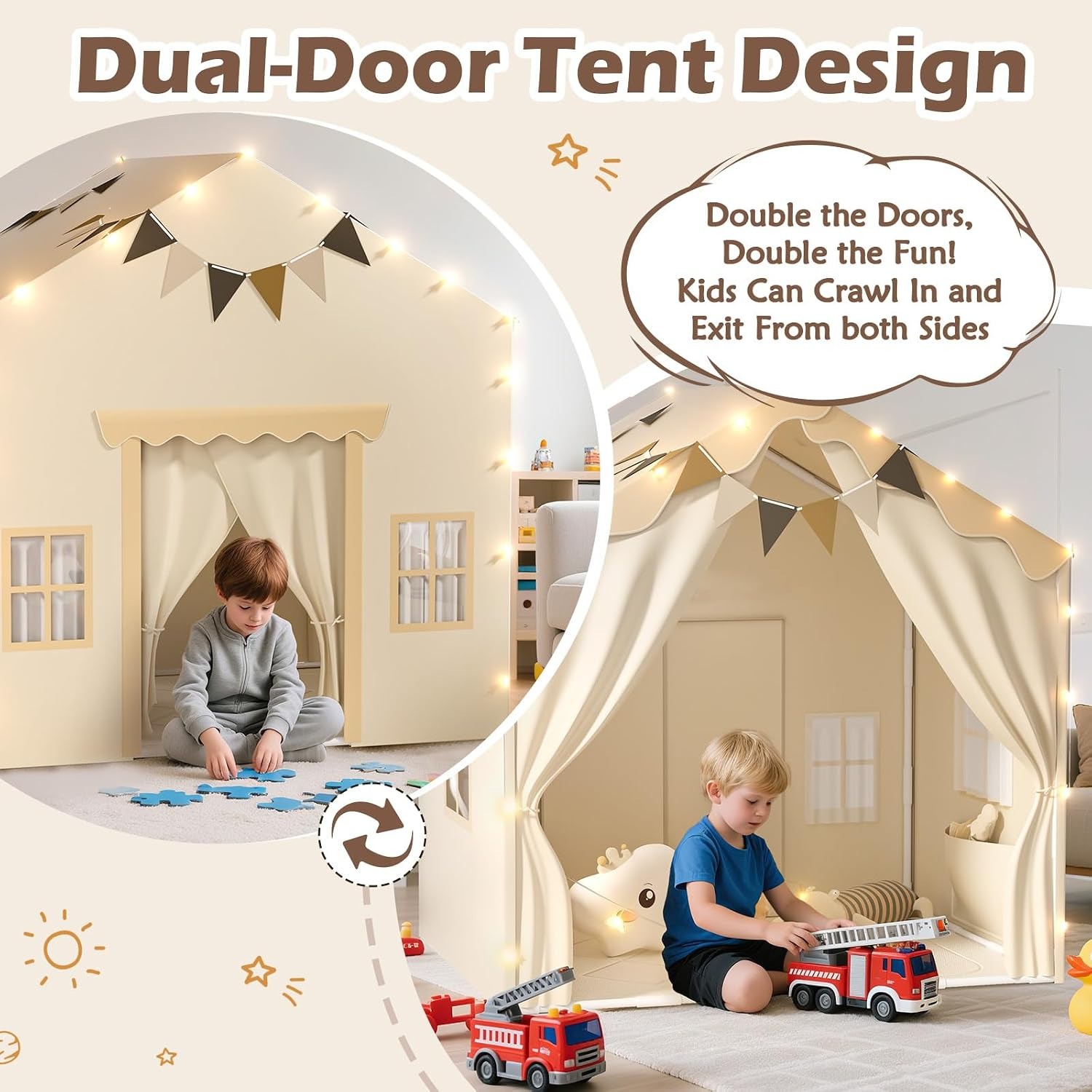
Two entrances sounds like a small detail. In practice it changes how children use the space.
With one door, a tent is a dead end. You go in, you come out the same way. With two, it becomes a passage. Children run through it, hide at one end and peek out the other, and set up games that use the tent as part of a bigger route around the room. That kind of open-ended play tends to hold attention for longer than sitting still inside a box.
It also helps when more than one child is involved. Each can claim an end. Nobody has to crawl over anybody else to get out. If you have two children close in age, or your home is the one where the neighbours' kids gather, the second door earns its keep fast.
Both doorways on this tent roll up and fasten. That matters more than it sounds. Some children want the doors shut and the world outside, especially after a loud day. Others want everything open so they can still see you. Being able to switch between the two in a second means the tent suits both moods.
Size, and being honest about your floor space
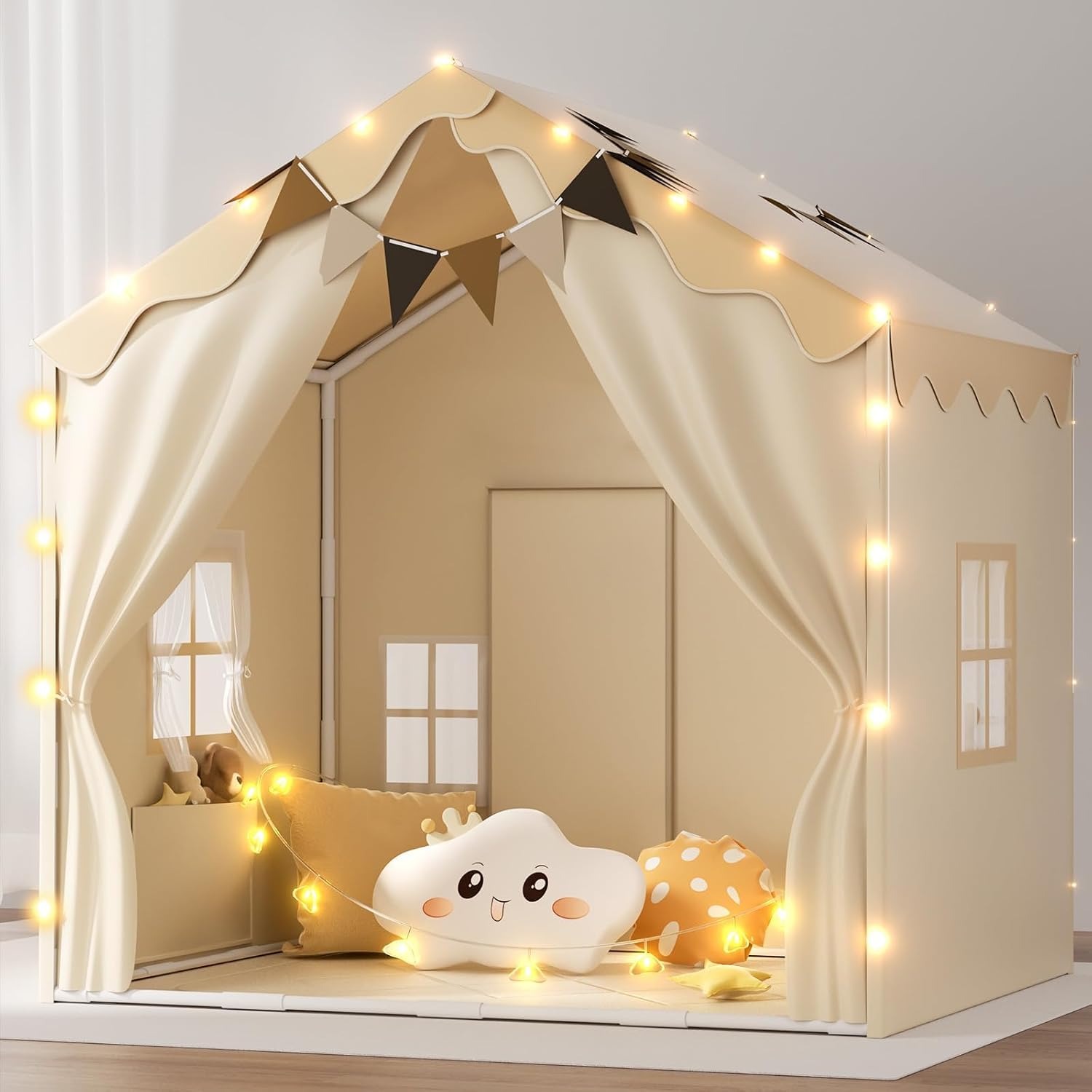
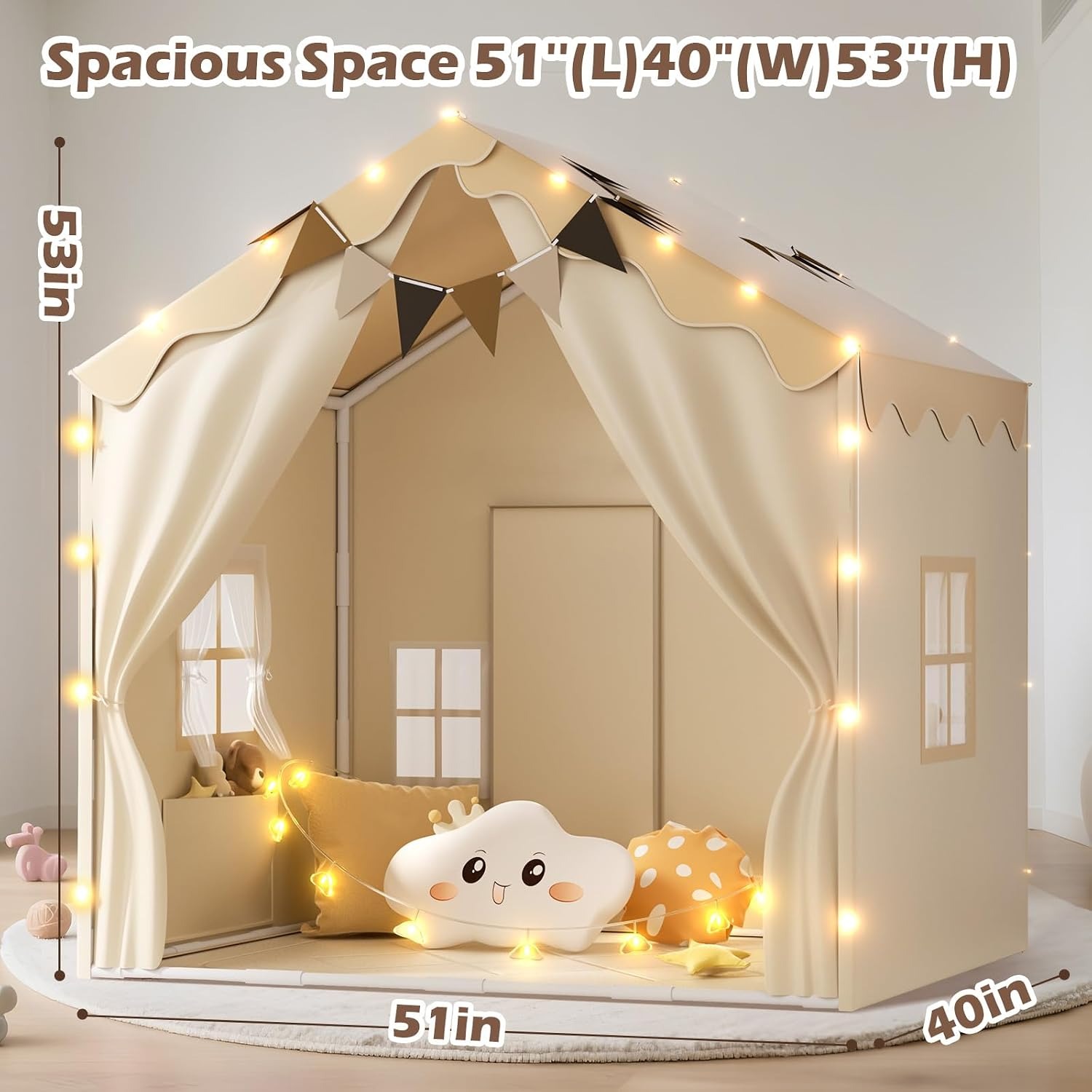
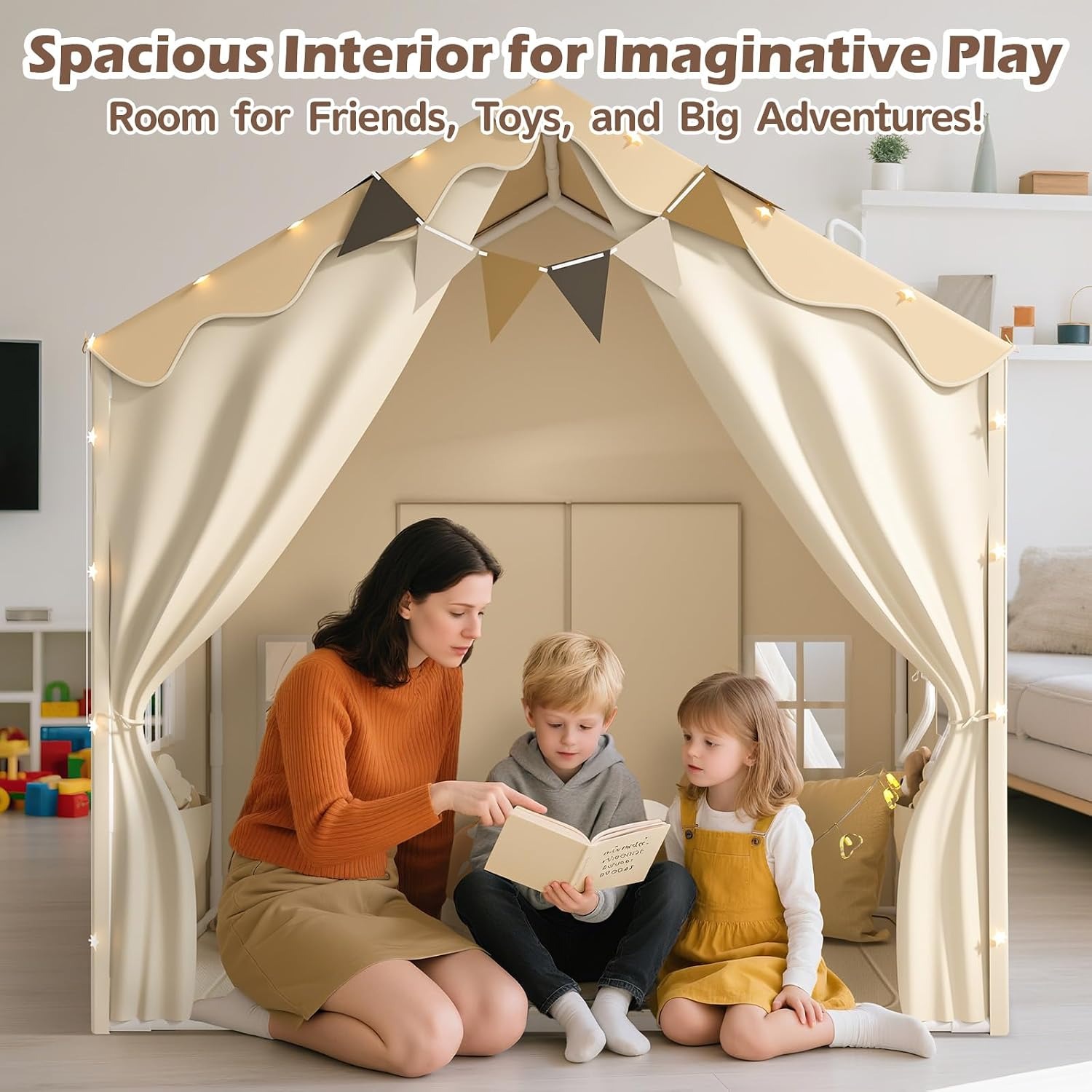
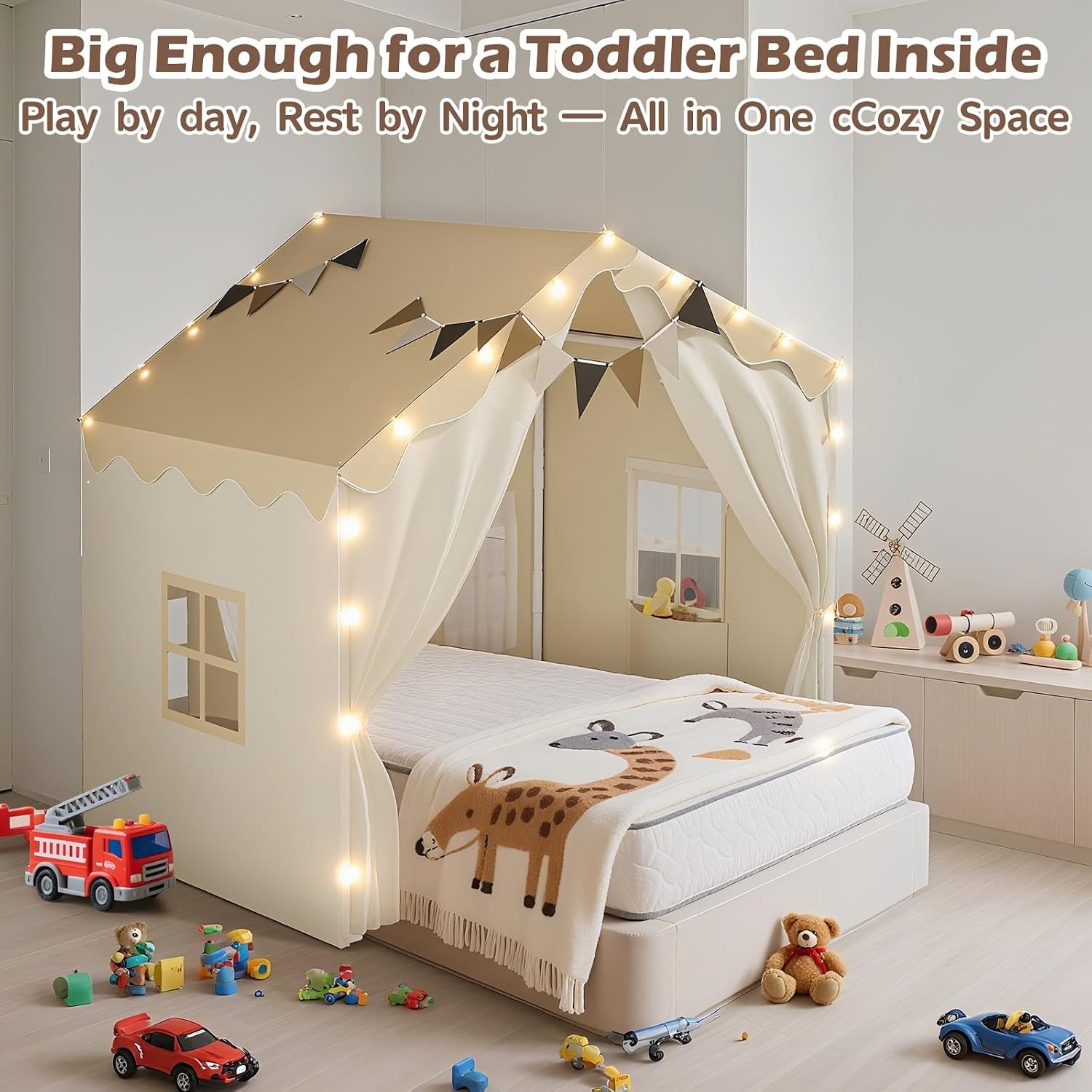
This tent measures 135 cm long, 102 cm wide and 130 cm tall when it is up. The interior is sized for three or four children sitting down, and an adult can fit for a story if everyone budges along.
That is a proper amount of space, which is good for play and less good for small bedrooms. Before you order, get a tape measure out and mark the footprint on the floor. Then think about where the doors will open. A tent pressed into a corner with one entrance against a wall loses half the point of having two.
The headroom of 130 cm means most children up to about seven or eight can stand up inside, hunched, and sit comfortably with plenty of room overhead. Younger children have more space than they will use.
Packed down, the tent is 40 x 31 x 20 cm. That is small enough to store on a wardrobe shelf. If your living room doubles as a play area in the daytime and an adult room at night, this is the kind of thing you can build in a few minutes and take apart just as quickly.
Ventilation and keeping an eye on things
Four mesh windows run around the sides. Air moves through, so the inside does not turn into a sauna during a long afternoon. Children playing in an enclosed fabric space get warm quickly, and stuffiness is a common reason they come out early.
The windows also do something useful for adults. You can glance over from the sofa and see what is happening without getting down on the floor and opening a door. Children get the feeling of privacy; you keep the supervision. That balance is a big part of what makes the best indoor play tent work in a real family home.
Storage is not a gimmick
Two large pockets are sewn to the inside walls. It is easy to dismiss this as a filler feature on the listing, but it changes how the tent gets used day to day.
Without pockets, everything a child brings into a tent ends up on the floor of it. Books, torches, soft toys, half a packet of raisins. There is nowhere to put anything, so the tent fills up and there is no room to sit. Then the whole lot gets tipped onto the bedroom carpet at bedtime.
With pockets, the books live in the tent. The torch has a home. The child can reach for what they want without crawling out, and clearing up at the end of the day is a matter of putting a few things back rather than excavating. If you are comparing options, the best play tent with storage pockets is usually the one that stays usable longest.
Materials, frame and cleaning
The fabric is canvas and the frame poles are polyvinyl chloride, commonly called PVC. The colour is khaki.
PVC poles are a sensible choice for a product like this. They are light, they do not rust, and they push together by hand with no tools and no small fixings to lose. Assembly takes a few minutes. It is also a nice job to do with a child, since there is nothing sharp and nothing that needs tightening. Let them hand you poles and help slide the fabric over.
The fabric being machine washable is the feature that decides whether a tent lasts a year or three. Children eat in tents. They take felt tips in. Something gets spilled eventually. Being able to strip the fabric off, run it through a gentle cycle and air dry it means that one accident does not finish the product off. For small marks, a damp cloth with a bit of mild soap handles things without a full wash.
Dry the fabric completely before you rebuild. Damp fabric folded over a frame and left in a corner is how you get musty smells and marks that will not shift.
Who this suits
This is a good match if you have a child aged three or over, a corner of floor you can give up, and a reason to want a defined play space. Recommended age is three years and up, with a minimum of 36 months.
It works particularly well for a few situations. Families who want a calm-down corner, somewhere a child can take themselves when a room gets loud. Households with two children who need their own space but share a room. Parents trying to build a reading habit, where having a dedicated book spot helps more than nagging does. Grandparents who want something that packs away between visits.
It is less of a fit if your only free space is very small, or if you need something genuinely weatherproof for the garden year round. This is built as an indoor play tent. Taking it outside on a dry, calm day is fine. Leaving it out in rain and wind is not what it was made for.
Making it a place they want to be
A tent on bare floor is just a tent. A few cheap additions turn it into somewhere a child chooses.
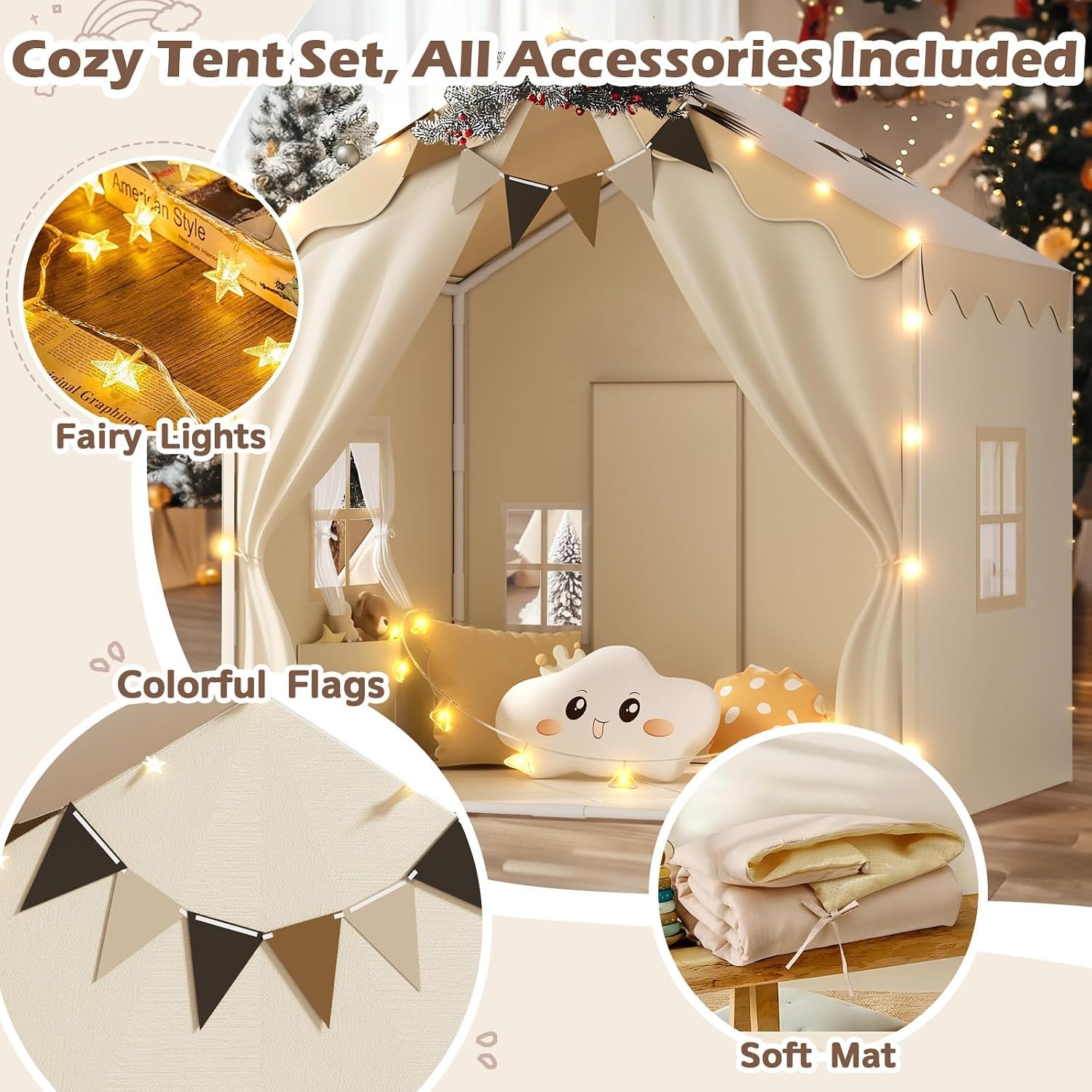
A soft rug or foam mat inside makes the floor comfortable enough to lie on. Two cushions do more than you would think. A string of battery fairy lights, bought separately, changes the feel of the space completely in the evening, and children love having their own light they control. Fill the pockets with a rotating handful of books rather than all of them, and swap the selection every couple of weeks to keep it feeling new.
Then leave it alone. Resist tidying the inside too often. Part of what children like about the best bedroom play tent is that it is theirs, arranged the way they want it, not the way you would.
The short version
This is a 135 x 102 x 130 cm playhouse-style tent for ages three and up, with two roll-up doorways, four mesh windows and two inside storage pockets. The canvas fabric is machine washable and the PVC frame builds without tools.
The two doors are the real difference. They make the tent something children move through rather than sit in, and they stop two kids getting in each other's way. The mesh keeps it from getting stuffy, the pockets keep it usable, and the washable fabric means one spilled drink does not end its life.
Measure your floor space first, give it a corner where at least one door can open freely, and it will get used far longer than the tents that end up behind the wardrobe.