
The complete guide
How To Choose A Princess Castle Play Tent That Actually Gets Used
The problem a play tent quietly solves
Most homes do not have a spare room for children. What they have is a corner of a bedroom, a patch of lounge carpet behind the sofa, or a bit of floor near the window that nobody uses for anything. Children fill those gaps anyway. They build forts out of dining chairs and bedsheets, they crawl under tables, they drag duvets around. The instinct is simple. They want a space that is theirs, with walls and a door, where the rules are slightly different from the rest of the house.
A pop up play tent gives them that without the sheet-and-chair chaos. It stands up on its own, it has a proper doorway, and it comes down again when you need the floor back. That last part matters more than people expect. A permanent wooden playhouse is lovely if you have the room, but a tent that folds flat and weighs about a kilogram can live in a wardrobe between uses.
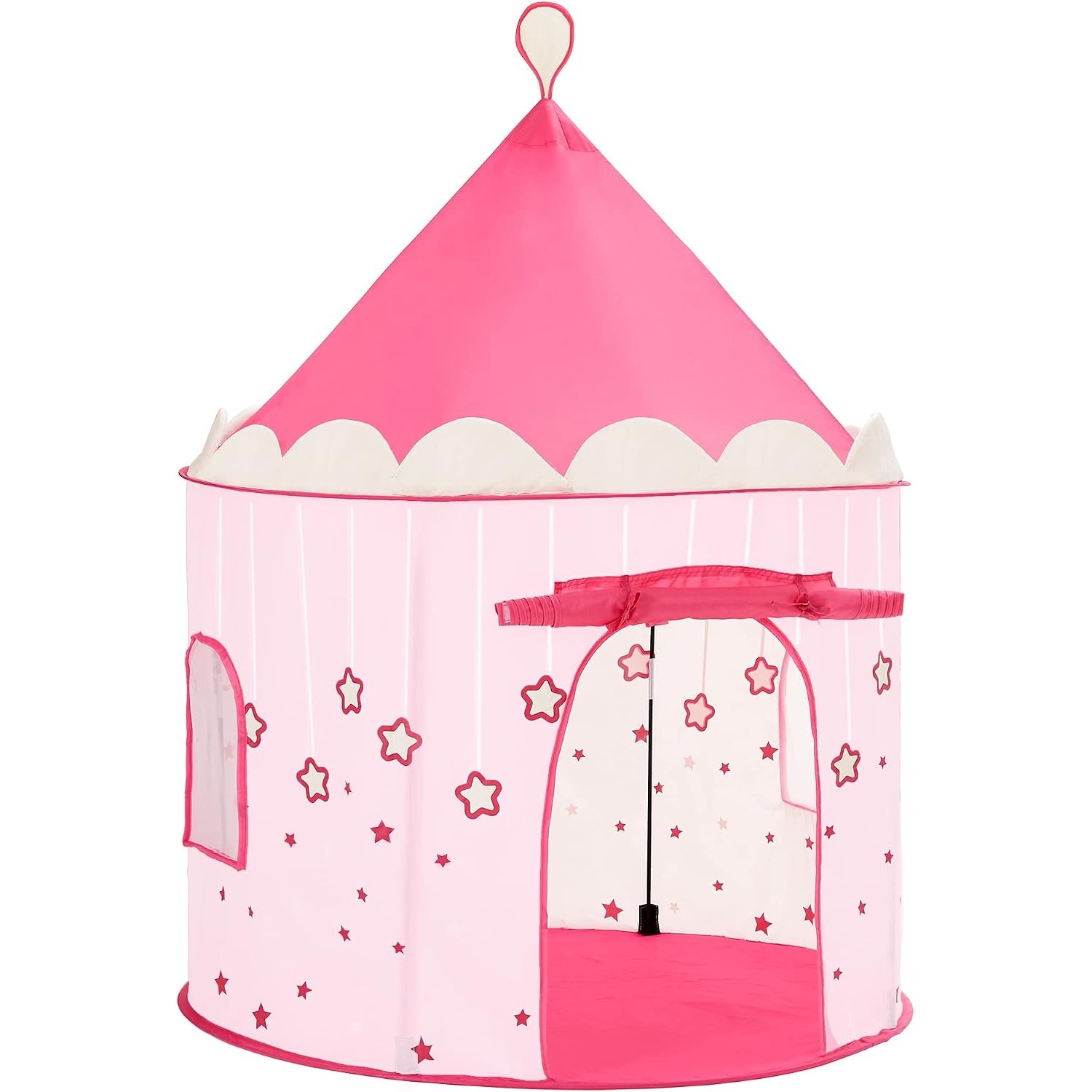
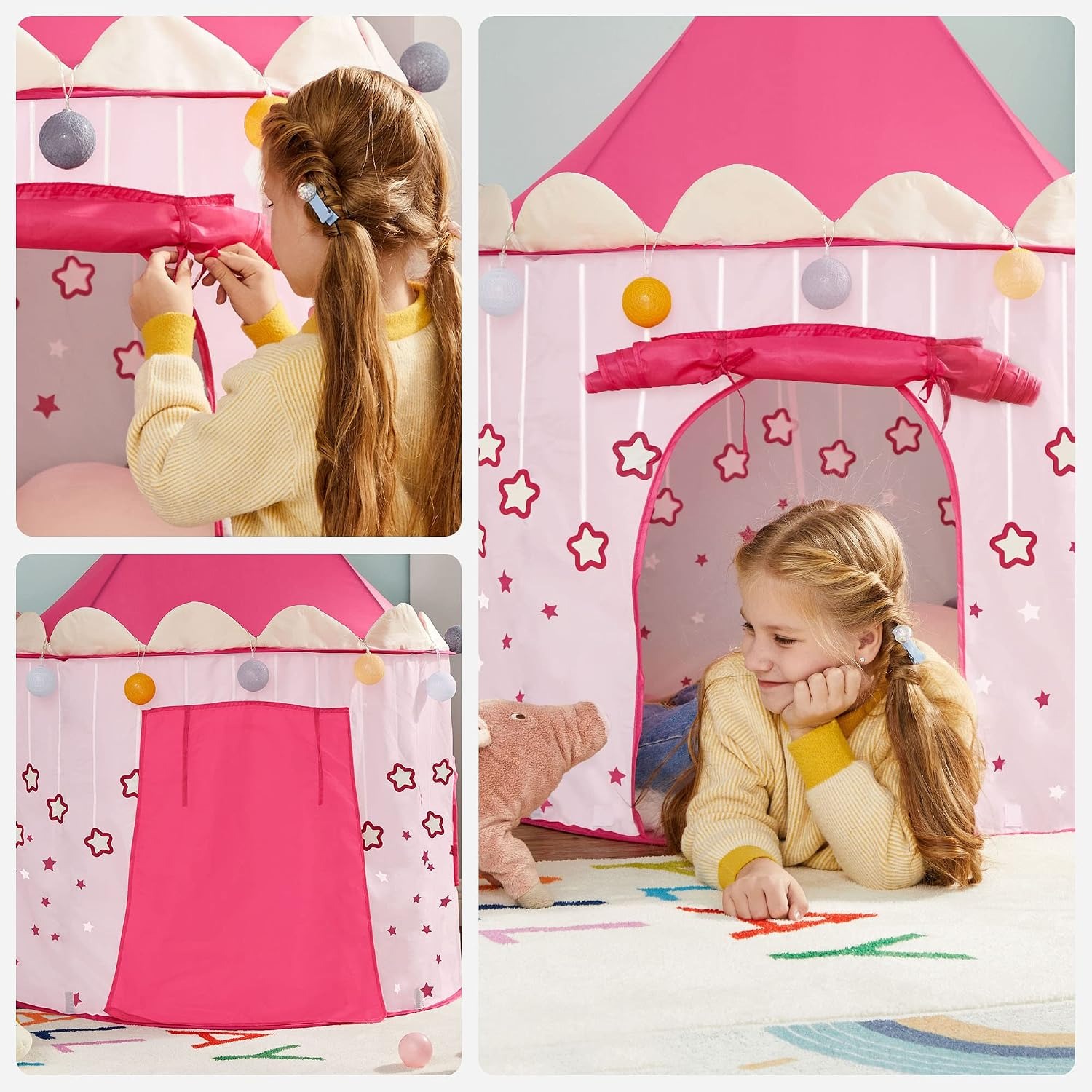
This particular one is a princess castle. The turret shape and the pink colour do a lot of work with young children, because the tent is not just a space, it is a setting. A plain cube is a cube. A castle is a story that has already started.
How a pop up tent actually works
The mechanism is older than it looks. Flexible poles are sewn into channels in the fabric and held under tension when the tent is folded. Release the tension and the poles snap back to their natural shape, pulling the fabric open with them. On this model the frame is fibreglass, with galvanised iron wires adding structure, and the walls are 190T polyester.
Polyester with a 190T weave is the standard material for lightweight play tents. It is thin, light, and holds printed colour well, which is why the stars and castle detailing look crisp. It is not a heavy canvas, and it is not meant to be. The whole point of this design is low weight and fast setup.
The maker confirms no assembly is required. There are no screws, no instruction sheet to decode, no poles to thread. You pull it from the bag and it opens. Folding it back down is the part that takes a bit of practice. Pop up frames go down by twisting the hoops into overlapping circles rather than by bending them flat. Watch it once, do it twice, and you will have it.
Who it suits
The age guidance here is broad, listed only as Kid. In real homes, a tent this size tends to get the most use between roughly two and seven years old. Young children like the enclosure and the hiding. Older preschoolers like the pretend play. Early school-age children often shift it toward a reading corner or a quiet retreat.
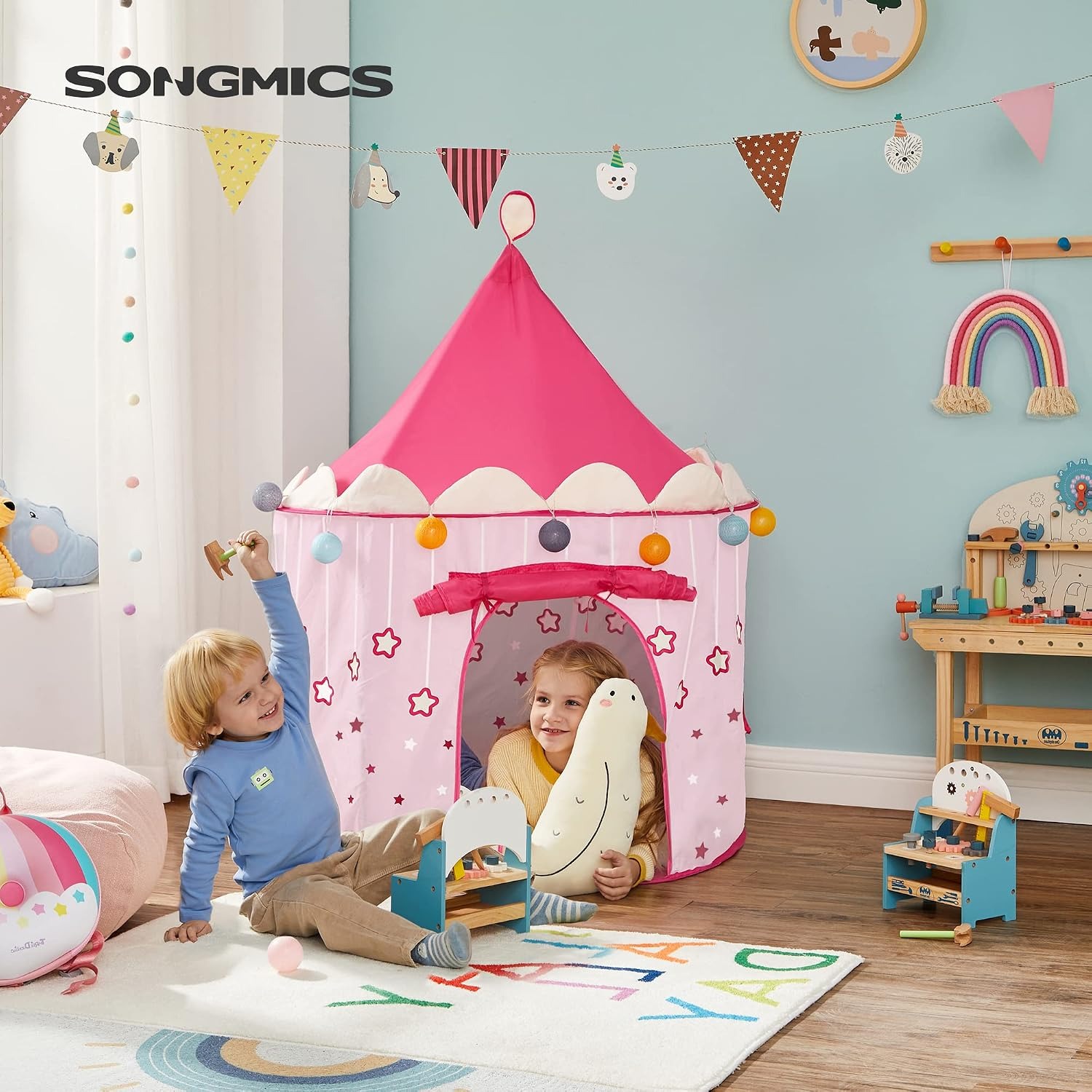
The stated capacity is up to two children, and that is a fair description of a 101 cm circle. Two children can sit facing each other with a board game or a pile of soft toys between them. One child gets a generous amount of room to lie down. Three is a squeeze, and three excited children in a fabric tent usually ends with the tent on its side.
It is also worth thinking about temperament rather than just age. Children who get overwhelmed in busy rooms often take to an enclosed space quickly. Having somewhere to go that is not their bed, and not a punishment, can defuse a lot of end-of-day friction. Some families find the best young child hideaway tent is the one that doubles as a calm-down corner.
Measuring your space properly
The footprint is 101 cm across and the peak reaches 135 cm. Before ordering, mark out a square of about 110 cm on the floor where you plan to put it. That extra margin matters because the fabric walls slope outward near the base and you do not want them pressed against a radiator, a bed frame or a chest of drawers.
Height is usually the easier dimension. At 135 cm the castle clears most low shelving and sits well under a window. Check for ceiling lights, hanging mobiles and the swing arc of a door. Doorway clearance only matters if you plan to move the tent while it is open, which most people do not bother doing because folding it takes seconds.
Flooring makes a difference too. On carpet the tent grips and stays put. On polished wood, tile or laminate, a lively child can slide it a few centimetres during play. A rug underneath fixes that and adds comfort at the same time.
The features that earn their place
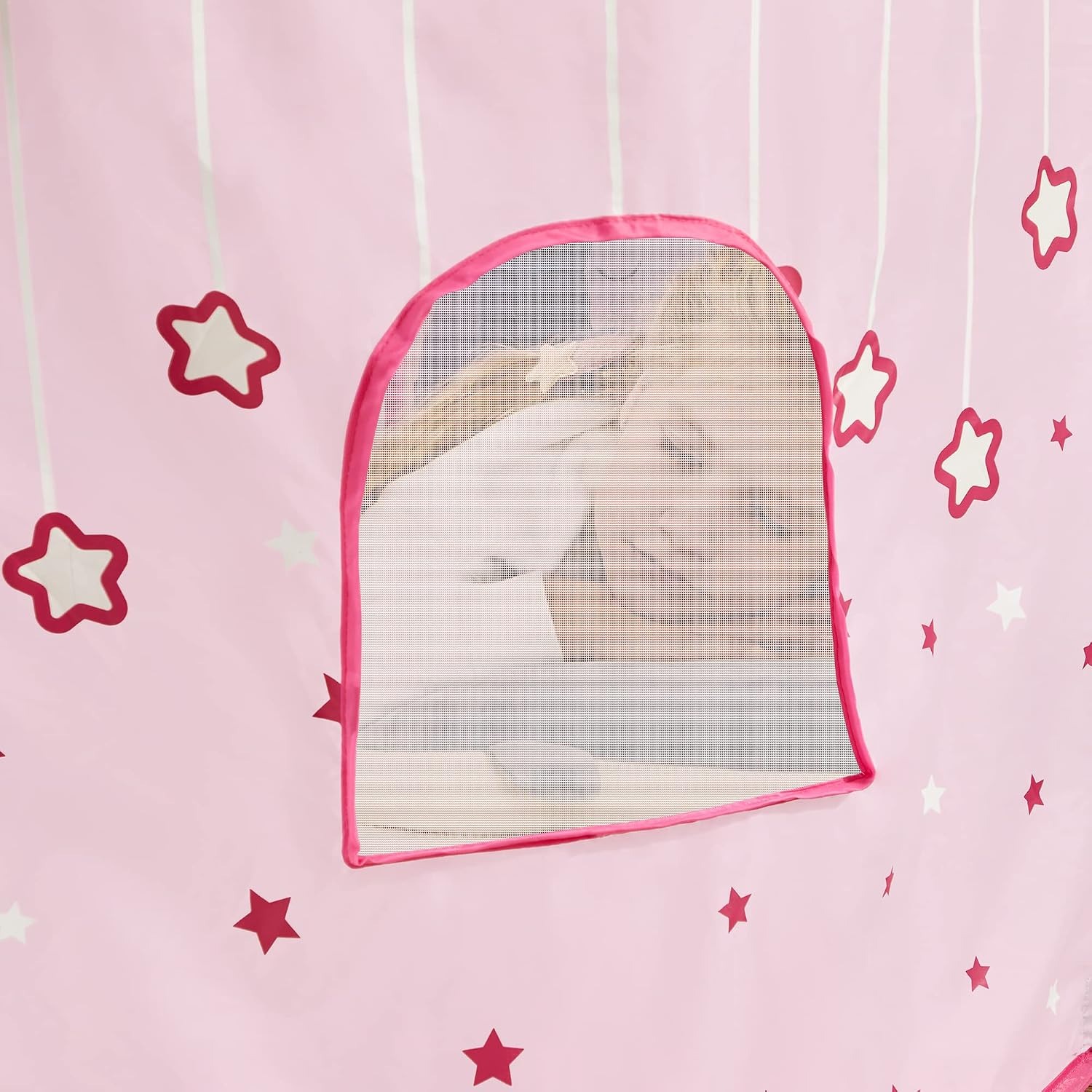
Mesh windows are the one feature people underrate until they have a child in a closed fabric box on a warm afternoon. Airflow keeps the inside pleasant, and the see-through panels let you check in from the doorway rather than crouching down and opening the flap. Both of those things make the tent easier to live with day to day.
The roll-up door is the other practical detail. It ties back so small children are not fighting a flap to get in and out, and it drops down when they want the door shut. That control is a big part of the appeal for children, who rarely get to decide when a door is open in their own house.
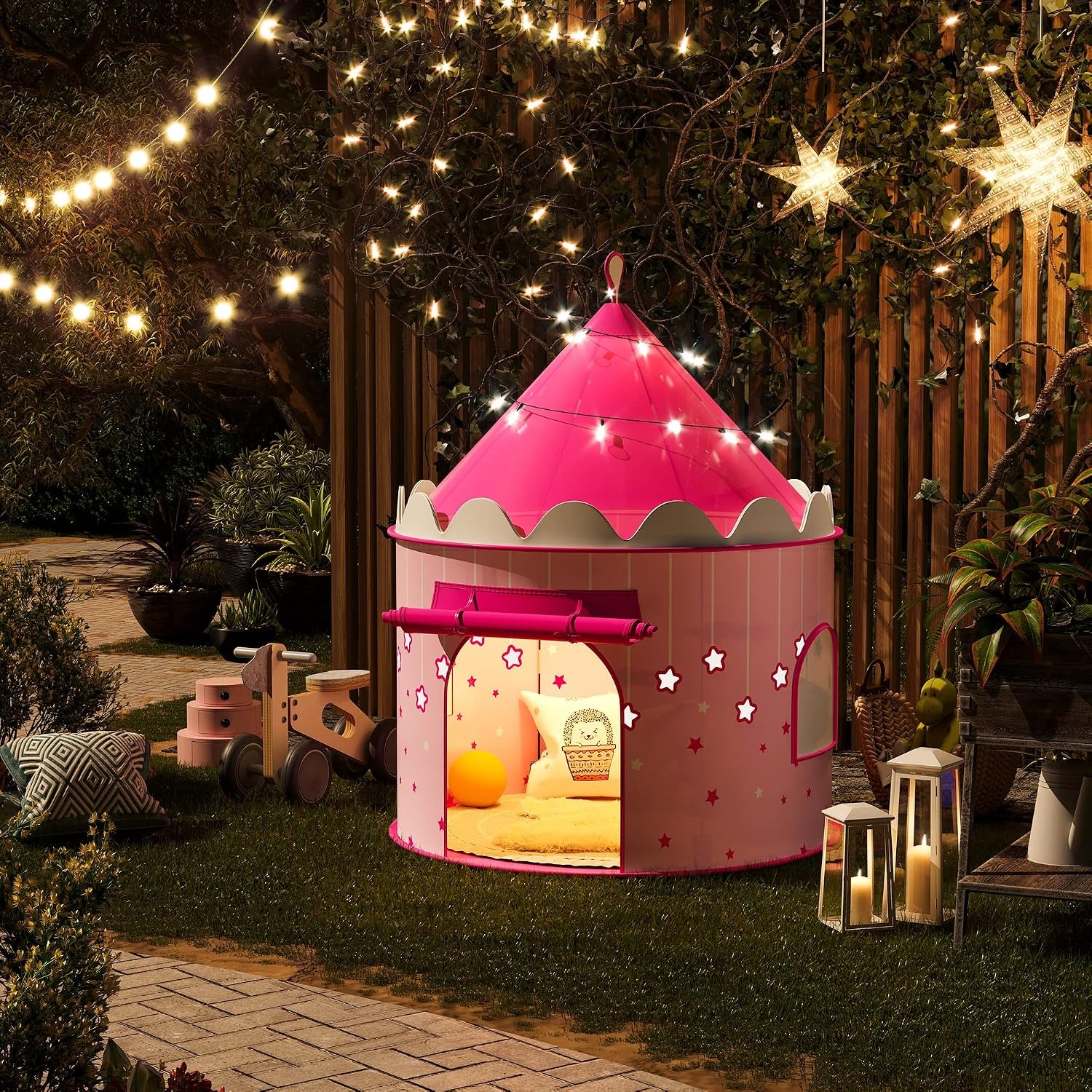
Then there are the glow-in-the-dark stars. These charge under normal room light and glow once the lights go off. Glow pigments always fade over time rather than staying bright for hours, and no duration is specified for this product, so treat it as a gentle bedtime effect rather than a nightlight. If you want more, battery string lights draped inside are a popular addition, though none are included here.
Keeping it in good shape
Care for a polyester play tent is straightforward. Wipe marks away with a damp cloth and a small amount of mild soap, then let the fabric air dry before you fold it. Never put it in a washing machine. The frame is sewn into the panels and a wash cycle will wreck both.
Avoid parking it in direct sun for weeks on end. Sunlight fades printed colour on lightweight fabric faster than anything else. Keep it away from heaters, candles and anything with a flame, which is sensible practice for any fabric structure around children.
When storing, make sure the tent is fully dry first. Damp polyester left folded in a bag develops a musty smell quickly. Store it flat in a cupboard rather than crushed under heavy items, so the poles keep their shape.
Give the fabric a quick look over every so often, particularly around the pole channels and the door edges where wear shows first. Small repairs to seams are easy if you catch them early.
Making it feel like a proper room
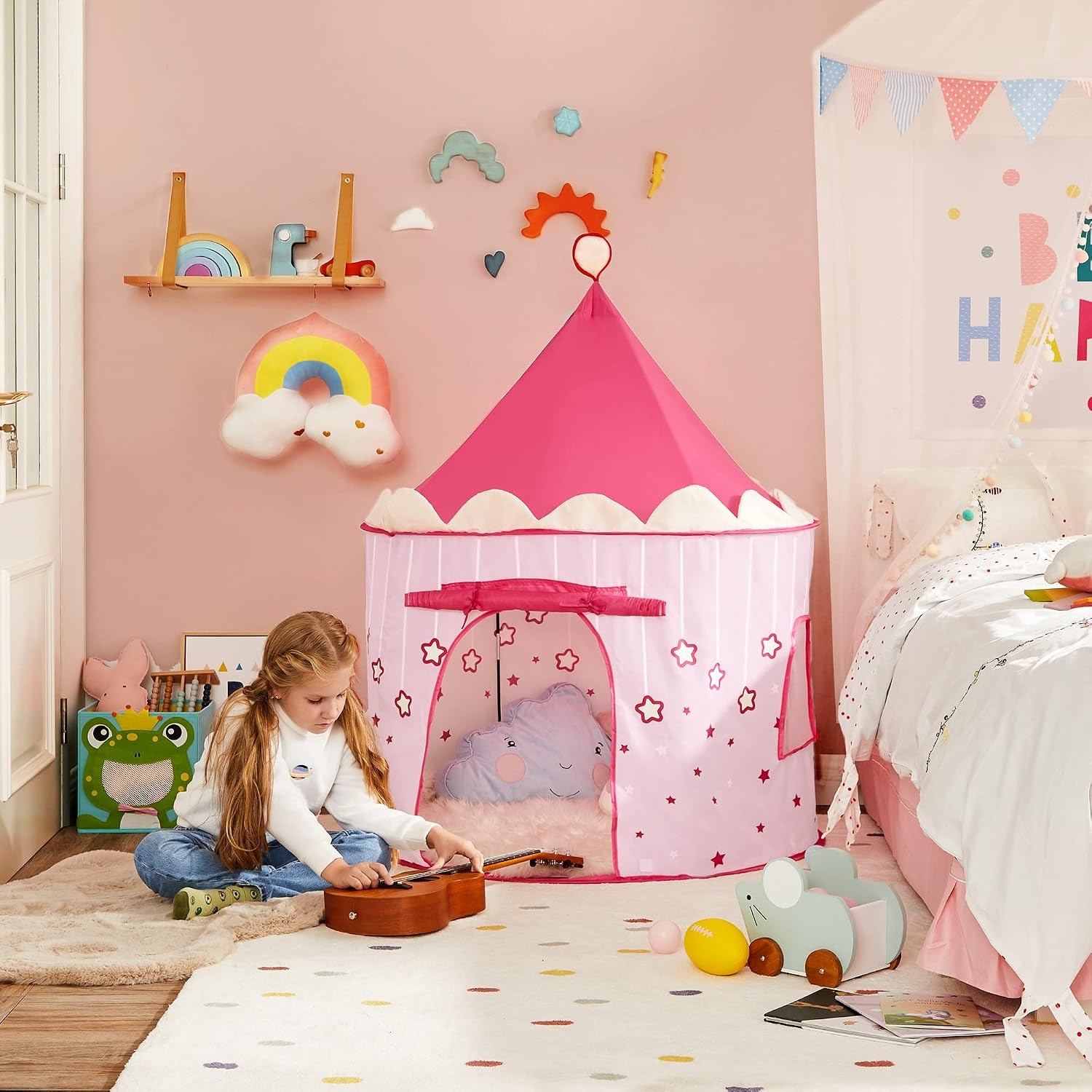
A tent on bare floor is a tent. A tent with a soft base is a den. A folded blanket, a cot-sized mattress topper or a couple of floor cushions transforms how long a child will stay in there. Add a small basket of books and you have one of the better reading nook setups a bedroom can hold, with none of the carpentry.
Position matters as well. Backing the tent into a corner makes it feel more secure than leaving it marooned in the middle of a room. Near a window is good for charging the glow stars during the day. Near a bed is good if the tent is doing double duty as a wind-down spot.
Resist the urge to fill it with toys. Children treat an empty tent as a blank space and invent something. A tent stuffed with plastic becomes storage.
The short version
This is a lightweight pink castle tent, 101 x 101 x 135 cm, made from 190T polyester on a fibreglass frame, weighing 1.06 kg. It pops open with no assembly, holds up to two children, has mesh windows and a roll-up door, and the printed stars glow in the dark.
It suits homes without a spare playroom, parents who want something that folds away, and children who like having a door of their own. Measure your corner, pop it open, throw in a cushion, and leave them to it.