



The complete guide
How to Choose a Pop Up Playhouse Tent for Your Child
The problem a play tent actually solves
Most homes do not have a spare room for a child. What they have is a corner of a bedroom, a patch of lounge floor and a pile of toys that migrates across both. Children still need somewhere that feels like theirs, a spot with a door and a roof where the rules are different.
That is the real job of a pop up playhouse tent. It is not storage and it is not furniture. It is a small, defined space that a child can enter and leave on their own terms. The moment a young child crawls through the opening, the game starts, and it usually keeps going for far longer than a toy that sits on a shelf.
A rocket theme adds one more layer. Children already know what a rocket does, so they do not need an adult to explain the premise. They climb in, decide they are going to space, and the rest writes itself.
How this tent works
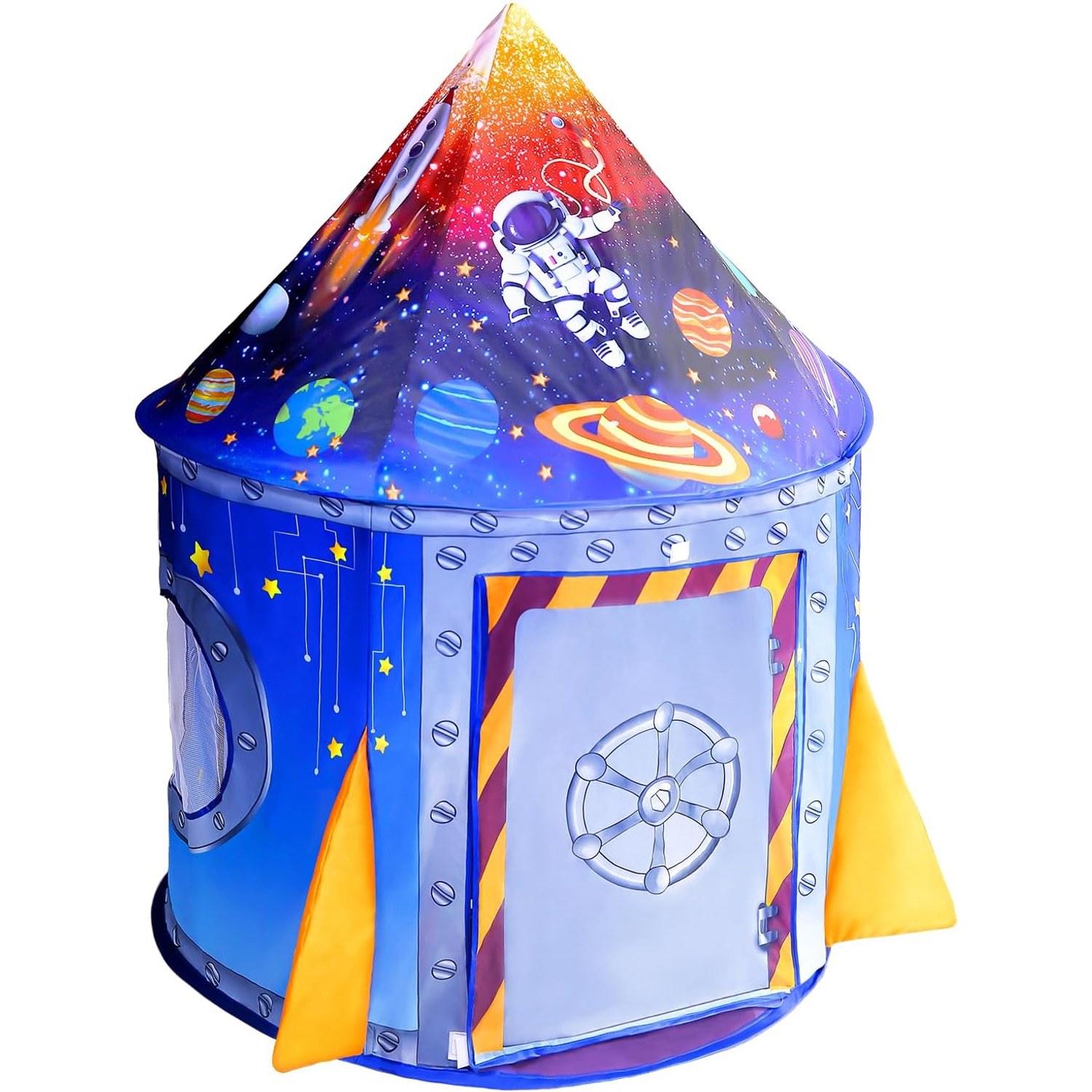
The design is deliberately simple. Fabric panels sit over a plastic frame, forming a child-sized shell with an opening at the front. The bottom section is styled like a cockpit, with the upper panels carrying a space print, so the inside and the outside both do some of the storytelling.
Two mesh windows sit on the sides. Those windows do two jobs at once. They keep air moving so the inside does not turn stuffy after ten minutes of excited play, and they let a parent look in from a few feet away without opening the door and ending the game. Anyone who has tried to check on a quiet young child without being noticed will understand why that matters.
Assembly is required when the tent first arrives. The frame goes together, the fabric goes over it, and the guide for doing all that is kept inside the carry bag so it does not vanish in a drawer. First time through takes a few minutes of reading. After that, putting it up and taking it down becomes a routine job.
When play finishes, the tent folds flat and slides back into its bag. That is the feature parents end up valuing most, because a play tent that cannot be put away quickly tends to end up permanently in the way.
Who it suits
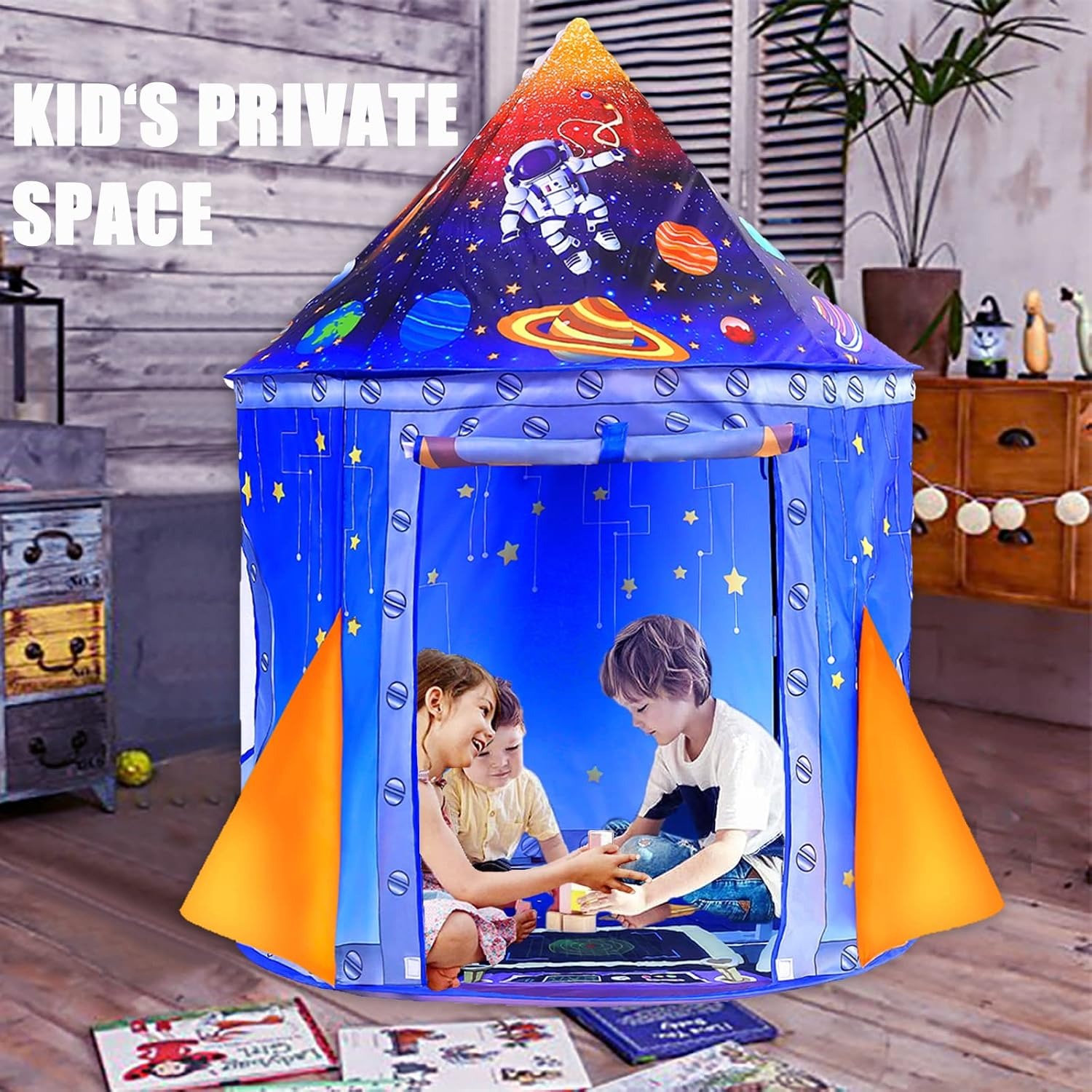
The manufacturer's suggested age range is 18 months to 4 years. That lines up with how children use dens. Around 18 months, the appeal is physical, crawling in, crawling out, peeping through the window. By three or four, it has become properly imaginative, with missions, crew members and rules invented on the spot.
It suits families who want a best indoor play tent for a bedroom corner or playroom rather than a garden structure. It works well in flats and smaller homes, because it can be set up in the evening and packed away in the morning. It also travels, which makes it useful if your child spends time at a grandparent's house or you take a lot of self-catering holidays.
Two children can share it, and siblings often do. Expect the space to feel snug with two, which is usually part of the fun but worth knowing if your child prefers room to spread out.
If you are shopping for the best birthday gift tent for kids in this age range, a tent like this has a practical advantage over most toys. It does not have one function. It is a rocket, then a reading nook, then a hiding place, then a cave.
How to choose between play tents
A few things separate one tent from another, and price is rarely the useful one.
Theme and how it prompts play. A plain tent is fine, but a themed one gives a child a starting point. A rocket or space design suggests a story straight away, which helps children who need a nudge to get going. Think about what your child is already interested in.
Ventilation. Mesh windows are not decorative. A closed fabric box warms up fast with a child inside, and air flow makes the difference between ten minutes of play and an hour. Two windows on opposite sides is a sensible arrangement.
How it packs down. This decides whether the tent stays in your life or gets quietly moved to the loft. A tent with a carry bag that folds flat is far easier to live with than one that has to stay assembled. If you have limited floor space, treat this as a top priority.
Materials and the frame. Fabric panels over a plastic frame keep the weight down so an adult can move the tent in one trip, and so a knock does not do damage. Heavier frames are not automatically better for this age group.
Supervision sight lines. You want to be able to see in. Mesh panels let you check without entering, which keeps the game intact and your mind at ease.
Floor comfort. Most tents of this type are shells rather than floored structures. Plan to add a rug, a folded blanket or a play mat if your floors are hard. Children stay in a den far longer when sitting in it is comfortable.
Setting it up well
Where you put the tent matters more than people expect. Pick a flat surface with a little clearance all round so the fabric is not pressed against a wall or radiator. Carpet or a rug helps the tent stay put when a child bumps into it, which they will.
Keep it away from heat sources, open fires, stairs and anything that could topple. Those are the same rules you would apply to any play structure, and they are easy to follow once you have chosen the spot.
Adding a cushion, a small blanket and a couple of favourite books turns a tent into a place a child chooses to go, rather than one they visit once. Some families add a battery tea light or a soft clip lamp for reading. Avoid anything with a cable running into the tent.
Outdoors, treat it as a fair-weather item. A shaded, sheltered corner of the garden on a dry day is fine. Rain, strong sun and wind are not what this kind of tent is built for, so bring it in when play finishes.
Keeping it clean and lasting
Play tents collect exactly what you would expect. Crumbs, juice, chalk dust, the occasional felt tip line that was definitely not drawn by anyone present.
Wipe the fabric with a damp cloth and a little mild soap, then let it air dry fully. Do not reach for bleach or strong solvents, and skip the washing machine, which can stress seams and pull the panels out of shape. Spot clean as marks appear rather than waiting for a big clean, and the fabric stays much better for it.
Before folding the tent away, make sure it is completely dry. Damp fabric packed into a bag is how musty smells start. Store it flat in the carry bag so the plastic frame keeps its shape, and keep it out of direct heat.
A quick shake-out every few weeks does most of the maintenance work on its own.
The short version
This is a rocket-themed fabric play tent on a plastic frame, in blue, with two mesh windows and a carry bag. Assembly is required, it folds flat for storage, and the suggested age range is 18 months to 4 years. Set-up dimensions, weight and country of origin are not specified in the maker's details, so we have not guessed at them.
If you want a best young child play tent that gives a child their own corner, encourages pretend play without batteries or screens, and can be packed away in a minute when you need the floor back, this one does that job. Add a rug and a couple of books inside and it earns its space quickly.