
The complete guide
Choosing a Kids Play Tent: A Practical Buyer's Guide
The problem a play tent actually solves
Children need somewhere that belongs to them. Not a whole room, just a space with a door they control. In most homes that space does not exist. The living room is shared, the bedroom is for sleeping, and the corner behind the sofa is where the laundry basket lives.
A play tent fixes that cheaply and without renovation. It marks out a few square feet as the child's territory, and something changes in how they play there. Games last longer. Siblings negotiate instead of hovering. Quite a few parents report that the tent becomes the default wind-down spot before bed, which was never the plan when they bought it.
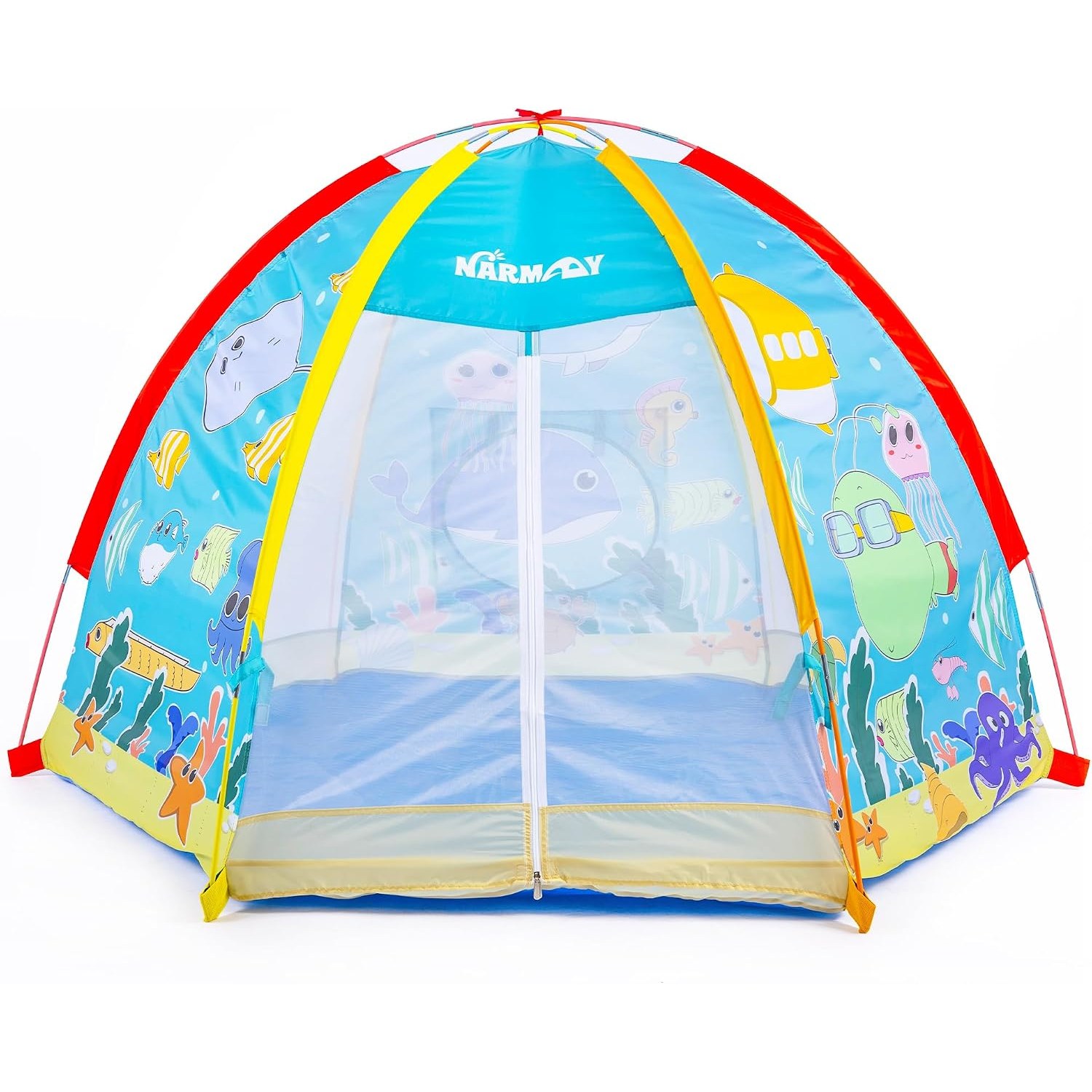
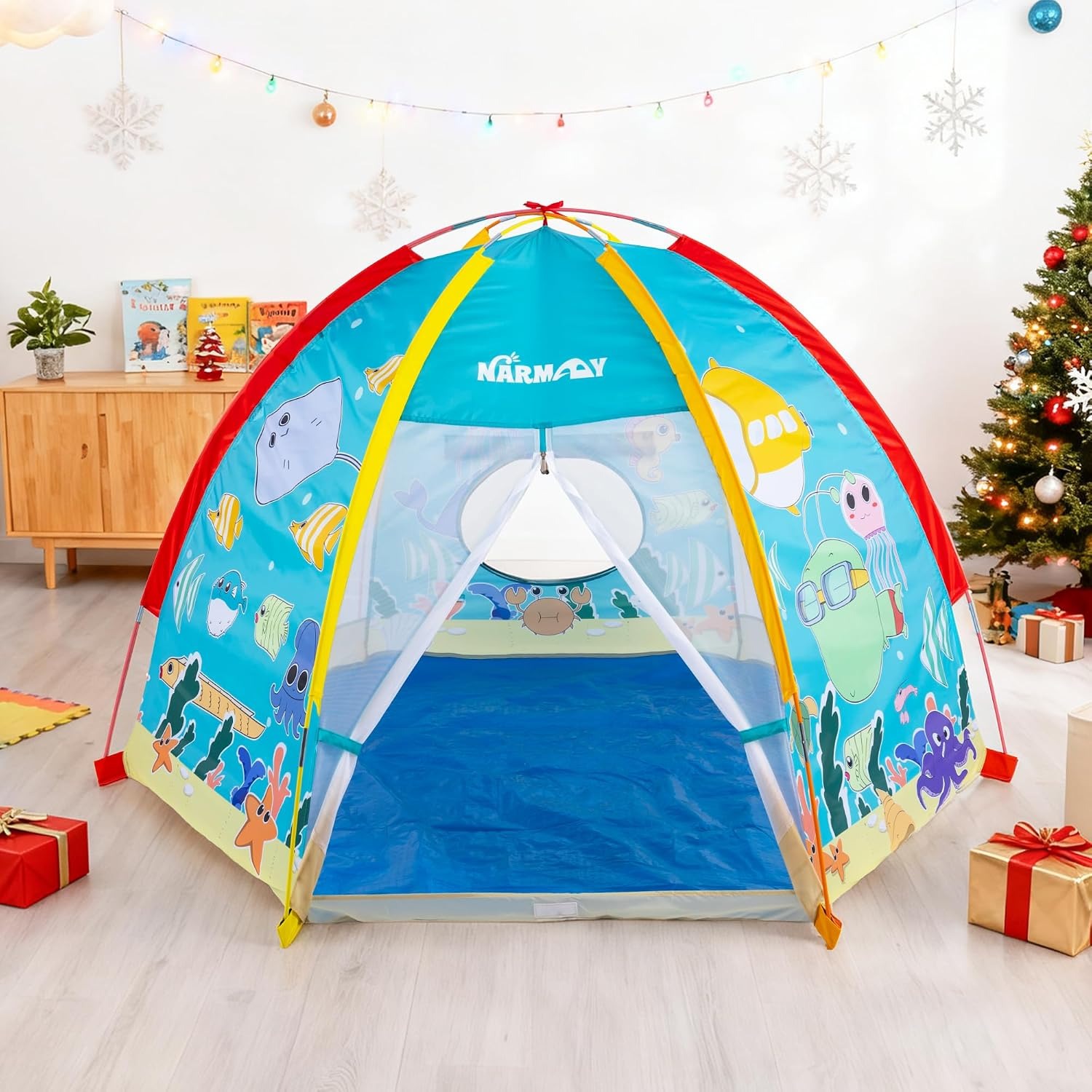
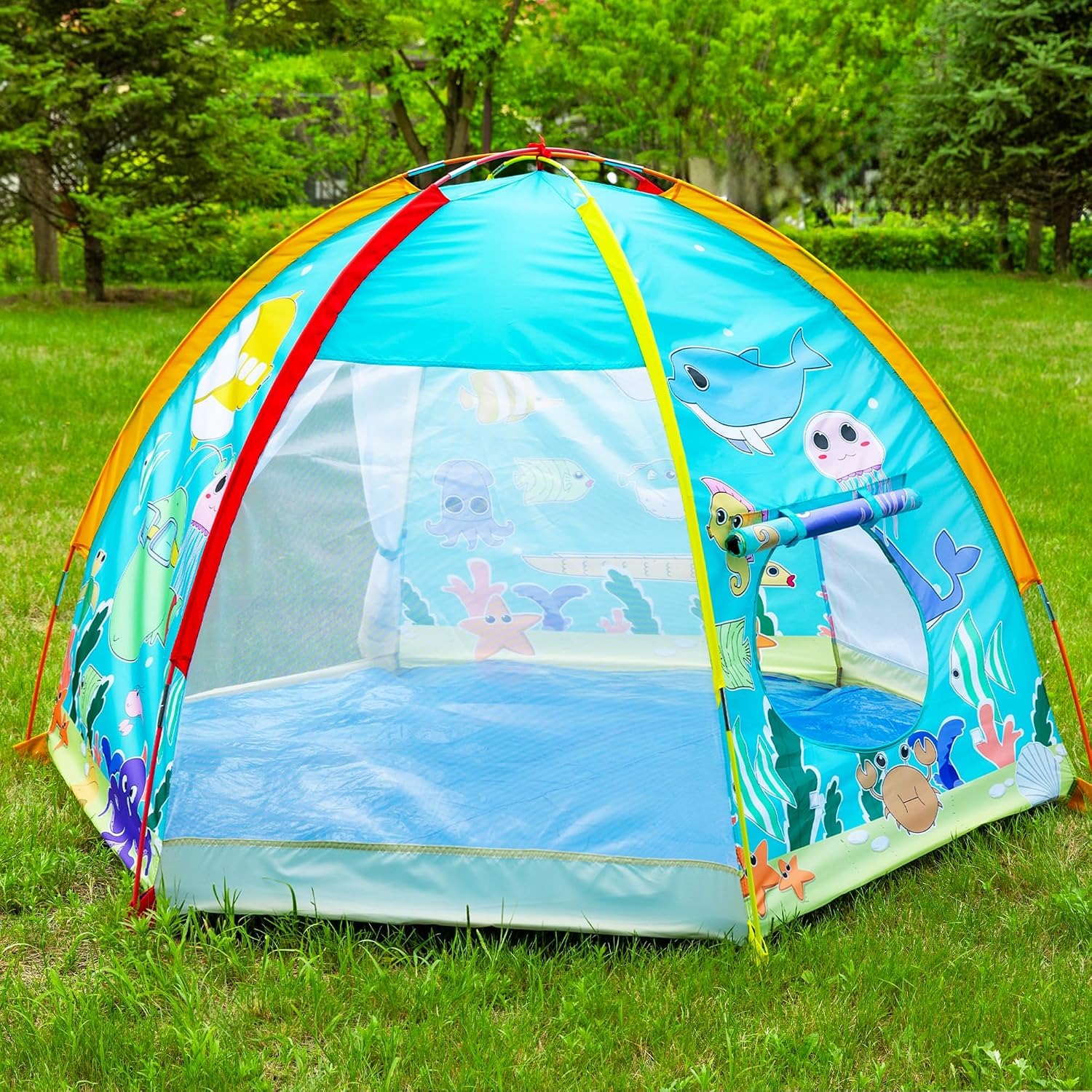
The Ocean Dome Play Tent takes that basic idea and adds a theme. Cartoon sea creatures across the panels give the space a story before anyone has invented one. For a lot of three to six year olds, that is enough of a starting point.
How this one is built
There are two common ways to make a children's tent. Pop-up frames use a sprung wire hoop that springs open and then has to be twisted back into a flat circle, a move that defeats plenty of adults. Pole tents use separate rods that slide through fabric sleeves.
This is a pole tent. Three fibreglass poles, shock-corded so the sections stay strung together on an elastic line inside. You feed each pole through its sleeve, flex it into an arc, and the tension holds the dome up. It takes a couple of minutes and there is nothing small to lose.
Fibreglass is the standard choice for this kind of frame because it bends a long way without taking a permanent set. The poles here are coated and sit inside fabric channels, so children are not handling bare rod during play.
The cover is polyester. That is the usual fabric for play tents for good reason, as it resists tearing better than light cotton and wipes clean. Three of the six sides are large mesh panels instead of solid fabric, and the front is a full zip door.
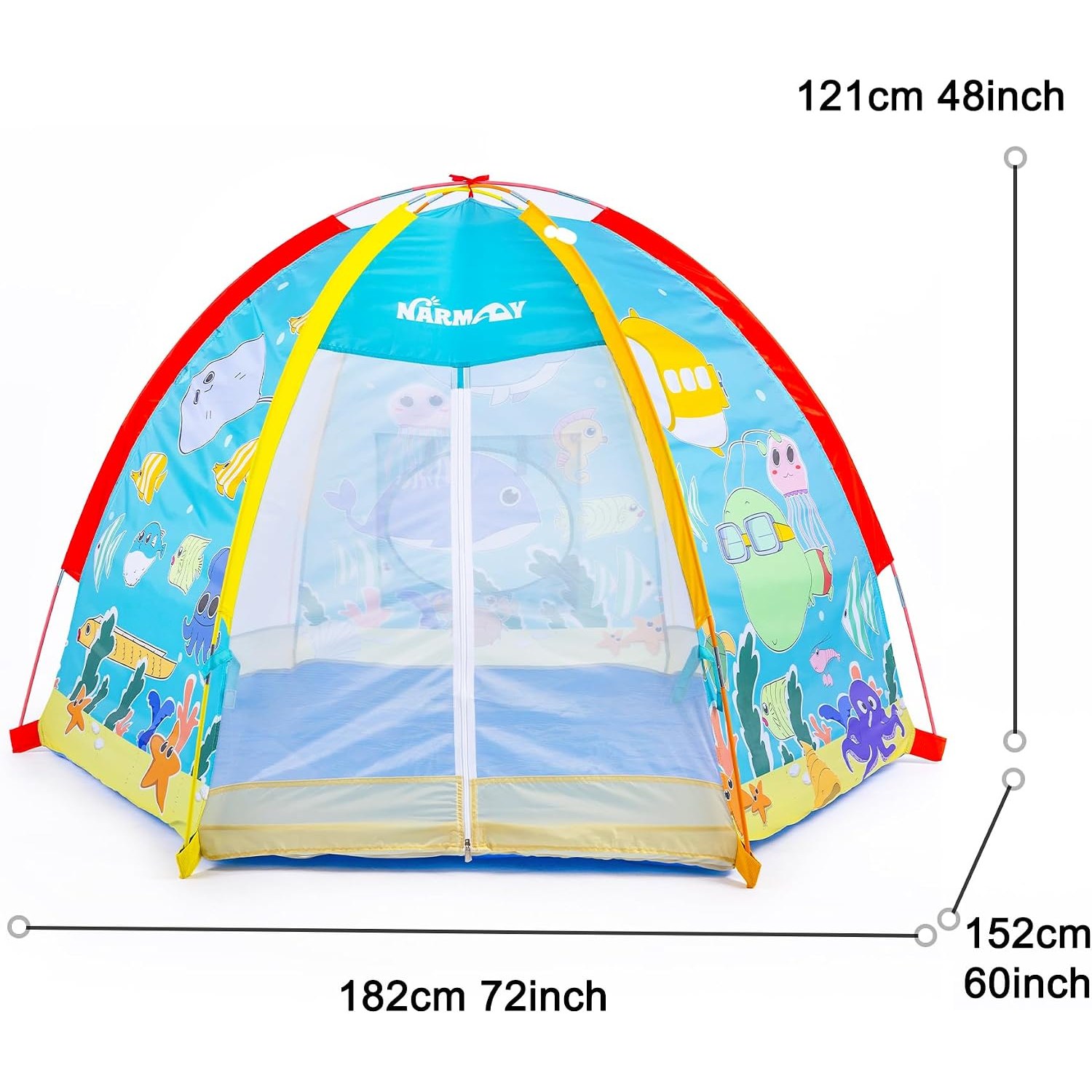
Assembled, you are looking at 183 x 152 x 122 cm. The whole thing weighs 1.18 kg and folds into a carry bag.
Why the hexagon shape matters
This is the part people underestimate. A lot of cheap play tents are narrow domes, basically two poles crossed at the top. The floor is round and the walls slope steeply, so the only place a child can sit upright is dead centre. Two children do not fit.
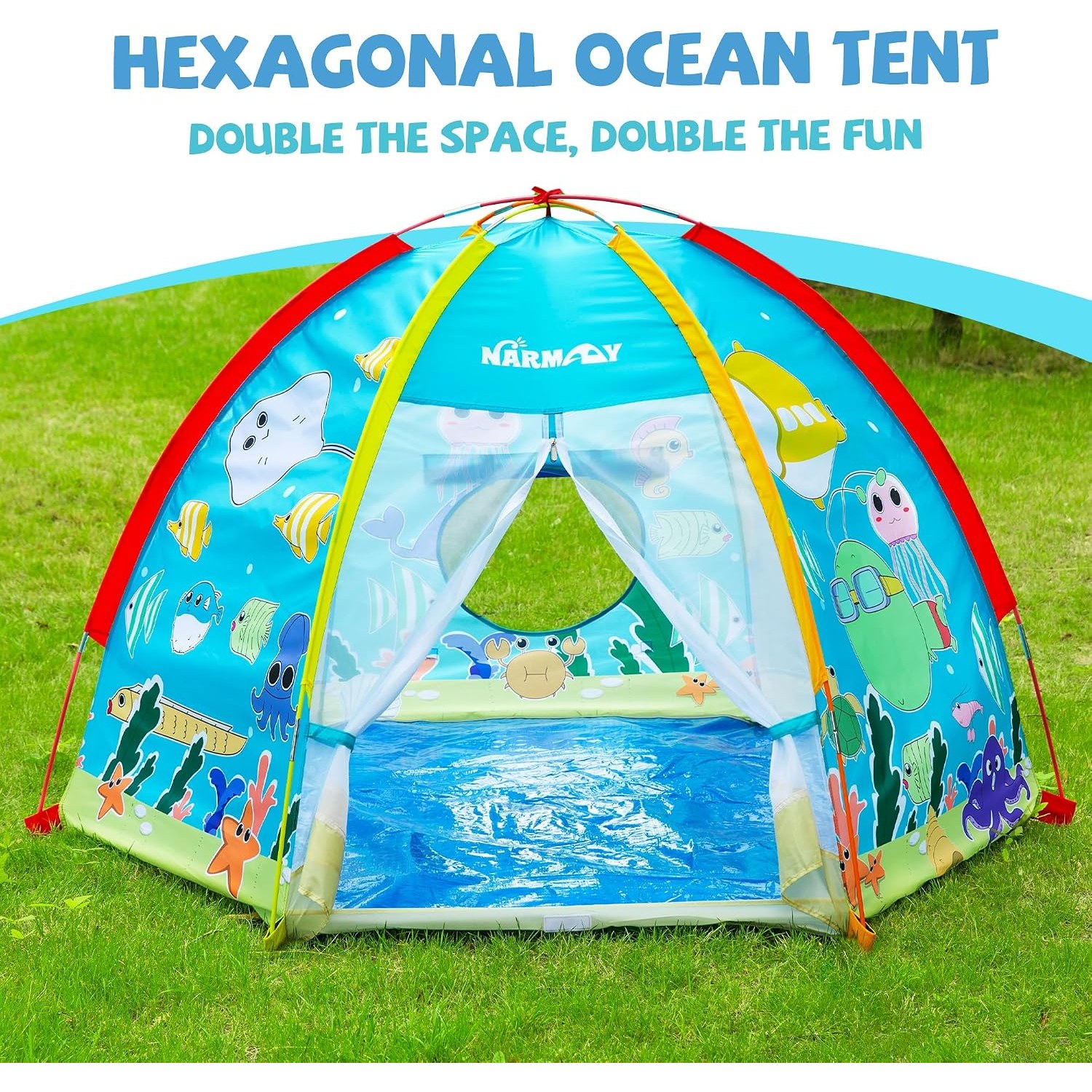
A hexagonal design pushes the walls out and keeps them more upright around the lower half. The result is more floor you can actually use. Two or three children can sit in a ring with toys in the middle. An adult can duck in, which sounds like a small thing until you are handed a plastic teacup and told to stay.
The six-sided shape is also why this tent can carry three mesh panels and a tunnel port without losing structure. There are simply more sides to work with.
Airflow, visibility and the stuffiness problem
Solid-walled tents get warm fast. A child inside on a summer afternoon is sitting in a sealed fabric box, and the usual outcome is they come out hot and grumpy after ten minutes.
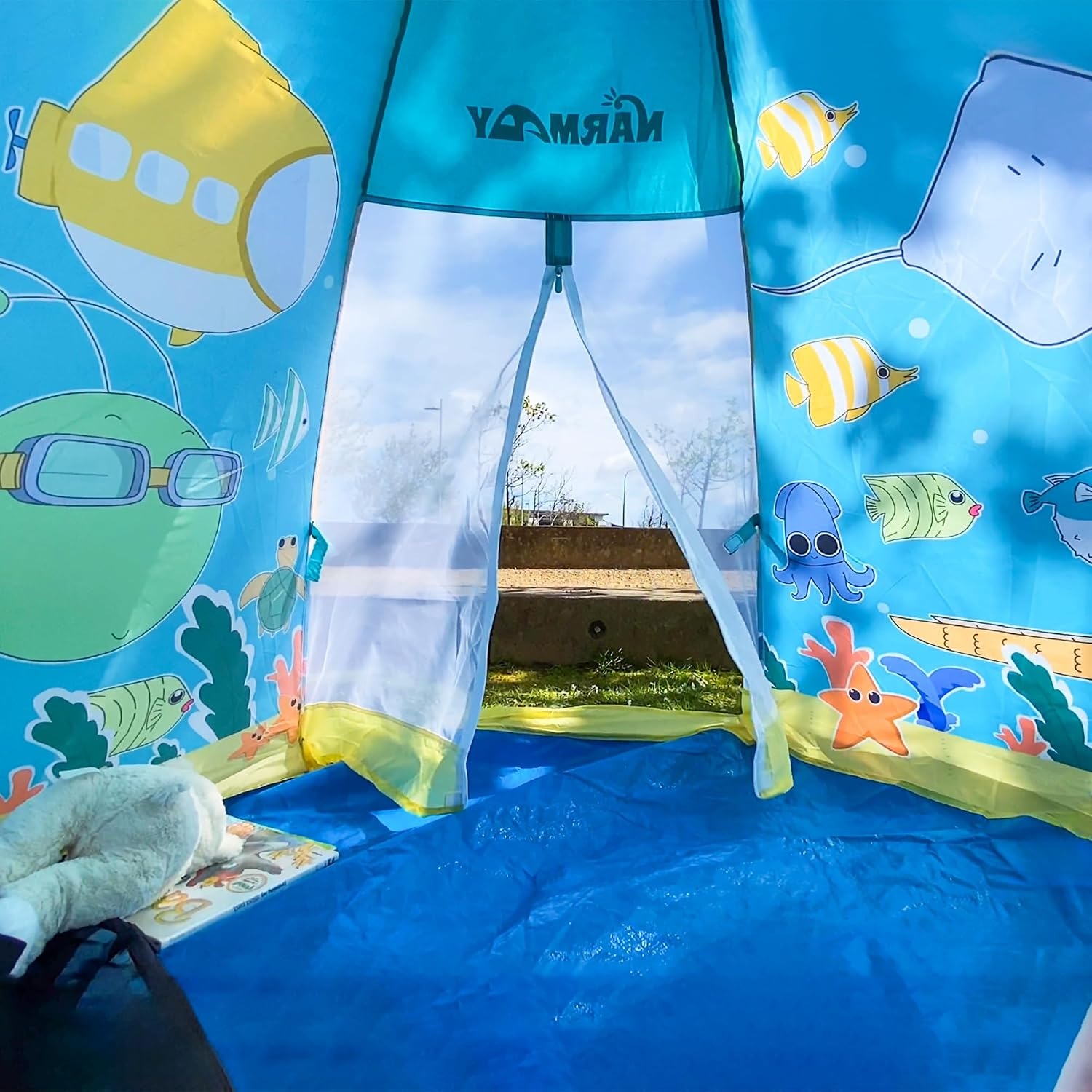
Three large mesh panels change that. Air moves through, and the inside stays close to room temperature. Outdoors, the mesh also keeps insects out while the door is zipped.
The second benefit is for you. You can see in. Supervising a child inside a solid tent means opening the door and interrupting whatever game is happening. With mesh walls, a glance from the sofa tells you everything. Parents searching for the best mesh play tent are usually chasing exactly this, and it is a sensible thing to prioritise.
The floor, and why it decides where the tent lives
The floor is lined and waterproof. Indoors, that means a knocked-over drink stays on the tent rather than soaking into carpet. Outdoors, it means a child can sit on grass that is still slightly damp from the morning without ending up with wet trousers.
Without a lined floor, a tent tends to become outdoor-only or indoor-only. With one, it moves between the two. That flexibility is worth a lot over a few years of use, and it is one of the main things separating a decent garden play tent for kids from a flimsy one.
Keep the expectation sensible though. The floor is waterproof. The walls are light polyester with mesh. This is not a camping tent and should not be left out in rain or overnight.
Who it suits
The manufacturer age guidance is 36 months to 7 years. That is a fair window. Three year olds love the enclosed feeling and the door. Six and seven year olds tend to use it more as a base for games or a reading spot.
It works well for families with two children close in age, because the floor is big enough that they are not immediately on top of each other. If you add a play tunnel through the side port (tunnel sold separately) and a second tent, you have the beginnings of a small play system, which older siblings often enjoy more than the tent alone.
It suits smaller homes too, not because it is small (it is not) but because it folds away in under a minute. Some families leave it up permanently. Others put it up after breakfast and pack it down before dinner.
How to choose between tents
A few questions sort most of it out.
Measure your space first. 183 x 152 cm is a real footprint. If your spare corner is 120 cm wide, this tent is going to dominate the room, and a smaller model will serve you better.
Then think about where it will mostly be used. Mainly indoors in winter? Ventilation matters less and floor protection matters more. Mainly in the garden? Mesh panels and a lined floor both earn their place.
Think about how many children. One child in a big tent is lovely. Two children in a small tent is a daily argument. If siblings or regular visitors are in the picture, go wider.
And consider storage honestly. A tent that lives in a bag behind the door gets used. A tent that needs dismantling and wrestling into a stuff sack usually gets used twice.
Looking after it
Care here is simple and mostly about habit. Wipe the fabric and floor with a damp cloth and a bit of mild soap when it needs it, then let it dry fully in the air. Do not put it in a washing machine or a tumble dryer, and keep bleach and irons away from the printed panels.
Shake crumbs and grit out before folding. Grit is what abrades fabric from the inside over a season of use.
Store it dry. Packing a slightly damp tent into a bag is how you get a musty smell that is very hard to shift. Keep it out of long spells of direct sunlight too, since any print fades eventually.
Give the poles a quick look now and then. If a section splits or the shock cord goes slack, stop using the tent until it is replaced. And keep the whole thing well away from heaters, candles and open flame, as you would with any fabric product.
The short version
This is a roomy hexagonal play tent with an ocean print, three mesh sides, a zip door, a waterproof floor and a tunnel port, on a shock-corded fibreglass frame. Assembled it measures 183 x 152 x 122 cm and it weighs 1.18 kg. Age guidance is three to seven.
Buy it if you have the floor space, want something that works indoors and in the garden, and like the idea of a tent that packs into a bag at the end of the day. Measure your corner first, and you will know within a minute whether it is the right call.