
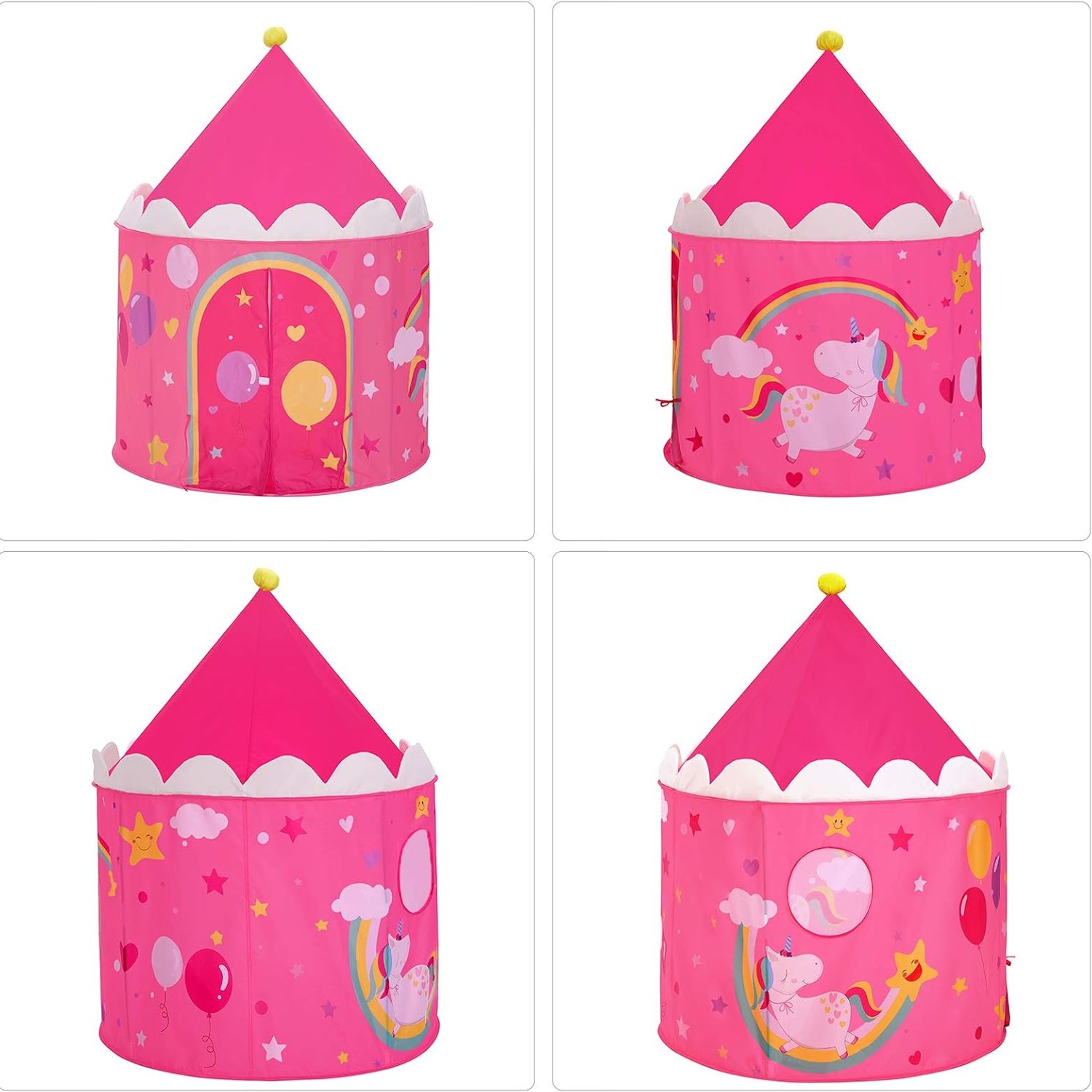
The complete guide
Choosing A Princess Castle Pop Up Tent, A Practical Buyer's Guide
The problem with giving a child "their own space"
Most homes do not have a spare room going begging. What children actually want is not square metres, it is a boundary. A line they drew, a doorway they control, somewhere adults have to ask before entering. That is why a bedsheet over two kitchen chairs has survived as a design for about a hundred years.
The trouble with the bedsheet version is that it collapses, it eats the dining chairs, and it is in the way by teatime. A princess castle pop up tent solves the same problem with a frame that holds itself up and a fold that takes it out of the room in under a minute.
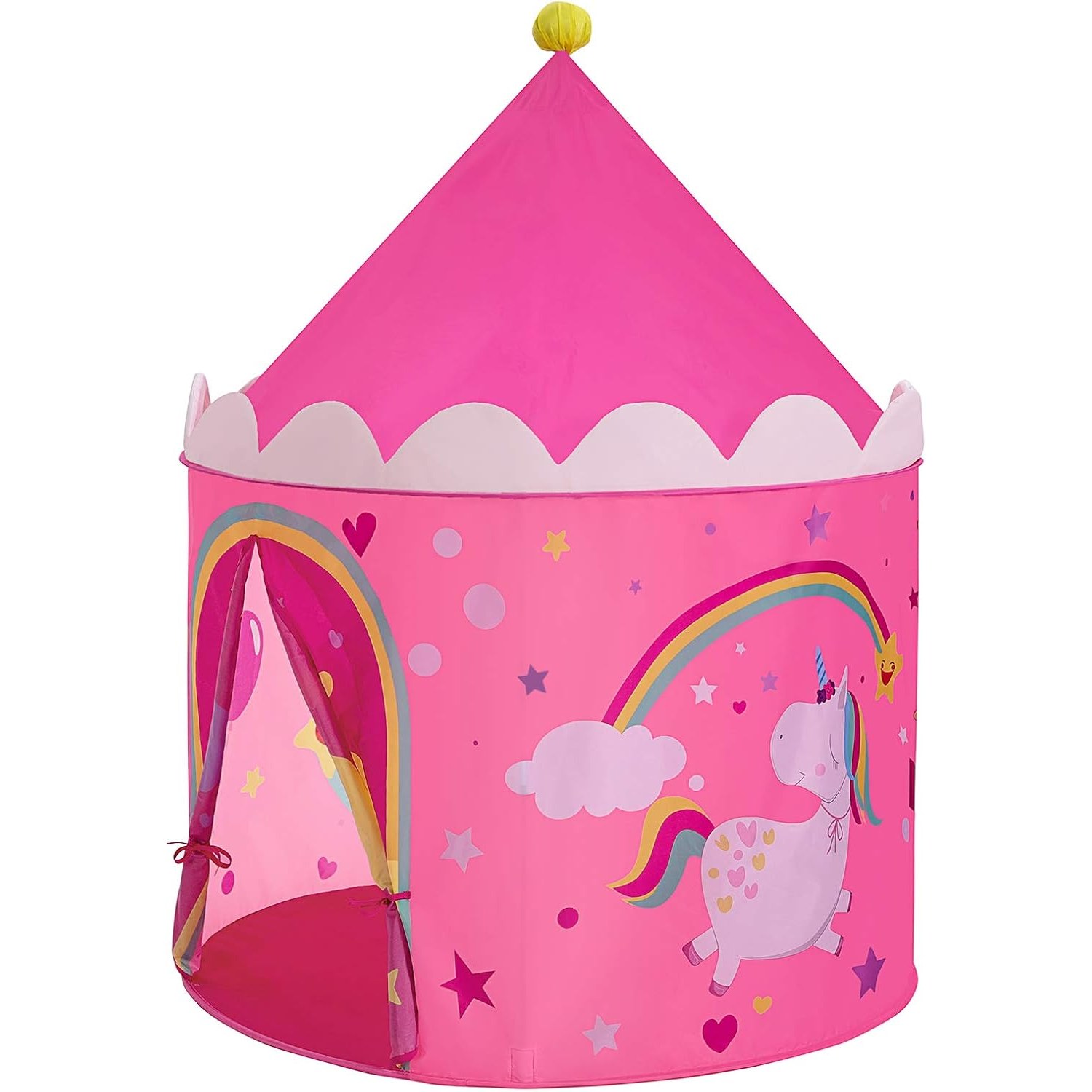
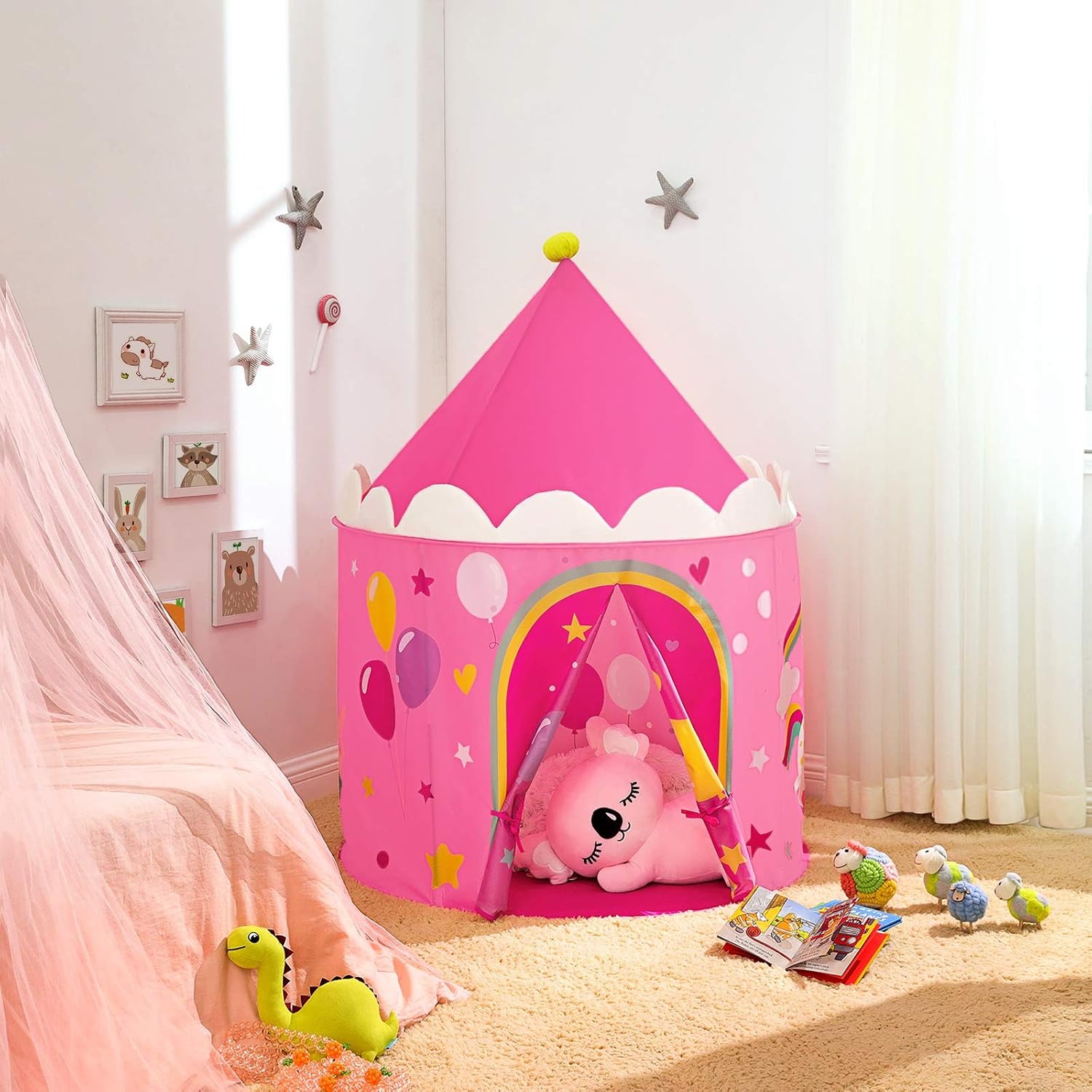
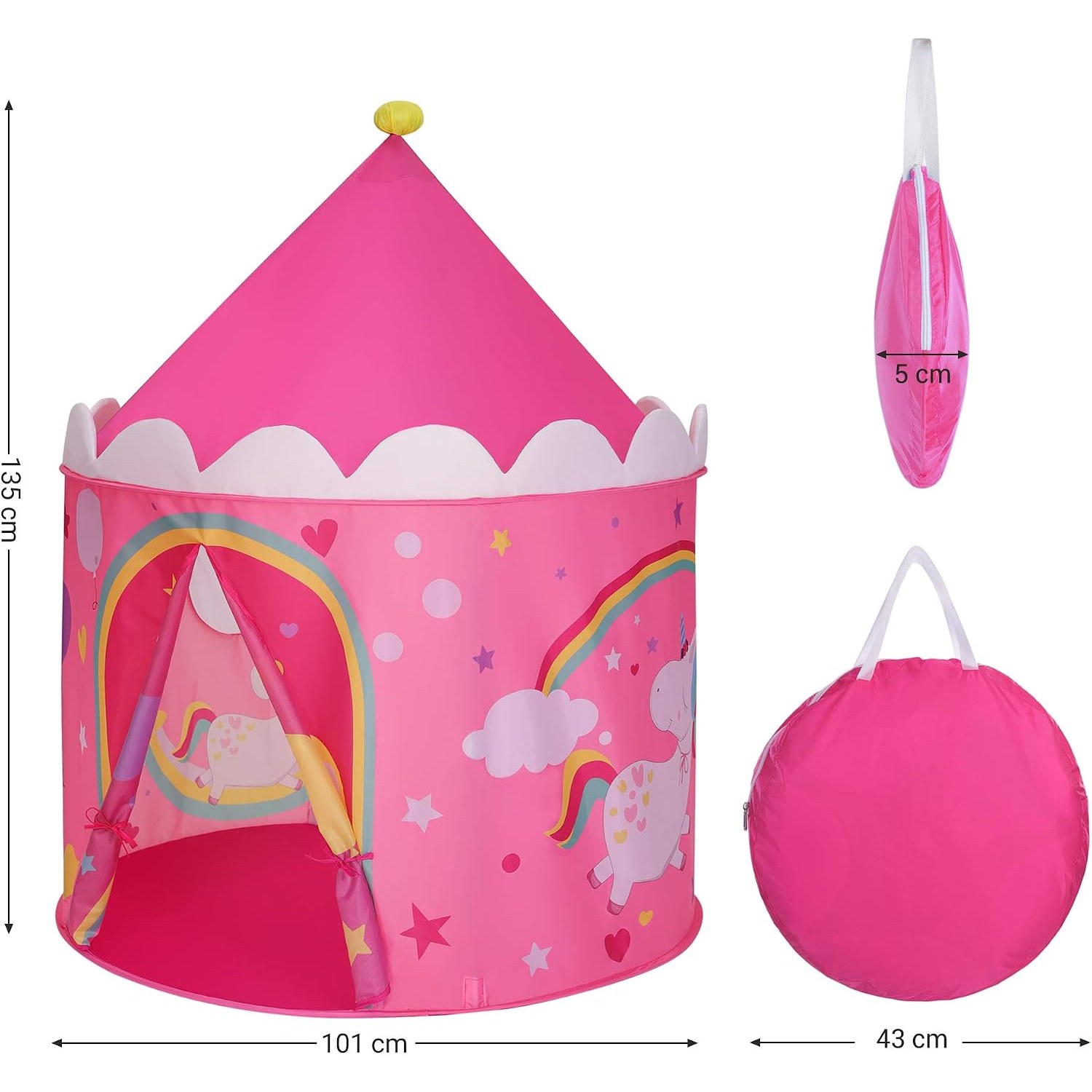
This one is 101 cm square at the base and 135 cm tall. In practice that means a child of three or four can kneel up inside without bumping their head, and there is floor room for a cushion, a few soft toys and a stack of books.
How a pop up frame works
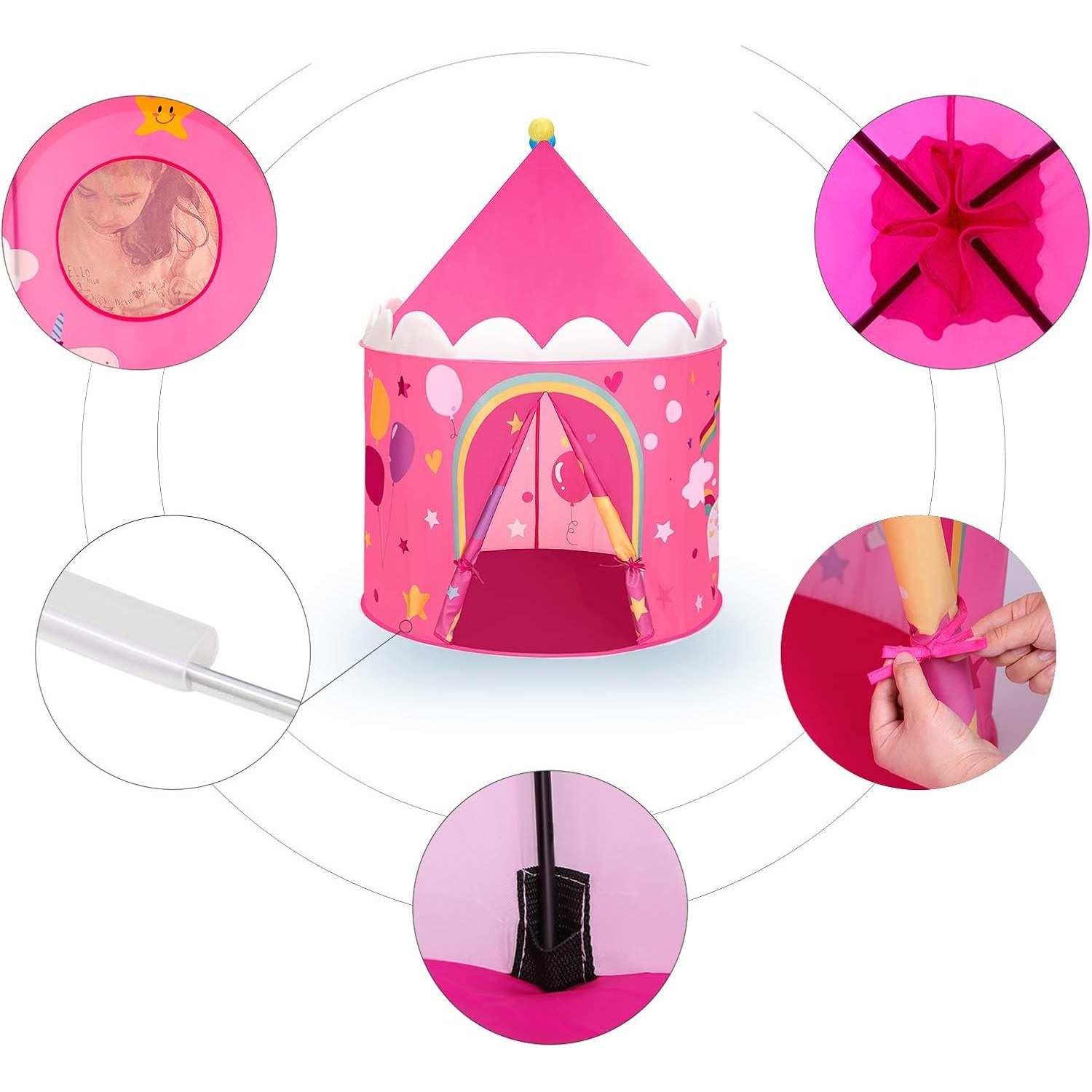
There are no poles. Flexible steel wire runs through channels sewn into the seams of the polyester shell. In the bag the wire is coiled flat under tension. Take the retaining band off and the wire wants to straighten, which pushes the fabric out into a castle shape on its own.
That design has two consequences worth knowing before you buy. The first is good. Setup genuinely takes seconds, there is nothing to lose and nothing to tighten, and a child can set it up without help. The second is a small learning curve. Folding a sprung frame is a twisting motion, not a squashing one. You bring the frame into two overlapping loops and let it settle into a flat circle. The first attempt is often fumbled. The tenth takes five seconds.
If you have never owned one, watch the fold once before the tent is handed over. It saves a lot of muttering on a Sunday evening.
Who this suits
The age guidance from the maker is 3 years and up. That lines up with how children use a space like this. Around three they start playing stories rather than just handling objects, and a tent becomes a shop, a castle, a cave or a spaceship depending on the week.
It suits a few situations particularly well:
- A bedroom that needs a quiet corner for winding down before bed
- Grandparents who want something for visits but no permanent toy clutter
- A living room where play needs to be contained and then cleared away
- Holiday lets and caravans, since 1.01 kg packs into a car boot without thought
It is less suited to outdoor sleeping, rough garden use in wind, or households wanting something a six-year-old can stand up inside. At 135 cm tall it is built for sitting and kneeling play, not standing around.
Indoors, outdoors, or both
The maker describes it as a garden style tent, and it does work nicely on dry lawn or a patio. Light polyester means it dries fast and shakes clean. But it is a play tent, not camping gear, and there is no waterproof rating given in the maker's details. Treat it that way. Bring it in before rain, do not store it outside, and weight the inside with a cushion if there is any breeze.
Indoors, the roll-up door and viewing window matter more than you might expect. Children in an enclosed fabric box get warm quickly. Air moving through the window keeps the inside pleasant, and it lets you glance over from the kitchen table rather than crawling across the floor to check nothing has gone quiet in a suspicious way.
What to look at when comparing tents
If you are weighing this against other options, a handful of things actually change the experience.
Height versus footprint. A tall narrow tent feels roomier to a child than a low wide one, because they spend most of the time sitting up. 135 cm of headroom over a 101 cm base is a sensible ratio for the 3 to 6 bracket.
Fabric weight. Heavier canvas tents look lovely and stay put, but they are a project to move and they need a proper frame. Light polyester, as used here, is the trade-off most families actually want. It moves room to room in one hand.
How it stores. This is the question people forget and then regret. A tent that only folds back into its bag with two adults and a rude word is a tent that stays up permanently or goes in the loft. A sprung frame that twists flat into a carry bag is the difference between using it every week and using it twice.
Entrance design. A roll-up door that ties back beats a zip for young children, because zips jam and small fingers get stuck. Rolling and tying is something a four-year-old can manage alone.
Visibility. A window is not decoration. It is how you supervise without interrupting.
Parents searching for the best indoor play tent for young children often end up comparing on print and colour alone. The practical features are what decide whether it is still in use six months later.
Setting it up well
Give it a bit of thought and the tent gets used far more.
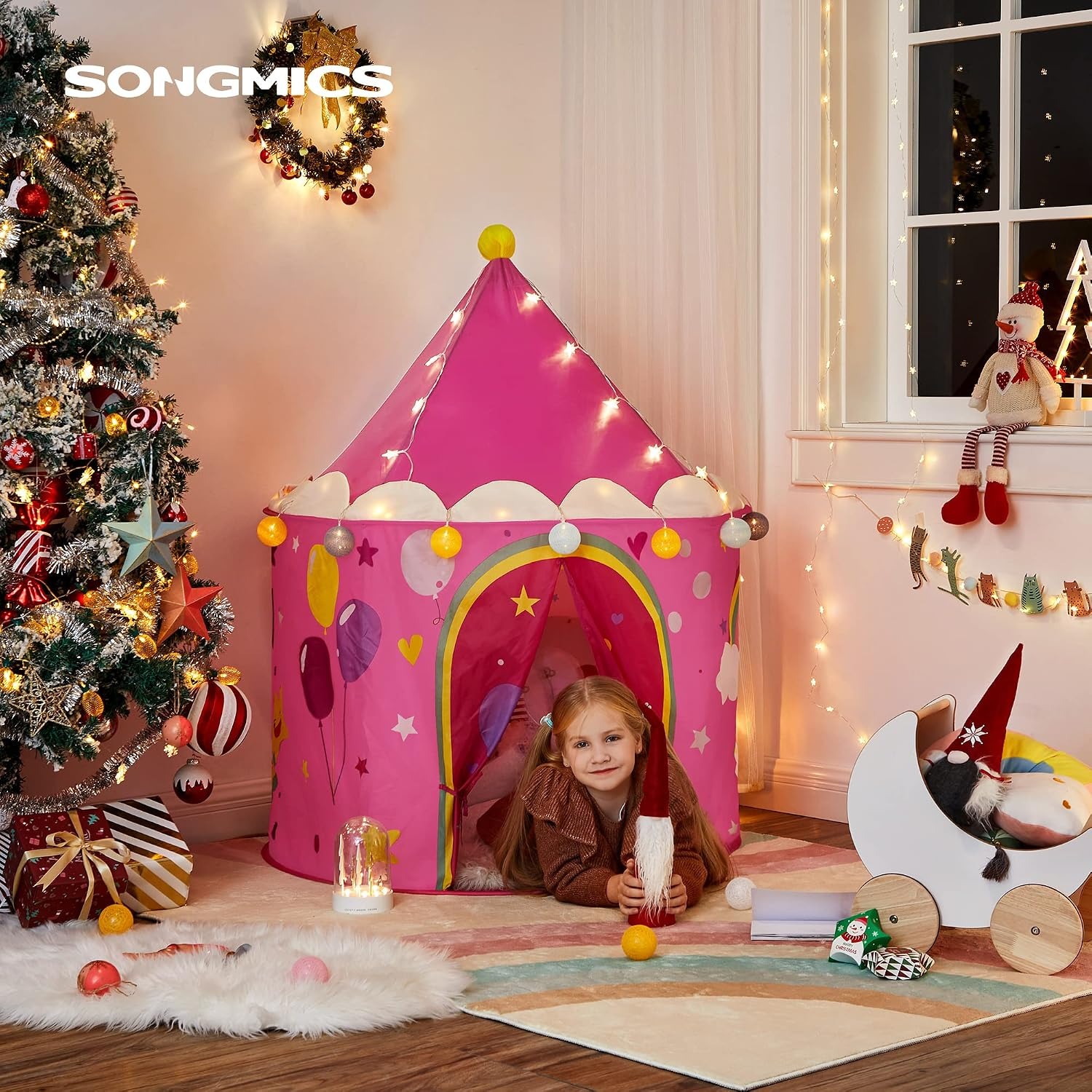
Pick a corner away from radiators, stairs, heavy furniture and anything a child could pull over. Put something soft on the floor inside, a folded duvet or a bath mat works fine, since fabric over a hard floor is not comfortable for long. Add a small light if the room is dim, battery-operated only, never a candle or a mains lamp with a trailing cable.
Then leave it alone. The appeal of a den is that it belongs to the child. If you tidy the inside every evening, it stops being theirs.
Looking after it
Care is straightforward because the materials are simple. Spot clean the polyester with a damp cloth and a little mild soap, then let it dry completely in the open position before folding. Do not put it in a washing machine, a tumble dryer, or near an iron. Heat and sprung frames do not mix.
Shake crumbs and dust out after play, which takes ten seconds and prevents the gradual grubbiness that kills most play tents. If it has been on damp grass, stand it up indoors until the fabric and the frame are dry. Storing a slightly wet tent folded in a bag is how fabric picks up a smell.
For the frame, the only real rule is not to force it. If it does not want to fold, reposition your hands rather than pushing harder. Kinked spring wire does not go back to its original shape.
The short version
It weighs 1.01 kg, needs no assembly, has a roll-up door and a viewing window, comes with a carry bag and is recommended for children aged 3 and up.
If you want a den your child can open themselves, that moves between the bedroom and the garden without effort, and that disappears into a cupboard when the room needs to be a room again, this does the job well. If you need something weatherproof for overnight outdoor use, look at proper camping gear instead.
For most families with a three to six-year-old and a spare corner, it is a small purchase that gets a surprising amount of use.