
The complete guide
How to Choose a Castle Play Tent That Children Actually Use
The problem with most children's play spaces
Children ask for somewhere of their own long before they can explain why. They build it out of sofa cushions, drag a blanket over two chairs, crawl under the dining table. The structure always collapses, someone trips on it, and by teatime the living room looks like a jumble sale.
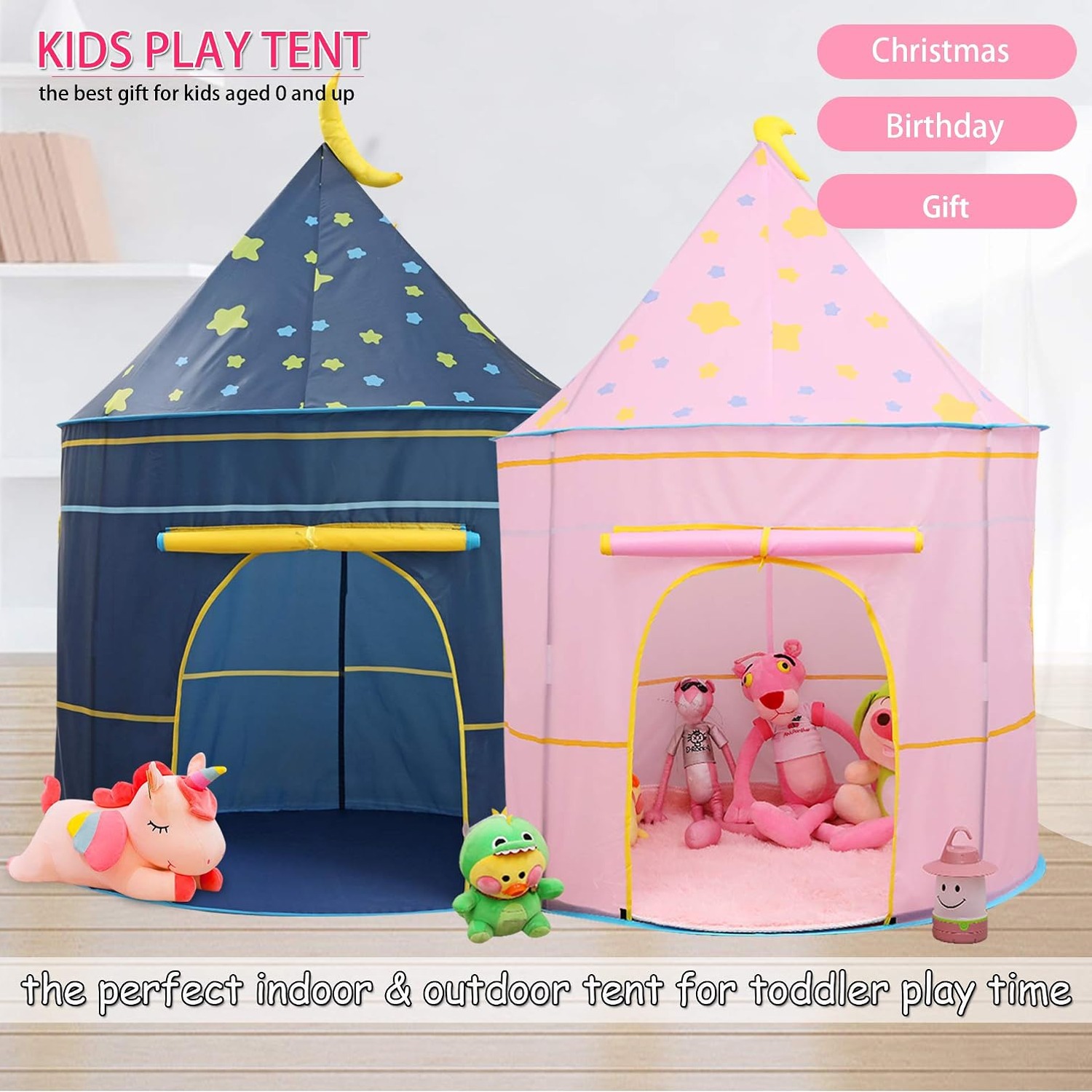
A castle play tent solves that in a very ordinary way. It gives the den a shape that holds, a door that works, and walls that do not fall in when someone leans back. The castle theme matters too. A plain fabric box is a toy. A castle is a place, and children treat places differently. They name them, they decorate them, they invite people in.
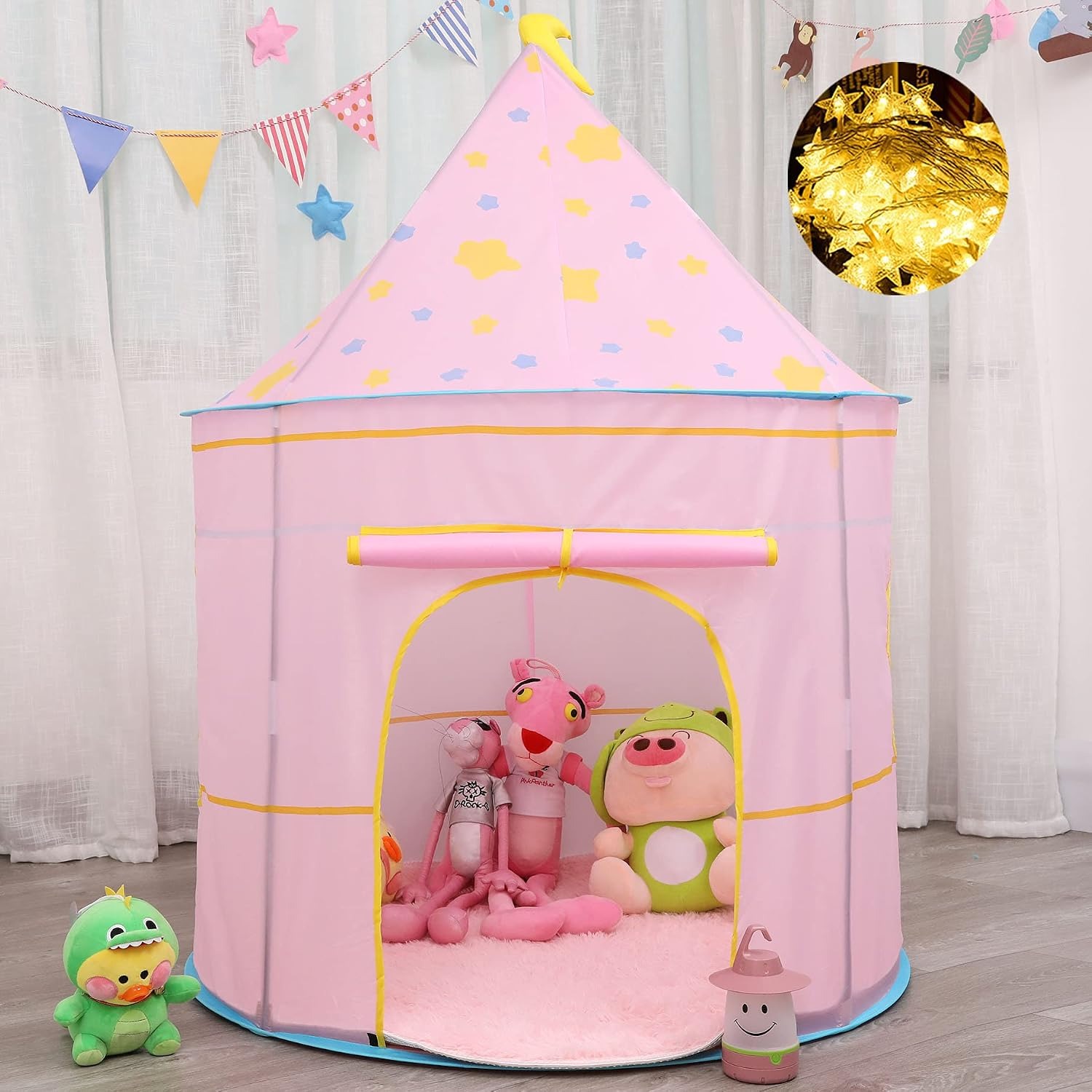
This particular tent measures 105 x 135 cm with an overall item size of 135 x 105 x 135 cm. That is roughly a square metre of floor and about 135 cm of standing height. Small enough to tuck into a bedroom corner, big enough that a child does not feel folded up inside it.
How it works
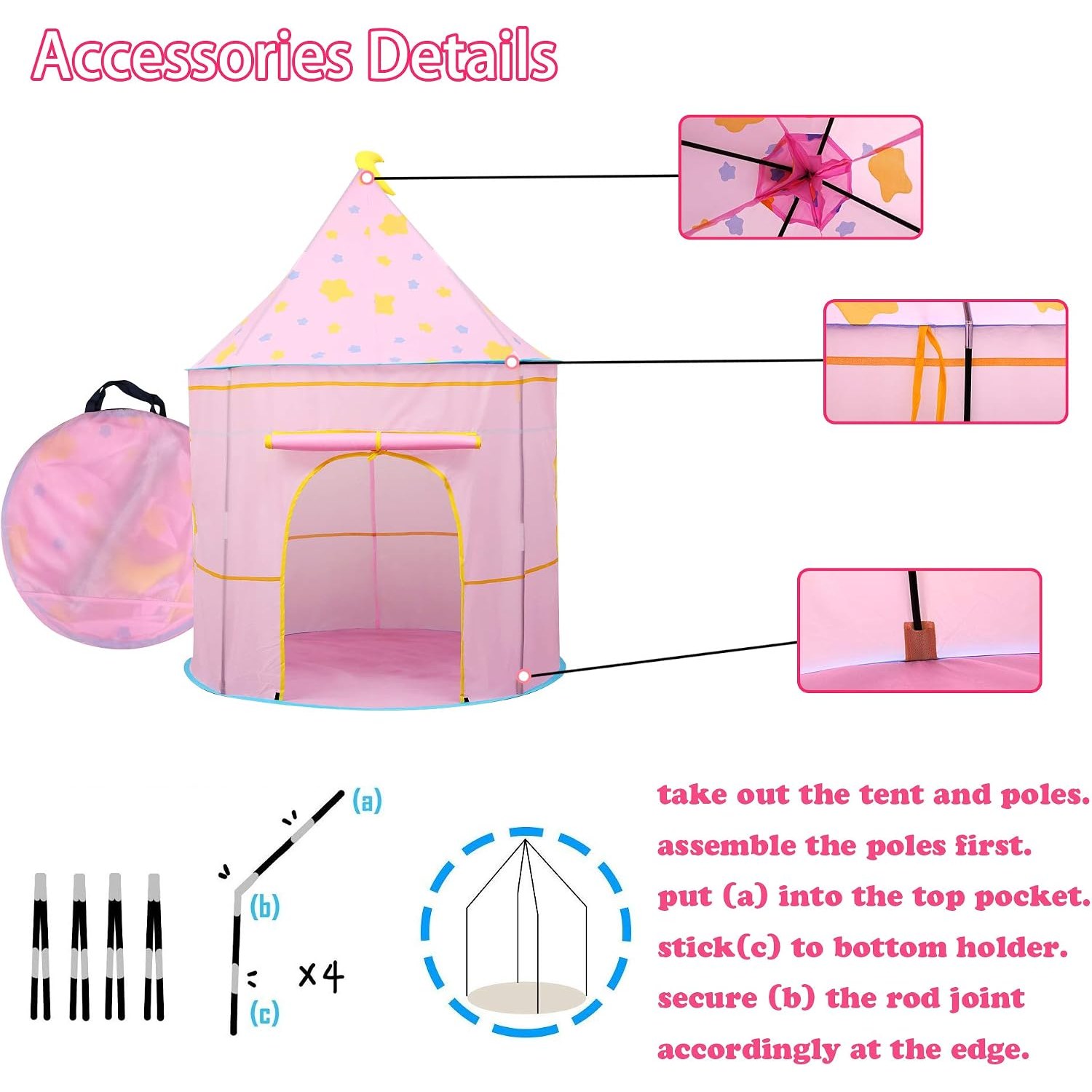
The construction is deliberately simple. Four plastic poles support a polyester shell. You thread the poles, seat the shell, add the flag on top, and it stands. The whole thing weighs 0.8 kg, so there is nothing to wrestle with and nothing heavy to drop on a foot.
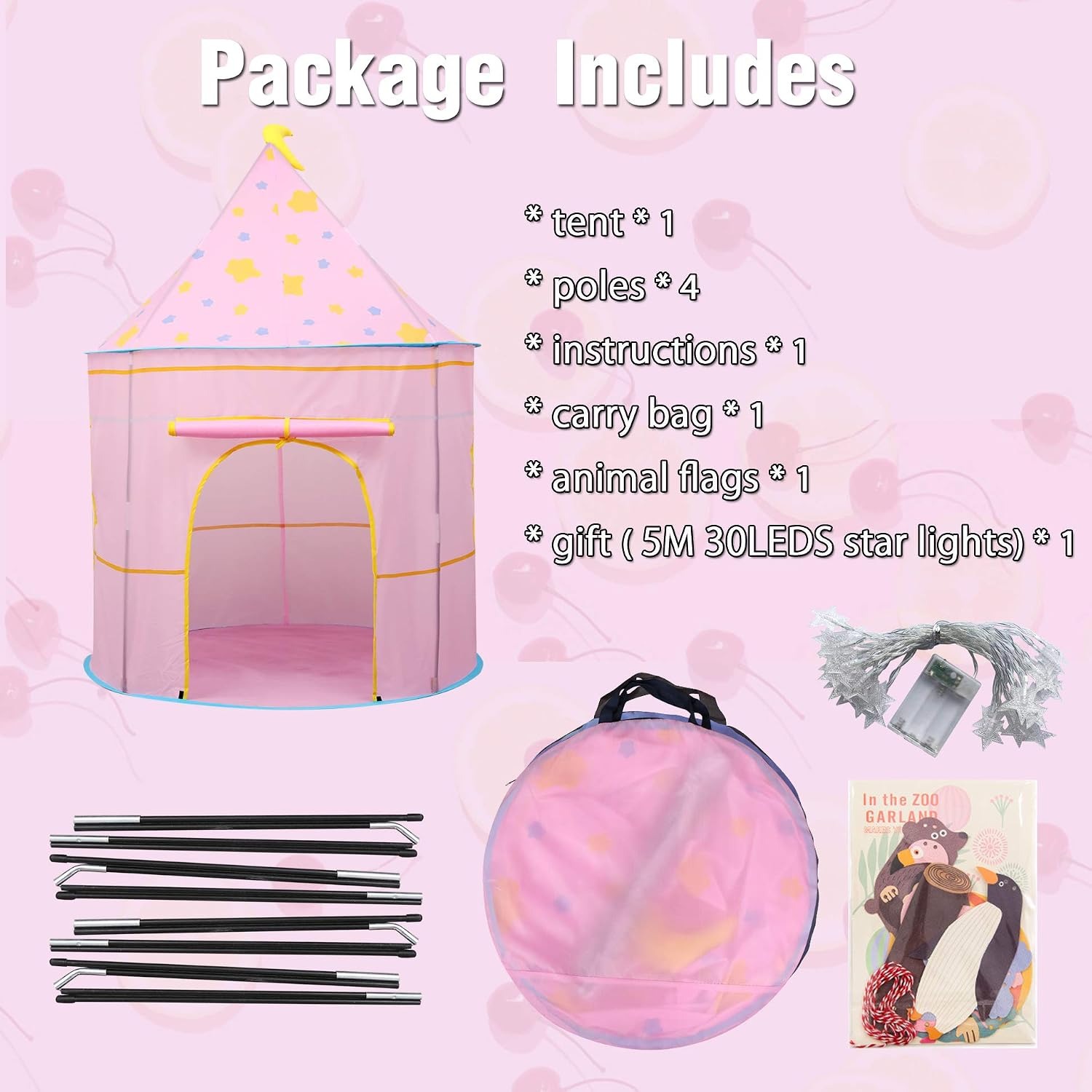
Assembly is required, and the instruction sheet comes in the box. The first build is the slow one because you are working out how the parts relate to each other. After that, it becomes a few minutes of work. Taking it down is the same steps in reverse, and the carry bag swallows the fabric, the poles, the flag and the light string in one go.
The star lights are the detail that gets the most reaction. The set includes a 5 m string with 30 LEDs, designed to drape inside the roof. During the day the tent is a den. In the evening, with the lights on, it reads as something softer, more like a glowing cave. That shift is useful if you are trying to make the hour before bed calmer. A story inside a lit tent competes well with a screen.
One honest note. The power source for the light string is not specified in the maker's details, so check the packaging and the instructions when it arrives rather than assuming.
Who it suits
The suggested age range runs from 36 months to 12 years. In practice, the way it gets used changes as children grow.
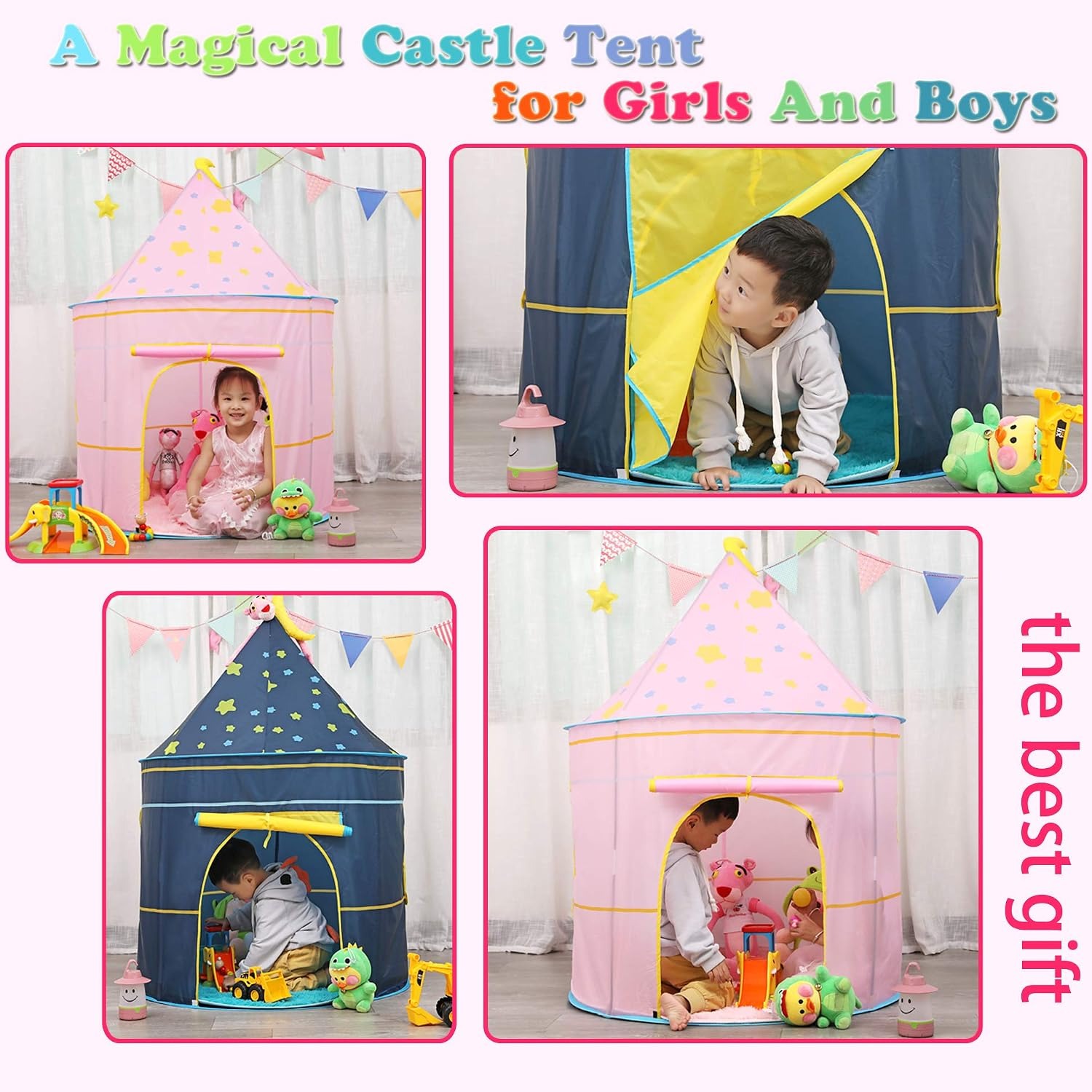
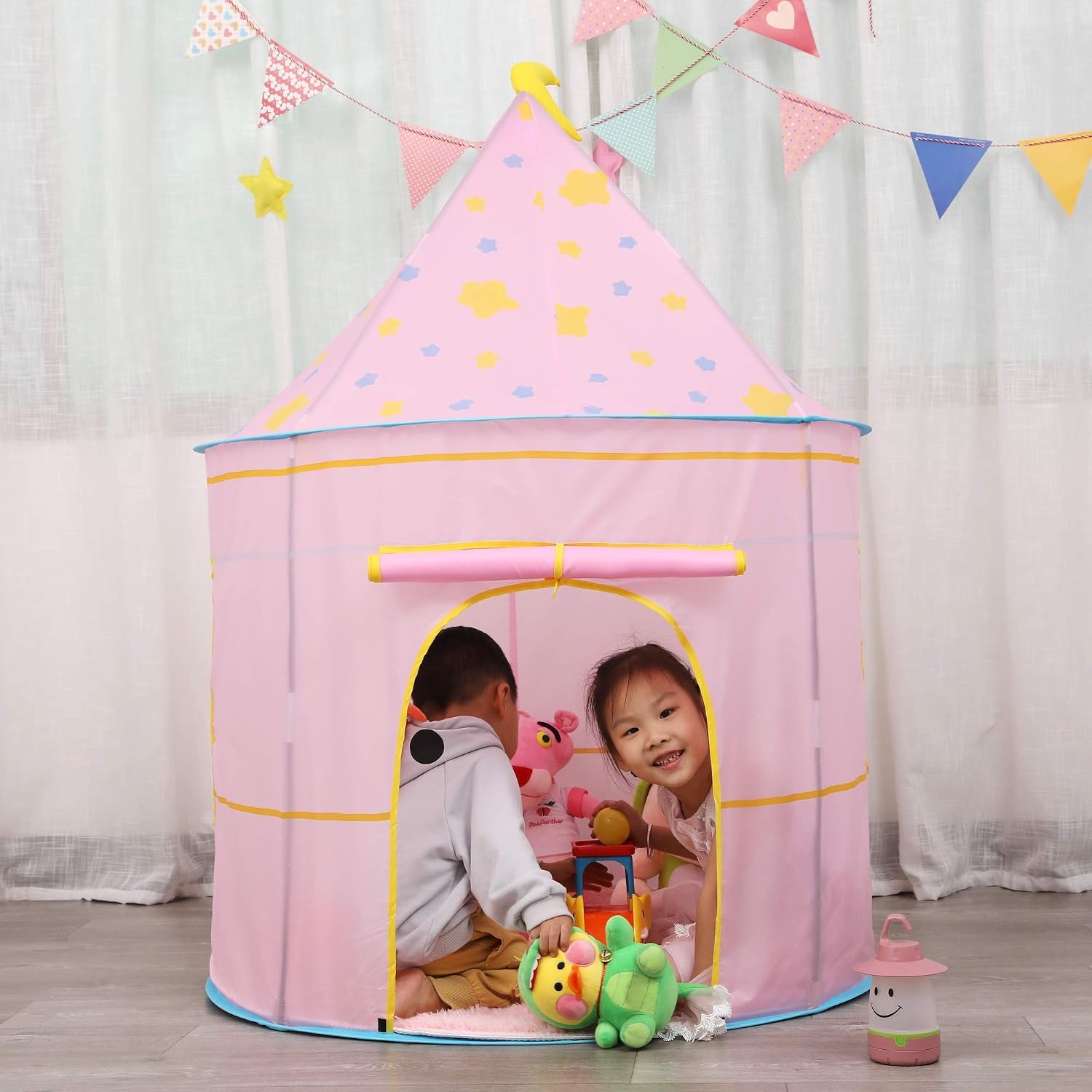
Around three to five, it is a den and a hiding place. Children crawl in with soft toys, pull the door shut and announce that nobody is allowed in. It supports the kind of imaginative play that is good for them and happens to be quiet, which helps everyone.
From roughly six upwards, it tends to become a reading spot. This is where the star lights earn their keep. Many parents searching for the best kids reading nook tent end up with something like this precisely because the lighting is built in rather than bought separately.
Older children at the top of the range may use it less often, but it still works as a sleepover feature or a quiet corner when the house is busy. The tent also travels well, which makes it handy for grandparents who want something for visits without surrendering a whole room.
How to choose between play tents
A few practical things separate a tent that gets used from one that lives in a cupboard.
Height is the first. A tent a child cannot stand in feels like a crawl space. At about 135 cm, this one gives most young children room to stand, which makes a real difference to how long they stay in it.
Footprint is the second. Measure the corner you have in mind before you order. You need roughly 105 x 105 cm of clear floor, plus a little breathing room so the walls are not squashed against furniture. People hunting for the best playroom tent sometimes buy on looks alone and then discover the space does not work.
Setup speed is the third. If a tent takes half an hour and a diagram you cannot read, it will go up once. A short, repeatable build keeps it in rotation, and the carry bag means packing away is not a chore either. That is also why this works as one of the best portable play tent choices for families who move it between rooms or houses.
Then there is weight. At 0.8 kg, an adult can lift the assembled tent and carry it somewhere else without dismantling it. That sounds trivial until you need to vacuum.
Finally, think about whether lights are included. Buying a separate string, finding somewhere to attach it and hoping it looks right is more faff than it sounds. Here the 5 m, 30 LED string comes in the box with the tent, poles, carry bag, instructions and animal flag.
Looking after it
Play tents live hard lives. Snacks happen. Felt tips happen. The good news is that polyester is easy to keep tidy.
Spot clean with a damp cloth and a little mild soap, working gently so you do not rub colour. Let it dry completely in the air before folding it away, because fabric packed slightly damp develops a smell fast. Keep it out of the washing machine and the tumble dryer, and skip bleach and the iron entirely.
Treat the poles gently. They are plastic, and forcing them in or out at an angle is how plastic poles break. Slide them in line with the sleeves and they will last.
For the light string, keep it dry and handle it by the cord rather than the LEDs. If the tent is going into storage for a season, take out any batteries first so nothing leaks inside the bag. Store the whole set somewhere dry and away from radiators.
Where it fits in a home
The most common spot is a bedroom corner, left standing as a permanent reading nook. At around a metre square, it does not dominate a room the way larger playhouses can. The second most common spot is a playroom, where it gives the room a focal point and a quiet zone at the same time.
It also does short tours of duty. Birthday parties, where it gives smaller guests somewhere to retreat when the noise gets much. Garden afternoons in dry, calm weather, remembering that this is a light play tent, not a camping shelter. Visits to family, where it folds into the boot and gives a child something familiar in an unfamiliar house.
Some families run it as a weekend feature instead of a permanent fixture. Up on Friday, down on Sunday, stored in the bag the rest of the week. That works well in small flats, and it keeps the novelty alive.
The short version
This is a castle play tent with star lights that does a small job properly. It gives a child a defined space of their own, it goes up fast, and it folds back into its own bag when you want the floor back.
What you get is the tent, four plastic poles, a carry bag, instructions, an animal flag and a 5 m string of 30 LED star lights. The shell is polyester, the frame is plastic, it measures 105 x 135 cm with overall dimensions of 135 x 105 x 135 cm, and it weighs 0.8 kg. Suggested ages run from 36 months to 12 years, and the manufacturer lists a one year warranty against manufacturer defects.
Measure your corner, allow for the height, and if the numbers work it will likely be in use the same evening it arrives.