

The complete guide
Choosing a Play Tent That Actually Gets Used
The problem with most play spaces
Children want a place that belongs to them. Not a corner of the lounge that gets tidied away, not a shared bedroom they have to negotiate over. Somewhere with walls, a door, and a rule that grown-ups knock first.
Most homes cannot spare a whole room for that. So parents end up with a blanket over two dining chairs, which collapses every ten minutes, or a plastic playhouse that lives permanently in the way. Neither is great. One is unstable, the other is furniture you did not ask for.
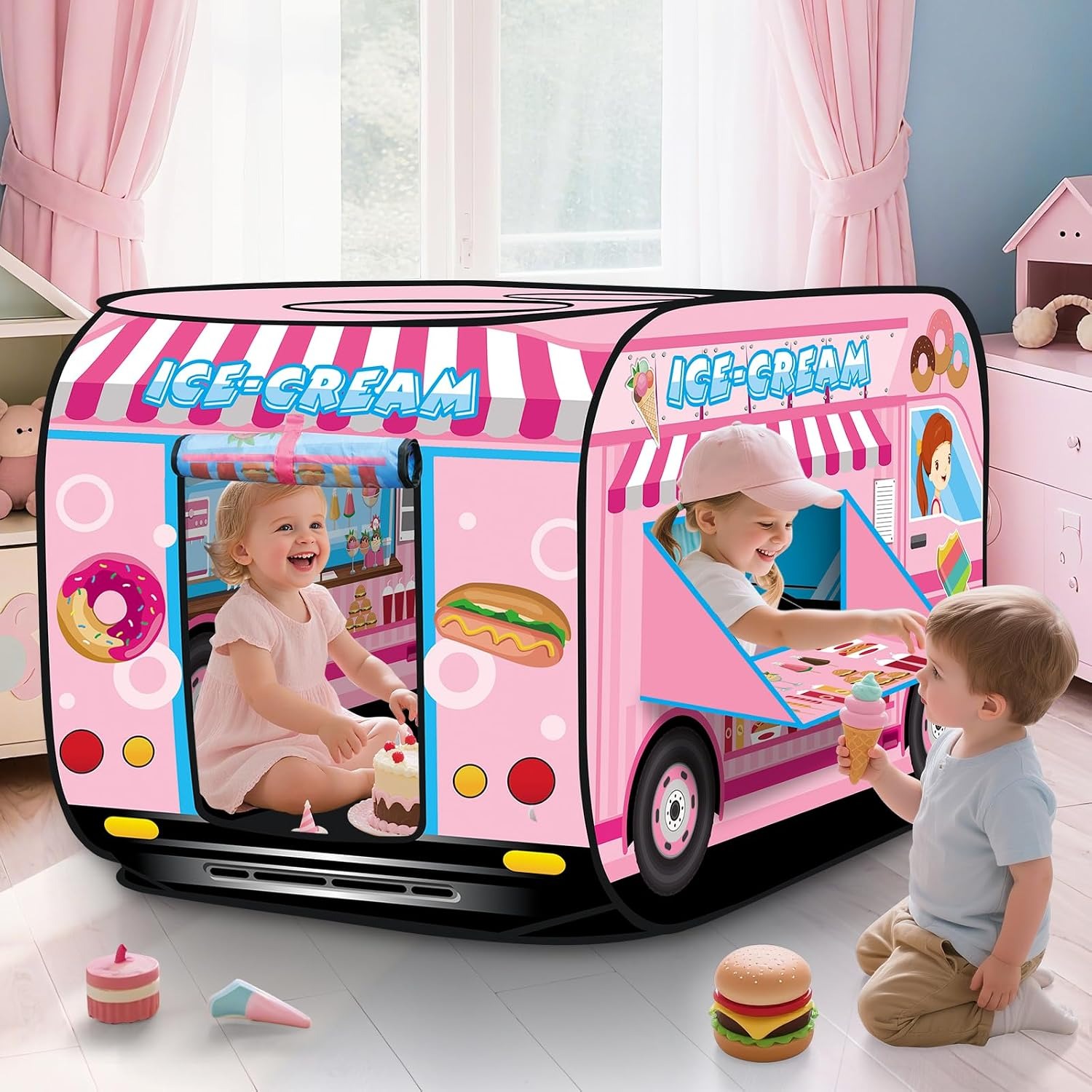
A pop-up play tent sits between those two options. It gives a child a defined space with a door and windows, then disappears into a cupboard when the room needs to be a room again. That is the whole idea behind this ice cream truck play tent, and it is why this format has stayed popular for years.
How a pop-up play tent works
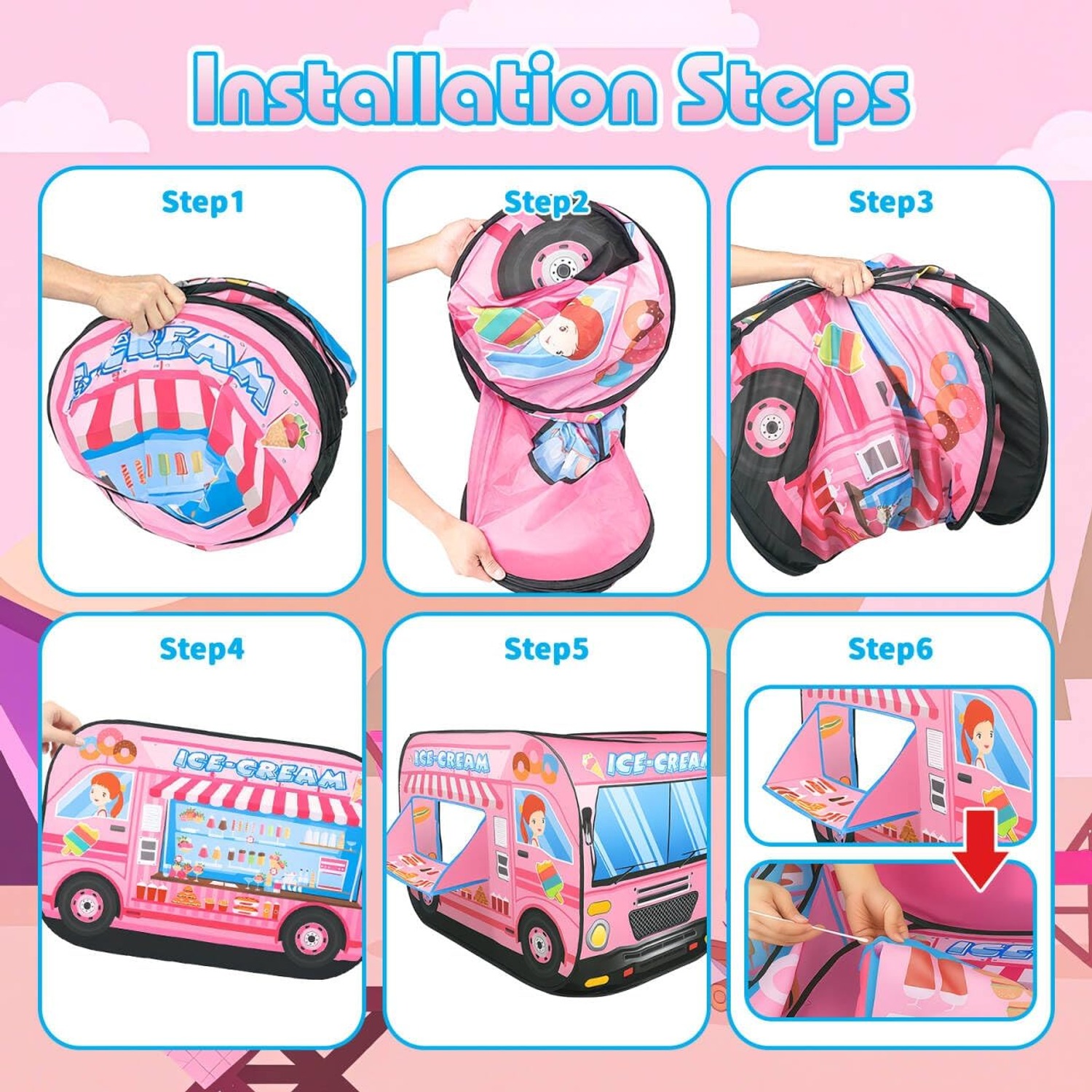
The frame is the clever part. Flexible hoops are sewn into channels in the fabric panels. When the tent is compressed in its bag, the hoops are held under tension. Release them and they spring back into shape, pulling the panels taut and forming the structure in one motion.
This particular model is built on a plastic frame and uses plastic as the listed material. Assembly is required, so the first time you open the box you should expect a short setup involving the frame and the door blind. After that initial run-through, opening it is a seconds-long job.
Folding is the part people find fiddly. There is a technique, usually twisting the hoops in on each other so they collapse into smaller concentric circles. It feels wrong the first few times. Then it clicks and you can do it one-handed while holding a cup of tea.
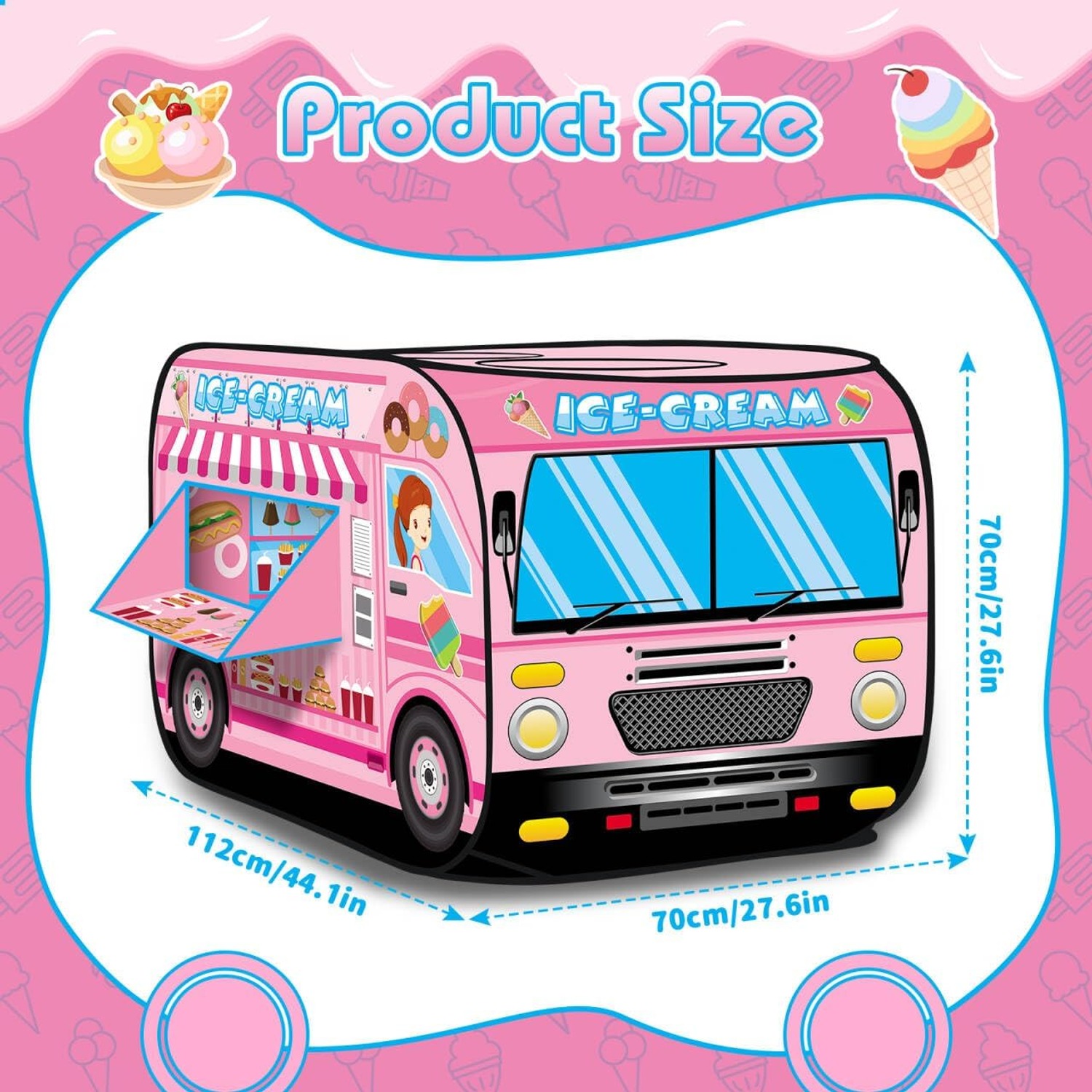
The tent measures 112 cm long, 70 cm wide and 70 cm high when standing. It weighs 500 g, which is light enough that a four year old can carry the folded bundle to the garden. For anyone hunting for the best portable play tent, that low weight does a lot of work.
Ventilation and why mesh matters
Small enclosed spaces heat up quickly. Add a child who has been running laps around the kitchen and the inside of a sealed tent becomes stuffy within minutes. That is the most common reason a play tent stops getting used.
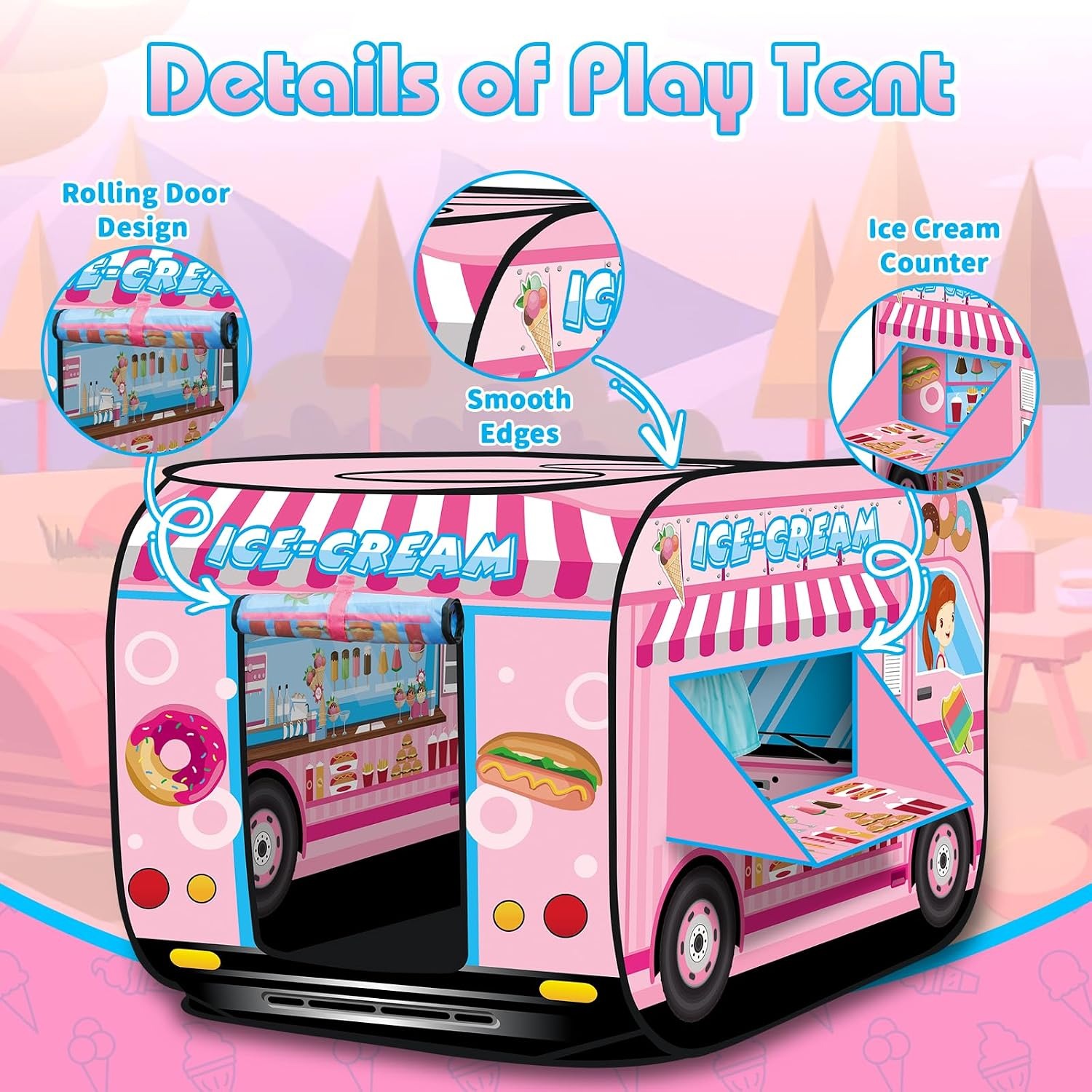
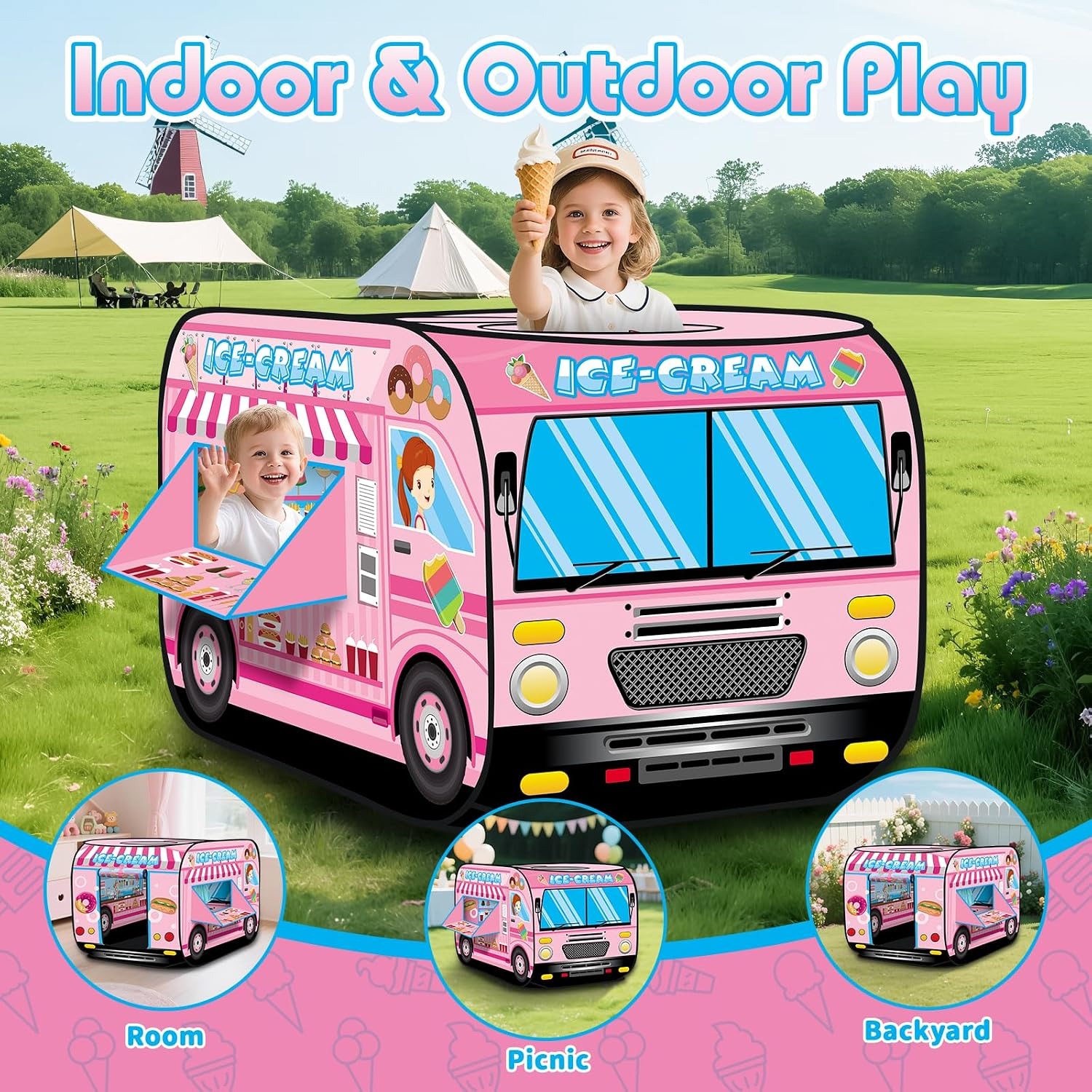
This design uses breathable mesh panels rather than solid fabric all round. Air moves through, so the inside stays comfortable for longer sessions. The mesh also has a fine weave, which keeps insects out when the tent is set up on the lawn. If you are weighing up the best outdoor play tent for kids against an indoor-only option, the mesh is the feature that lets one tent do both jobs.
There is a second benefit for parents. Mesh means you can see in. You can glance over from the kitchen and check what is happening without opening the door and breaking the game. That matters when the manufacturer, quite sensibly, asks for direct adult supervision during use.
Who it suits
The maker recommends this tent for ages 36 months to 12 years, and states clearly that it is not suitable for children under 3.
The sweet spot is the three to six range. That is when pretend play is at its most intense and a themed shopfront gets used daily. An ice cream truck gives a child a script to follow: take the order, make the cone, hand it over, collect the money. Open-ended toys are great, but a bit of structure helps younger children get started.
Older children use it differently. By seven or eight, the shop game fades and the tent becomes a reading corner or a hideout. Some parents of sensory-seeking children use a play tent as a calm-down space, because the walls reduce visual clutter while the mesh stops it feeling closed in. If you are looking for the best indoor play tent for that purpose, airflow and sightlines matter more than the theme printed on the side.
It also works as a gift. It arrives folded flat, so it posts and wraps easily, and the ice cream theme does not skew heavily one way or the other. The colour is pink, which is worth knowing if your child has strong opinions.
How to choose between play tents
A few things separate a tent that gets used from one that ends up in the loft.
Footprint against your actual room. Measure before you buy. A 112 x 70 cm floor area is modest, but if your child's bedroom already holds a bed, a wardrobe and a toy box, do the maths. Measure the corner you have in mind and compare it properly.
Setup time. If a tent takes fifteen minutes to put up, it will come out twice. Pop-up frames win here because the barrier to use is almost nothing. A child can ask for it and have it standing before they have finished the sentence.
Storage. Folding flat is not a bonus feature, it is the whole reason this format beats a rigid plastic playhouse for most families. Check you have a cupboard, a gap behind a door, or a space under a bed.
Airflow. Already covered, but worth repeating. Mesh panels are the difference between a tent used for an hour and one abandoned after ten minutes.
Age guidance. Take it seriously. If you have a child under 3 in the house, you will need to manage access, and that may make now the wrong time to buy.
Looking after it
Care is straightforward because there is not much to go wrong.
Wipe the panels with a damp cloth and a bit of mild soap when they get grubby. Let the tent air dry completely before folding it away, because damp fabric packed into a bag is how you end up with a musty smell and marks you cannot shift. Skip the washing machine, the tumble dryer, bleach and the iron.
After outdoor play, shake out grass clippings, sand and biscuit crumbs before folding. It takes thirty seconds and saves you a bigger clean later.
The frame is the part to protect. Avoid forcing the fold if it resists, and do not store heavy items on top of the folded tent. Bent hoops do not spring back properly and the tent never stands quite right again.
Hold onto your order confirmation in case you need it.
The short version
A play tent earns its keep by being easy. Easy to put up, easy to put away, easy to supervise. This ice cream truck model ticks those boxes with a pop-up plastic frame, a 500 g weight, mesh panels for airflow and insect control, and a roll-up blind on the door that children genuinely enjoy operating.
At 112 x 70 x 70 cm it fits in a bedroom corner or on a patch of lawn, and it folds flat for the cupboard. It suits children from 3 to 12, with the best years being the preschool stretch when pretend play is in full swing.
If you want your child to have a space of their own without rearranging the house, this is a sensible way to do it. And when you need the floor back, it is gone in under a minute.